Community Engagement Newsletter – 16 October 2026
Dear community representatives,
Thank you for your ongoing support and contributions to the community. The Community Engagement Network has collated this newsletter of important information from across the Australian Government that may be of interest to yourself and members of your community.
Please feel free to share content from this newsletter with members of your community, but in the interests of ensuring the information remains accurate, please do not make any alterations to the content.
In this fortnight’s edition, you can find information on the following:
News & Updates
· Updates to Student and Student Guardian Visa Rules
· New animation warns against submitting false Protection visa claims
· Adequate health insurance for visa holders
· Thriving Kids: Early Support for Children and Families
· Scam Alert: Investment Scams Hiding in Plain Sight
· National Safe Work Month 2026
· Working for Women Research Partnership
Upcoming events
· Webinar: Can You Spot a Scam? – 22 October 2026
Other information
· Useful information in your language
· Contact Us
Updates to Student and Student Guardian Visa Rules
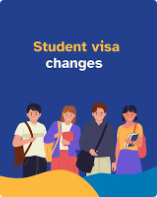
Image credit: Department of Home Affairs
There are new rules for
Student visa (subclass 500) and
Student Guardian visa (subclass 590)
From 2 October 2026, new rules change who can apply for and be granted a Student visa (subclass 500) or Student Guardian visa (subclass 590) while in Australia, and whether family members can be included.
These changes may affect people wanting to:
· Apply for a Student visa (subclass 500) or Student Guardian visa (subclass 590) in Australia
· Apply for another Student visa in Australia
· Include family members in a Student visa application or add them later.
Most temporary visa holders in Australia must now be outside Australia when they lodge a Student or Student Guardian visa application and when a visa is granted. A list of affected visas can be found at
Student visa applicants – whether they are applying for their first or a further Student visa – can no longer include family members in their Student visa application, unless an exemption applies.
Check how the new rules might affect you before enrolling in a course, making travel or relocation plans, or applying for a Student visa at
Changes to Student visa application rules (subclasses 500 & 590)
New animation warns against submitting false Protection visa claims

Image credit: Department of Home Affairs
The Department of Home Affairs has developed a short animation to help temporary visa holders understand the risks and consequences of making false claims in a Protection visa application.
Titled 5 reasons never to lie in a Protection visa application, the animation explains that providing false and misleading information in a visa application can:
· result in visa refusal
· affect future visa opportunities
· impact future travel and family migration options
· attract serious penalties, including fines and imprisonment.
You can watch the animation
here or on the
Protection visa information page
If someone in your community is considering applying for a Protection visa, encourage them to seek trusted advice before they apply.
You can suggest they speak to a registered migration agent or seek free, confidential advice from a specialist government-funded legal provider in their state or territory. Details about this service can be found on the
Protection visa information page on the Home Affairs website, along with other important Protection visa information.
Adequate health insurance for visa holders
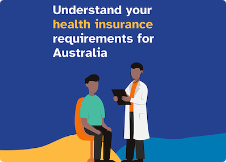
Image credit: Department of Home Affairs
Most temporary visa holders and visitors are not eligible for Australia’s Medicare system, so it’s important to understand your healthcare and health insurance arrangements.
To be eligible for Medicare, for a service rendered in Australia you must be:
· an Australian citizen
· an Australian permanent resident
· a New Zealand citizen who is lawfully present in Australia
· a Resident Return visa holder
· an applicant for permanent residency (conditions apply)
· a temporary visa holder covered by a Ministerial Order; or
· a citizen or permanent resident of Norfolk Island, Cocos (Keeling) Islands, Christmas Island or Low Howe Island.
We’ve updated our information on adequate health insurance requirements for visa applicants and visa holders, including a new factsheet to help you understand the requirements and your obligations.
For more information and practical guidance, download our new Adequate Health Insurance Factsheet.
Thriving Kids: Early Support for Children and Families

Image credit: Department of Health, Disability and Ageing
From 1 October 2026, families can access initial supports through Thriving Kids, a new program led federally by the Department of Health, Disability and Ageing, with service delivery managed on the ground by respective State and Territory Government departments. The program is designed to help children aged 0 to 8 years who need extra support with their development as well as their families.
Thriving Kids provides an easy starting point for families who have noticed signs of developmental concerns, have questions about their child’s development, or are looking for support.
The program offers:
· Trusted information on childhood development and autism
· Early supports for children and families
· No diagnosis needed
All Thriving Kids supports will be rolled out by January 2028. Learn more about Thriving Kids on the Department of Health, Disability and Ageing website.
Scam Alert: Investment Scams Hiding in Plain Sight
Image credit: ScamWatch
ScamWatch is reminding Australians to be cautious of investment scams that can appear through social media, online advertisements, news articles, messaging apps and professional-looking websites. These scams are designed to look legitimate and may use fake testimonials, celebrity endorsements or fabricated investment returns to gain trust.
Before investing, take time to independently verify the opportunity and be wary of promises of high or guaranteed returns. If you are pressured to act quickly or asked to transfer money unexpectedly, it may be a scam.
To help protect yourself:
· Be cautious of unsolicited investment offers.
· Research investment opportunities using trusted and independent sources.
· Be wary of promises of high or guaranteed returns.
· Take time to seek independent financial advice before investing.
· Never share personal or financial information with unverified sources.
For more information and advice, visit
National Safe Work Month 2026
Image credit: Safe Work Australia
October marks National Safe Work Month, an annual campaign encouraging workplaces across Australia to strengthen their commitment to health and safety. This year’s theme, “Safe work is for life,” highlights the importance of protecting workers’ lives, health and future through effective workplace safety practices.
Throughout the month, organisations are encouraged to start safety conversations, raise awareness of workplace risks, and take practical action to create safer and healthier workplaces.
The campaign focuses on four key themes: For Life, For Health, For the Future, and For All, emphasising that workplace safety benefits everyone. Employers and workers can access a range of resources, including campaign materials, activity guides, posters and digital assets, to help promote safety and wellbeing across their workplaces.
For more information and resources see About National Safe Work Month | Safe Work Australia or visit the Safe Work Australia National Safe Work Month website National Safe Work Month | Safe Work Australia.
Working for Women Research Partnership
Image credit: Department of the Prime Minister and Cabinet (PM&C).
The Australian Government’s Office for Women, located within the Department of the Prime Minister and Cabinet, is partnering with leading researchers through the Working for Women Research Partnership to produce rigorous data-driven evidence and insights to help government and industry drive gender equality.
One of the Partnership’s first major reports, Good Flex, Bad Flex: Designing Flexibility for Gender Equality, found that quality flexible work arrangements can improve workforce participation, retention, and productivity. However, poorly designed flexibility can reinforce inequality and job insecurity, particularly for women working in frontline and traditionally female-dominated industries.
The reports are based on data gathered through a large, nationally representative survey of workers, including all genders, with boosted samples of groups often underrepresented in labour market research, such as First Nations workers, LGBTQI+ workers and migrants. Research included focus groups and yarning circles with mid-years women aged 40 to 55, segmented across work contexts (for example frontline and hybrid work), demographics (including migrant women, First Nations women and women with disability or chronic illness), location (such as outer suburban and regional areas) and with managers. To find out more about the research see Working for Women Research Partnership | PM&C.
Webinar: Can You Spot a Scam? – 22 October 2026
The eSafety Commissioner is hosting a free online presentation to help people recognise and respond to common scams. The webinar will share practical information to help participants stay safe online and avoid common scam tactics.
Topics include:
· Common scams, including the latest Tax and Medicare scams.
· Tips on how to spot scam activity.
· What to do, and what not to do, if you think you’ve been targeted.
· Where to go for help and support.
Date: Thursday, 22 October 2026
Time: 3:00pm – 4:00pm AEDT
Register via the Be Connected website
to receive the webinar access details.
For more information, see Joining online presentations on the
At eLanka, we respect the rights of creators. If we have used an image you own and you’d like it removed, please email us at info@elanka.com.au and we’ll handle it promptly.
Thanks.
eLanka team
eLanka Disclaimer
Content published on eLanka may be created by the eLanka team, submitted by contributors or third parties, reproduced or adapted from other sources with appropriate source acknowledgement, or provided as promotional/advertising material by our clients. While eLanka takes reasonable care in preparing and publishing content, we do not warrant its completeness or accuracy. Views expressed are those of the respective authors or contributors and do not necessarily represent the views of eLanka. Third-party contributors, content providers and advertisers are responsible for the accuracy of material they supply and for ensuring they hold the necessary rights and permissions for its publication. Advertising and promotional content should not be regarded as an endorsement by eLanka of any product, service or claim.