From ‘Pulle Madu’ to Medical School: Record University Intake Signals a Turning Point for Sri Lanka’s Plantation Communities
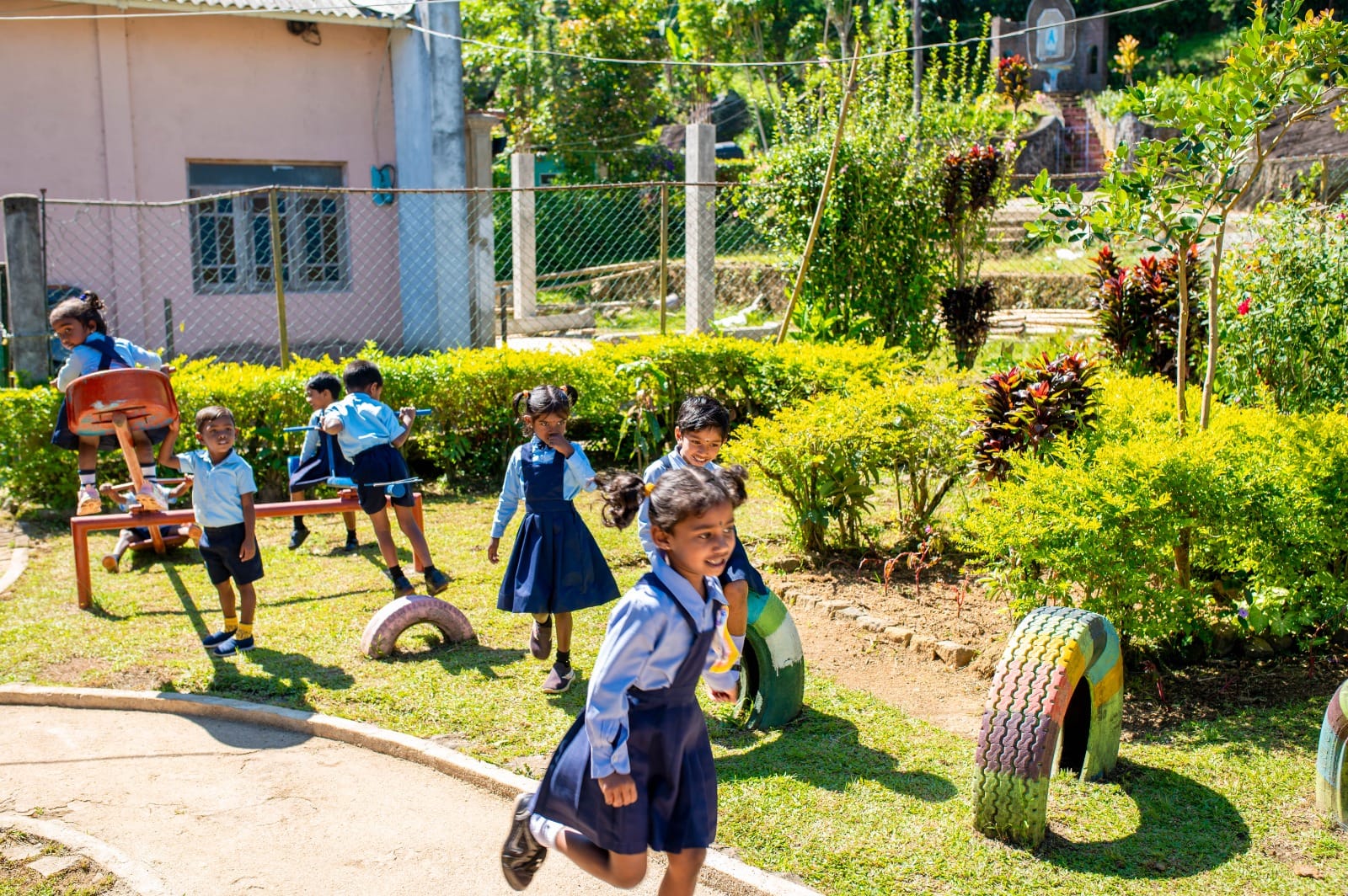
Children at a plantation-sector early development facility. Image credit: Lanka Business Online.
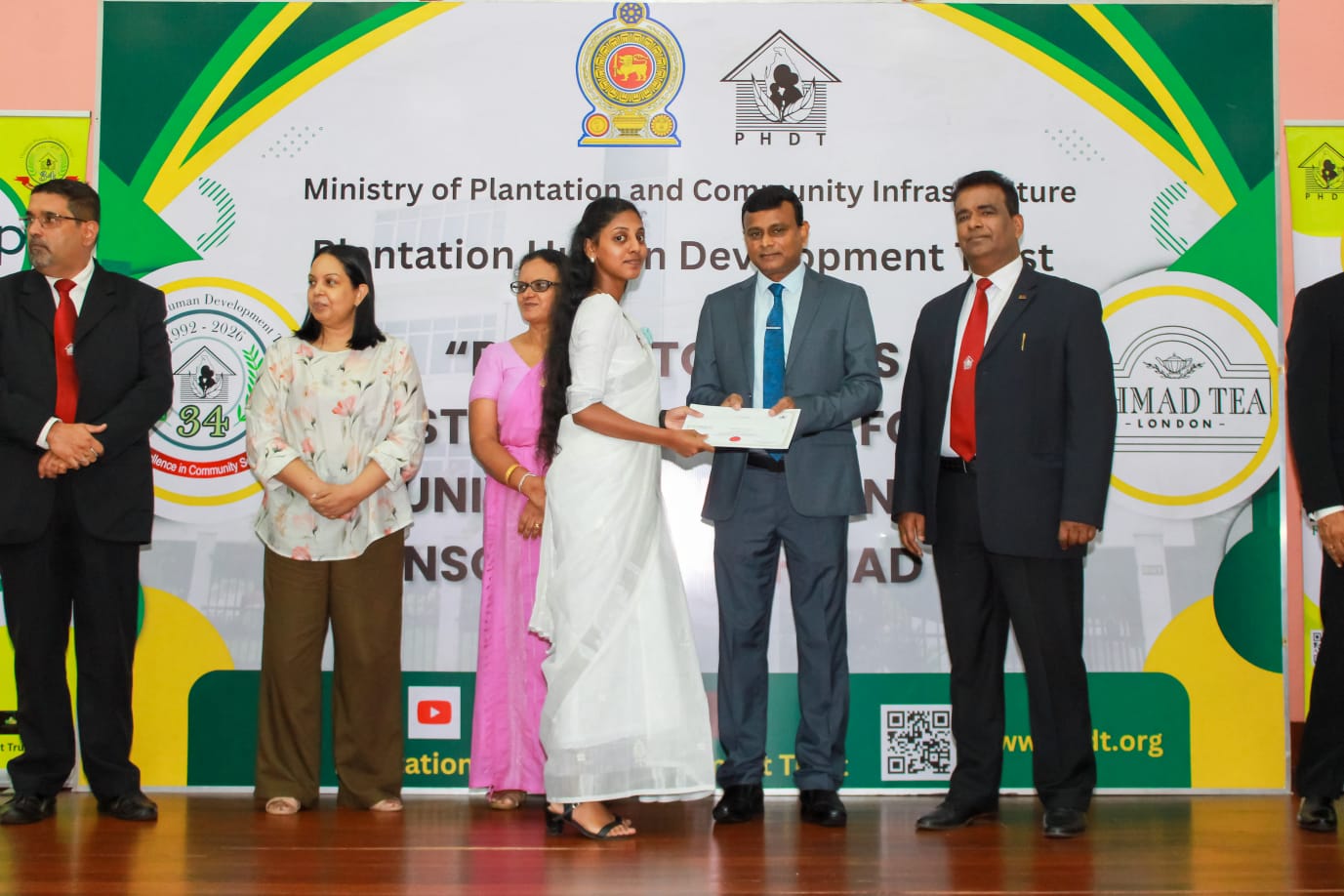
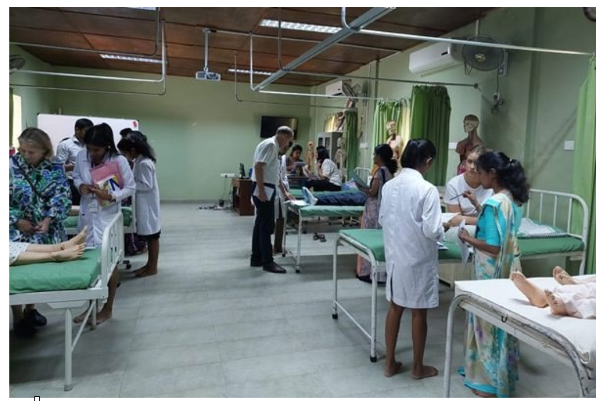
Education and community development within Sri Lanka’s plantation sector. Image credit: Lanka Business Online.
The journey from a cloth hammock suspended beside the tea bushes to a university lecture hall represents one of the most significant generational transformations taking place within Sri Lanka’s plantation communities.
Many generations ago, an estate child’s earliest years frequently began in a simple cloth hammock tied near the rows of tea, allowing a mother to remain within earshot of her infant while continuing the demanding work of tea plucking. As the needs of plantation families became more formally recognised, a corner of a line room was converted into what became known as Pulle Madu, a basic shelter where infants and toddlers could be cared for while their mothers worked.
That modest arrangement served an important practical purpose, yet it offered limited opportunities for structured learning, nutrition and child development. Today, the old Pulle Madu system has been replaced by fully equipped Child Development Centres, or CDCs, staffed by qualified and trained CDC officers who provide custodial care, early development support and educational exposure comparable to that available to children in urban areas.
The transformation, reported by Lanka Business Online on 17 September 2026, is not merely an institutional upgrade. It reflects a broader shift in the social and educational prospects of plantation families, whose children are increasingly progressing from early childhood facilities to primary schools, secondary education and local universities.
From custodial care to structured early learning
The modern CDCs provide safe and supervised environments for young children while their parents are engaged in estate work. Alongside them, Early Childhood Centres, or ECDs, place greater emphasis on structured early learning through play-based curricula.
These centres also provide dedicated spaces where working mothers can breastfeed, demonstrating how plantation-sector welfare has gradually moved beyond basic childcare towards a more comprehensive understanding of childhood development and maternal wellbeing.
The facilities are the result of collaborative work involving the Regional Plantation Companies, the Government of Sri Lanka and key plantation-sector trade unions, including the Planters’ Association of Ceylon. Together, these stakeholders form the tripartite body that established the Planters’ Human Development Trust, or PHDT, in 1992.
Since its establishment, PHDT has contributed to development across 22 Regional Plantation Companies, with its work extending across education, healthcare, housing-related welfare and early childhood services. The RPCs collectively spend nearly Rs. 720 million each year to maintain the CDCs, an investment that reflects the sector’s continued focus on childhood development and the wellbeing of plantation communities.
That foundation has also helped children remain in education for longer, supporting their progress towards the GCE Ordinary Level and Advanced Level examinations.
Record university admissions signal a new horizon
Primary school enrolment among children from plantation communities has now reached 100%. Although approximately 2 to 3 per cent of students continue to local universities, the recent increase in admissions is regarded as a significant achievement in communities where educational access was once severely constrained.
Over the past two years, nearly 250 children from plantation families have gained admission to university, representing the highest number recorded by the sector to date.
Among those students is a young man from Strathspey Estate who is now training to become a doctor at Eastern University. Reflecting on the role played by his family and teachers, he said:
> “Everything I have achieved is a direct result of my parents’ tireless hard work.”
He also expressed gratitude to his teachers and to the scholarship grant that helped carry him through school. His identity has been withheld in line with the programme’s standard practice for student privacy.
The significance of his achievement extends beyond one individual academic journey. A medical student emerging from a plantation family represents the widening of possibilities for communities where children were once expected to enter estate employment rather than pursue professional careers.

Roots to Wings addresses the hidden costs of university
The Roots to Wings university start-up scholarship initiative was launched by PHDT in collaboration with the Planters’ Association and other industry partners to address the practical difficulties that frequently arise after a student has secured a university place.
Admission alone does not guarantee that a student can begin or complete a degree. A laptop, textbooks, suitable clothing, transport, accommodation and other initial expenses can become insurmountable obstacles for families with limited financial resources.
PHDT Director General Lal Perera described the purpose of the initiative in the following terms:
> “Every year we saw bright students earn a place at university and then risk losing it, not for lack of ability, but because they couldn’t afford a laptop, a set of books, or even proper clothing to arrive on campus with dignity. To correct this situation, after careful study, we facilitated a scheme that bridges the most urgent gap. We cover the immediate start-up costs, while the Regional Plantation Companies, through their CEOs, ensure that the student is carried through to graduation. If a family loses estate housing when a parent retires, we don’t let that end a degree either. Students are granted extensions, and where needed, RPCs provide new housing, supported in part by Indian High Commission grants. Once a child has earned a place at university, we consider it our duty to make sure that place is never lost to circumstance.”
The scheme costs an estimated Rs. 10 to 15 million each year and is funded by various industry stakeholders. Its purpose is therefore broader than a conventional scholarship: it seeks to protect the continuity of a student’s education when family circumstances, housing changes or the cost of university life threaten to interrupt it.
An expanding range of academic pathways
The 2024 to 2025 cohort demonstrates the widening range of subjects now being pursued by plantation-sector students. It included 35 students in Arts, 22 in Commerce and Management, 13 in Drama and Theatre, 10 in Bio-systems, seven in Music and six in Information and Communication Technology.
Four students each entered Medicine and Engineering, while three entered Engineering Technology, two entered Law and 24 pursued other faculties.
Such a spread would once have been difficult to imagine in estate communities where educational opportunity was restricted by distance, household income and limited exposure to professional careers. Literacy in PHDT’s target areas has risen from 40 per cent to 84 per cent, providing an important foundation for the current improvement in university admissions.
Specialised pathways have also become available. These include the Bachelor of Science Honours degree in Plantation Management at Uva Wellassa University, vocational training through the National Institute of Business Management and digital learning opportunities through the Open University of Sri Lanka.
These options are particularly important because they connect education with the economic and technological needs of contemporary Sri Lanka, while allowing students to develop careers in plantation management, business, information technology, public administration and other professional fields.
Health improvements have strengthened educational opportunity
The educational progress has been accompanied by substantial improvements in health outcomes, tracked in collaboration with the Department of Census and Statistics and the Family Health Bureau since 1992.
Infant mortality in plantation communities has fallen from 18.3 per 1,000 live births to 4.65, while under-five mortality has declined from 42.6 to 6.26. Maternal mortality, once as high as 150 per 100,000 live births, has fallen close to zero in the most recent figures.
Stillbirths have also decreased from 40 per 1,000 deliveries to fewer than five. Nearly all deliveries now take place in health institutions, almost every mother receives antenatal care and every child completes first-year immunisation.
These outcomes are instrumental because healthy early childhood development is closely connected with regular school attendance, concentration and long-term educational achievement. Improved access to healthcare, housing, roads and welfare services has therefore supported the educational transformation taking place across plantation communities.
Nutrition remains an area requiring continued investment
Nutrition support has also evolved. Earlier arrangements that relied on contractor-supplied meal packets are increasingly being replaced by parent-prepared midday meals, enabling families to exercise greater control over the quality and cultural suitability of children’s food.
A centrally managed kitchen model has been piloted at Dessford Estate, with a second facility planned at Holyrood Estate. Officials have nevertheless acknowledged that nutrition among younger children remains the area requiring the most sustained investment.
That acknowledgement is important because the progress achieved in education and healthcare will require continued support during the earliest years of life. Adequate nutrition, safe childcare and structured learning are mutually reinforcing elements in the development of confident and capable students.
A generational transformation in progress
The story of Sri Lanka’s plantation communities is increasingly being defined by movement: from the hammock near the tea rows to the Pulle Madu, from the Pulle Madu to the CDC, and from the CDC to the classroom, examination hall and university campus.
The record intake of university students, including a young man now training to become a doctor, illustrates what becomes possible when early childhood support, health services, primary education, scholarships and institutional commitment are connected across a child’s life.
The progress remains incomplete, particularly in nutrition and access to higher education, yet the direction is unmistakable. Through the combined efforts of the PHDT, Regional Plantation Companies, the Government of Sri Lanka, the Planters’ Association and plantation-sector trade unions, a system originally designed to protect mothers’ working hours has developed into a broader platform for educational advancement and community wellbeing.
For the global Sri Lankan community, this is an encouraging example of how sustained investment in children can convert inherited disadvantage into opportunity, while preserving the dignity, aspirations and contribution of plantation families.
Readers seeking further positive stories about Sri Lankan communities worldwide can subscribe to the eLanka Newsletter.
This article was written based on the sources https://www.lankabusinessonline.com/2026/09/17/pulle-madu-to-medical-school-record-intake-signals-turning-point-for-plantation-sector-welfare/ and https://bizenglish.adaderana.lk/pulle-madu-to-medical-school-record-intake-signals-turning-point-for-plantation-sector-welfare-2/, kindly email us at info@eLanka.com.au if any information needs to be corrected.
At eLanka, we respect the rights of creators. If we have used an image you own and you’d like it removed, please email us at info@elanka.com.au and we’ll handle it promptly.