



Sri Lanka’s First Mini Incubation Centre Opens in Mirigama to Support Rural Food Entrepreneurs
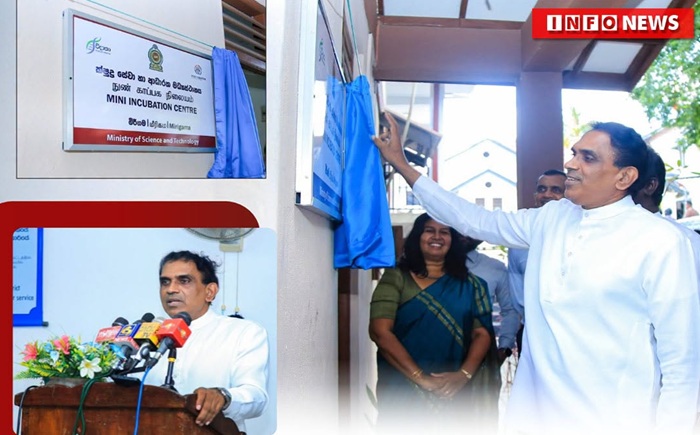
Image credit: Newswire.
Sri Lanka’s first Mini Incubation Centre has opened in Mirigama, providing local food producers with access to facilities intended to help them improve their products, strengthen their businesses and reach wider markets. The centre is the first under a new programme by the Ministry of Science and Technology to bring practical technology support closer to micro and small-scale entrepreneurs.
The facility was inaugurated on Wednesday, 4 November, by Science and Technology Minister Chrishantha Abeysena at the Vidatha Resource Centre, located within the Mirigama Divisional Secretariat premises. Its opening marks a local milestone and the start of a programme planned to extend similar support across all districts of Sri Lanka.
For rural food entrepreneurs, developing a product for sale involves more than preparing a recipe. Processing methods, product handling, packaging and labelling all contribute to how goods are prepared and presented to customers. Yet small producers may have limited access to the specialised equipment and infrastructure that can help them improve their production practices and meet market standards.
The new centre is intended to address some of these challenges by providing food producers with access to modern equipment and facilities for hygienic processing, packaging and labelling. The programme also aims to offer affordable access to specialised equipment and guidance, helping entrepreneurs improve product quality, develop their businesses and explore opportunities to reach wider markets.
Practical facilities for small-scale food businesses
Many micro and small-scale food businesses begin with local knowledge, skills and limited resources. As an enterprise grows, however, a producer may need facilities or equipment that are difficult to access independently. This can make it challenging to improve the consistency of production, prepare products for sale at a larger scale or meet the expectations of new customers.
The Mini Incubation Centre in Mirigama is designed to support producers at this point in their business journey. Access to equipment for hygienic food processing can assist entrepreneurs in preparing products in a suitable setting. Packaging and labelling facilities can help them present their goods more professionally and consistently.
These stages are important elements in preparing food products for market. Suitable processing practices help producers focus on product quality, while packaging and labelling allow goods to be presented clearly to prospective customers. For an entrepreneur who has been producing on a small scale, access to these facilities may provide a practical opportunity to refine a product and consider how it could be offered to a broader market.
The centre’s role is not limited to providing machinery. By making specialised equipment more accessible and pairing that access with guidance, the programme seeks to help rural producers strengthen their businesses. The aim is to enable entrepreneurs to improve the quality and standards of locally manufactured products, scale up their operations and explore new commercial opportunities.
The progress of each business will depend on its individual products, capacity and market circumstances. Nevertheless, the centre provides a resource that may help address one of the practical barriers faced by small-scale producers: access to appropriate facilities for processing and preparing their goods.

AI-generated illustration based on the source image; it is not a photograph of the Mirigama centre or its users.
A planned network across every district
According to the Ministry of Science and Technology, 25 Mini Incubation Centres are planned at selected Vidatha Resource Centres across Sri Lanka, covering all districts. The programme is expected to benefit around 2,500 entrepreneurs engaged in micro-scale food production. Rs. 100.9 million has been allocated for the programme’s implementation in 2026.
The proposed network reflects an effort to extend technology facilities and support beyond major commercial centres. For producers, the availability of equipment closer to their communities may make it easier to access resources that could otherwise be beyond the reach of a small business. It also recognises that entrepreneurs with promising local products may need practical infrastructure and guidance as they seek to improve their production and grow their businesses.
The planned reach of 25 centres and approximately 2,500 entrepreneurs is significant. The Mirigama facility provides the first operational example of the programme, while the wider rollout is intended to make similar support available in other parts of the country.
Opening the centres is an important initial step. Their longer-term contribution will depend on how effectively entrepreneurs can access the facilities and apply the support to their businesses. Attention to the needs of local producers, alongside access to suitable equipment and guidance, will be important as the programme develops.
Helping local products reach wider markets
For small food producers, reaching new customers involves more than making a product that people enjoy. Consistency, suitable processing, presentation and clear labelling can all contribute to a product’s readiness for wider sale. These elements may become increasingly important as an entrepreneur moves from small batches towards more regular production.
The Mirigama centre aims to help local businesses strengthen these foundations. By providing access to modern equipment for hygienic processing, packaging and labelling, it offers producers a place to work on the quality and presentation of their goods. The facilities are intended to help entrepreneurs scale up and reach wider markets, although each business will still need to identify its customers and build its own commercial pathway.
This initiative will interest readers in Sri Lanka and overseas who follow rural enterprise, local food production and small-business development. Food producers are part of the country’s wider enterprise landscape, and improved access to practical facilities may help more entrepreneurs develop local products into stronger businesses.
eLanka has previously covered Sri Lankan ventures that connect local resources and products with market opportunities, including Aurganica’s plans for king coconut water exports and the Hyacinthesis Accelerator’s support for village enterprises developing products from water hyacinth. These initiatives have different aims, but each illustrates the potential value of practical support in helping local businesses develop products and consider new routes to market.
The Mirigama centre offers a grounded example of that potential. With the first facility opened and 25 centres planned across the country, the programme sets out to make modern equipment and support more accessible to micro and small-scale food producers.
For rural entrepreneurs, access to suitable facilities can be an important step between making a product and preparing it for wider commercial opportunities. The centre in Mirigama is intended to help provide that step, while the planned network aims to extend similar opportunities to producers throughout Sri Lanka.
This article was written based on the source https://www.newswire.lk/2026/11/05/first-mini-incubation-centre-opens-in-mirigama/, kindly email us at info@eLanka.com.au if any information needs to be corrected.
At eLanka, we respect the rights of creators. If we have used an image you own and you’d like it removed, please email us at info@elanka.com.au and we’ll handle it promptly.
Thanks.
eLanka team
eLanka Disclaimer
Content published on eLanka may be created by the eLanka team, submitted by contributors or third parties, reproduced or adapted from other sources with appropriate source acknowledgement, or provided as promotional/advertising material by our clients. While eLanka takes reasonable care in preparing and publishing content, we do not warrant its completeness or accuracy. Views expressed are those of the respective authors or contributors and do not necessarily represent the views of eLanka. Third-party contributors, content providers and advertisers are responsible for the accuracy of material they supply and for ensuring they hold the necessary rights and permissions for its publication. Advertising and promotional content should not be regarded as an endorsement by eLanka of any product, service or claim.