How A St. Benedict’s College Student Became A Buddhist Monk – by Thomas Pavey
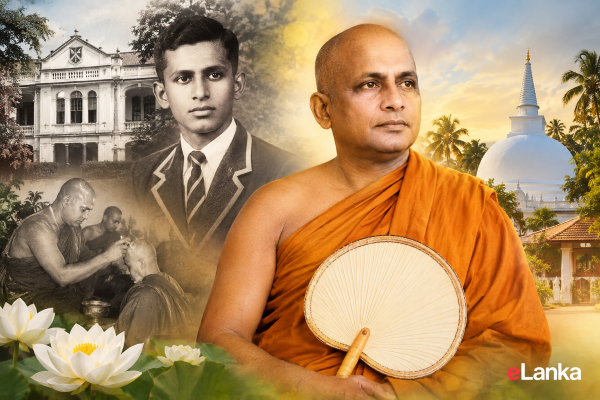
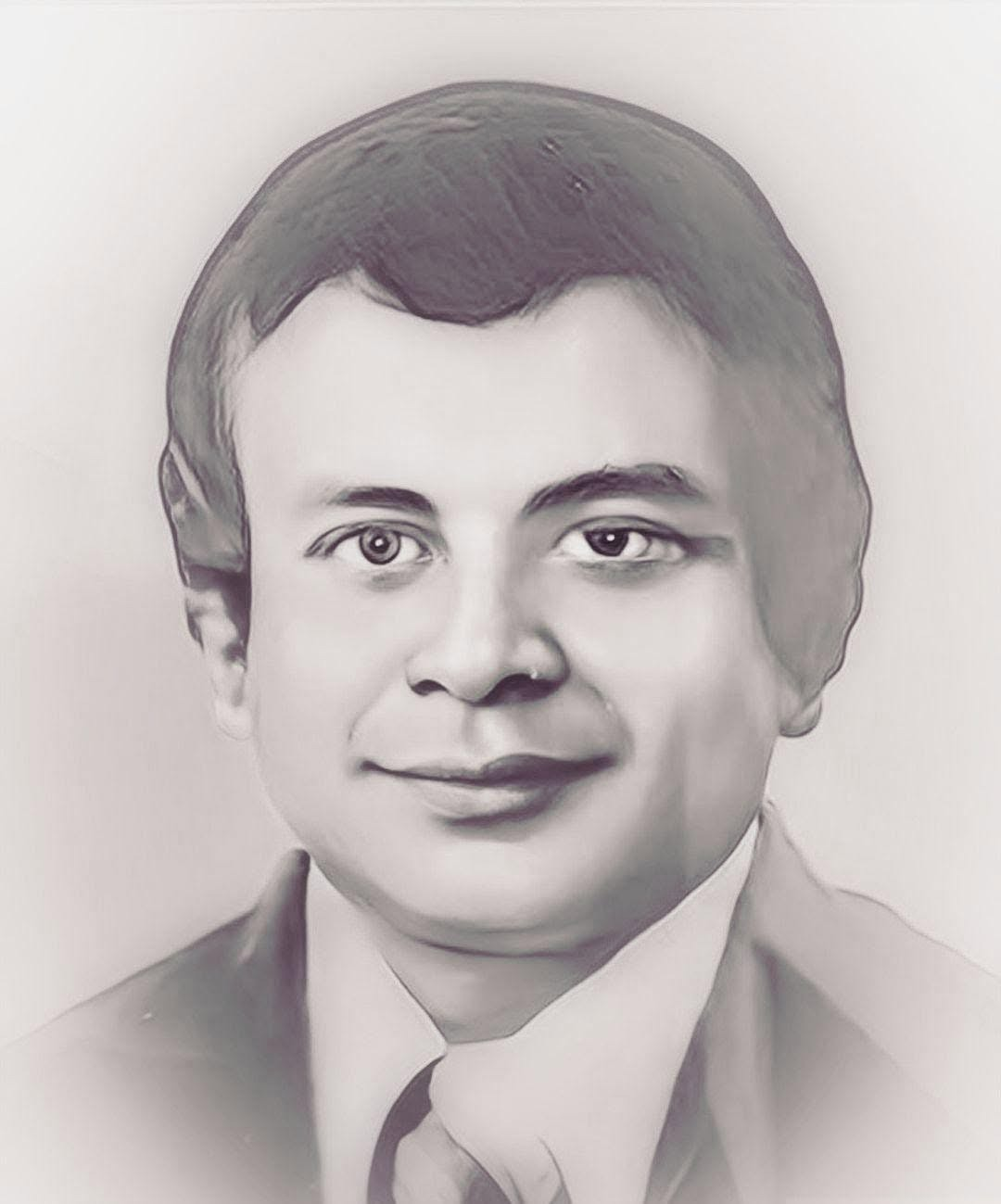
Having researched the life of a St. Benedict’s College boy named Victor Emmanuel Pulle later to become Ven.Kotahena Soma Thera, I hold him in sacred memory, as a Buddhist Saint, worthy I think, to be called an “Arhant”.
The word Arhant in Thervada Buddhism comes from the Paii, meaning one who has overcome the mental defilements of greed, hatred and delusion.
The Ven. Kotahena Soma Thera, received his entire education at St. Benedict’s College, Colombo. St. Benedict’s also produced two other students to the noble Sangha; Angarika Dharmapala and Narada Nayaka Thera.
Victor was born on 23 December 1898 in Kotahena.
He was ordained a Buddhist monk on November 6, 1936 in Moulmein, Burma, takeing the name, Kotahena Soma Thera and he passed away at the Vajirarama Buddhist Temple, Bambalapitiya, Colombo 4 on Tuesday February 23, 1960.
I was a fifteen years of age at the time of his passing and although I did not know him personally, he was a household name. I witnessed his crowded funeral since our family lived across the road from the holy Temple and my maternal grandparents lived in a small house immediately adjacent to the Temple on Vajira Road.
Victor’s father was Emanuel Mariam Perera Pulle and his mother, Theresa Rodrigo Babapulle.
They belonged to the Sri Lankan Colombo Chetty community.
Interestingly, the Chetty community historically known as Setthi, originally inhabited areas around Benares and the Setti people’s contribution to Buddhism is legendary, going back to very early times.
It was a Setthi named Sudhata, who became known as an “Anarhapindika” – because of his unparalled generosity towards the Buddha.
Prof. Hema Ellawala stated in the book “History of Early Ceylon” that the mother of Prince Vijaya and Princess Sangamitta, Vedeshi Devi. was the daughter of Deva Setthi-nater, and it was his son (Vedeshi’s brother) Prince Sumitta, who accompanied the sacred Bo sapling to Anuradhapura – at the request of King Devanampiyatissa.
So it is not surprising that a young Colombo Chetty, Victor Emmanuel Pulle, became a member of the Buddhist Sangha in Sri Lanka.
A story goes that when Victor once received a one Rupee note from his mother as pocket money, he did not rush out to buy lollies as most young boys would most likely do; instead he walked three miles to a bookshop in the Fort, looking for a book that cost one Rupee or less.
Finding an English translation of the Dharmapada being sold for a Rupee, he quickly bought it and read it again and again.
This was Victor’s introduction to the Buddhism.
He received his entire education at St. Benedict’s College, Kotahena.
St. Benedict’s was known for its academic rigor, where depth of understanding took precedent over rote learning. The deep intellectual engagement coupled with greath pedagogy and the high expections placed on students, provided Victor with the scfolding to succeed.
The depth of his thinking and insight is evident in the many books he later authored. He had grown to develop a powerful analytical mind and a high degree of critical sophistication, in that he had the ability to recognise, and perforce to produce, a well formed argument, a sound inference, an elegant proof, a plausible explanation and a cogent proposal for remedial action.
His love and devotion to the Buddha’s dharma and way of life, is epitomised by the legacy he left in the thirty books he authored, and the numerous articles he wrote for the periodical “Bodhi Leaves”.
His contribution to Buddhism in Sri Lanka began around 1920 when he met Oliver De Soiysa, one of the founding members of the “Servants of the Buddha” organisation.
In the late 1920’s having heard from the Chinese scholar Wong Mow Lam who was in Ceylon at the time, prompted him to lead a delegation to to China 1934, with his friend Khaminda Thera.
Come 1939, at the invitation of Sir Baron Jayatilaka, Ven. Soma led a delegation to Bangalore and was able to secure from the Government of Mysore a site for a Buddhist Centre.
In June 1957 Ven. Soma Thera led the first Theravada Buddhist Delegation to Germany where he made an address to members of the Buddhist Society, at Das Buddhistische Haus in Frohnsu, Berlin.
In conclusion, we find today, that “mindfulness” is very much in vogue.
It has become a global trend shifting from its ancient roots into a widely commercialized tool of modern wellness centres.
I find however that trying to turn a largely Buddhist philosophy into a commercial product has its limits.
Should anyone wish to reach at its kernal, I would recommend reading the Ven. Soma Thera’s famous work “The Way of Mindfulness“.
It can be downloaded from the IBC E- Library. A digital copy is also available via the Buddhist Spirituality PDF Library.
I think all Sri Lankans can be very proud of this great son of our land, the Ven. Soma Maha Thera, who through his life and writings, contributed not only to Buddhist philosophy, but more importantly, towards the assent of human civilisation.