The India–Sri Lanka Foundation has approved 13 projects valued at approximately Rs. 21 million, creating a new platform for cooperation in education, culture, agriculture, science and technology, and strengthening practical links between institutions and communities in the two countries.
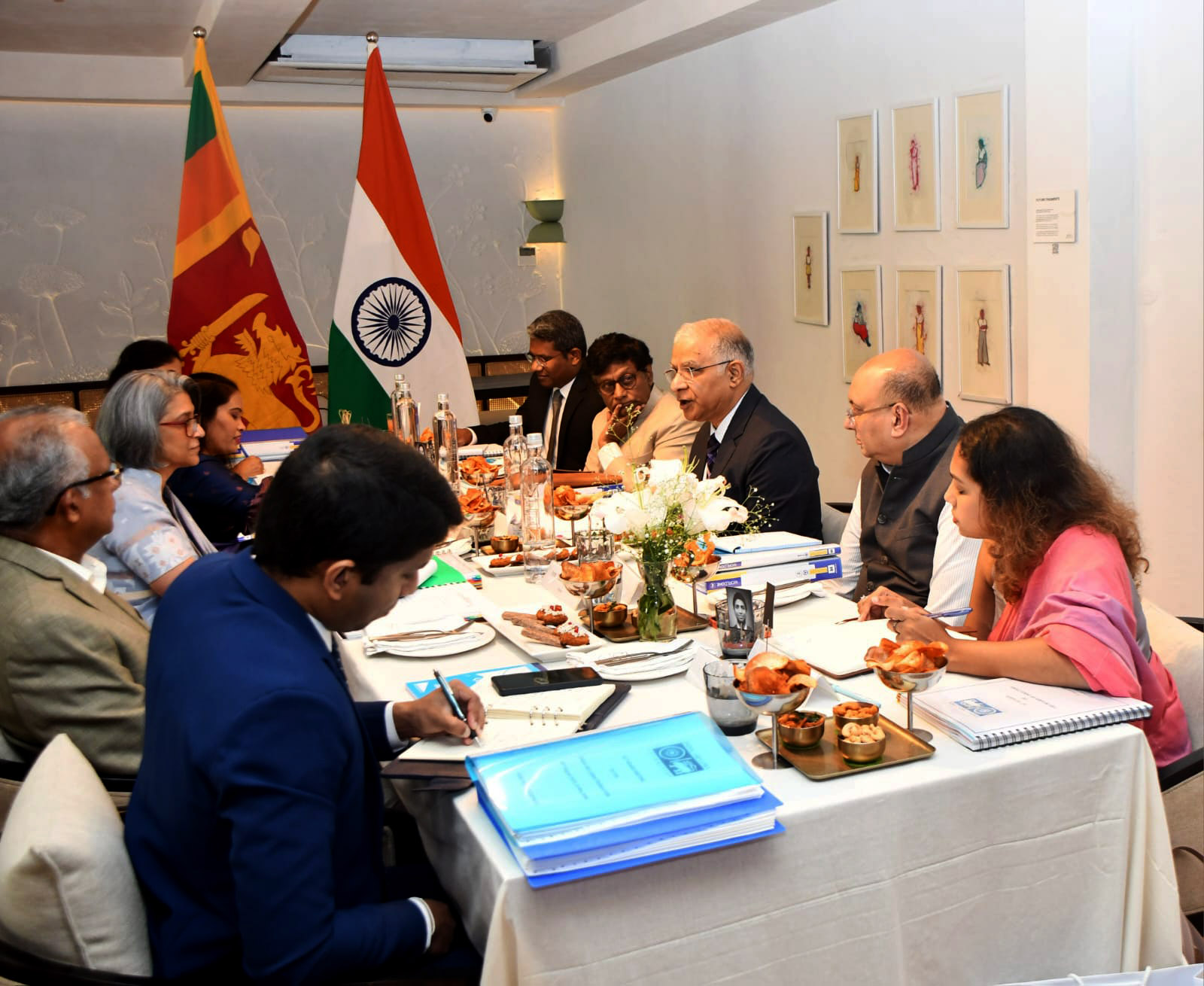
The decisions were taken at the Foundation’s 41st Board of Directors meeting, which was held in New Delhi on 28 August 2026. The meeting was co-chaired by Mahishini Colonne, Sri Lankan High Commissioner to India, and Santosh Jha, Indian High Commissioner to Sri Lanka. Board members Prasad Kariyawasam, Mohan Kumar and Ashok Malik also attended the meeting.
The approval of the projects represents an important investment in people-to-people cooperation, particularly because the Foundation’s work is directed towards exchanges and initiatives involving students, academics, researchers, professionals and artists. Although the individual projects were not detailed in the announcement, the approved areas indicate a broad approach in which educational advancement, cultural understanding, practical research and community development are treated as mutually reinforcing priorities.
A carefully assessed selection process
The scale of interest in the Foundation’s project programme was reflected in the number of proposals received by its Colombo Secretariat. More than 500 proposals were submitted for consideration, after which 137 were shortlisted through a vetting process.
From that shortlisted group, 20 proposals were submitted to the Board of Directors for final consideration. Thirteen projects were subsequently approved, representing a selective process intended to identify initiatives with clear value for cooperation between India and Sri Lanka.
The sequence, from more than 500 initial proposals to 137 shortlisted submissions, followed by 20 recommendations and 13 approvals, demonstrates the level of scrutiny applied before financial support was granted. It also indicates the considerable interest among organisations and individuals seeking to develop projects connected with education, culture, agriculture, science and technology.
A further 149 proposals were received from Indian nationals by the New Delhi Secretariat, even though a formal call for proposals had not been issued before the meeting because of financial constraints. The response suggests that the Foundation’s activities have gained increasing public recognition, while also pointing to the potential for a larger programme if additional resources become available.

Education as a foundation for lasting cooperation
Education remains one of the most effective means through which long-term relationships can be developed, since exchanges between students, teachers and academic institutions provide opportunities for knowledge-sharing that extend beyond a single event or funding cycle.
Projects supported through the Foundation’s programme can assist in building connections between educational institutions, encouraging the exchange of expertise and enabling participants to understand the social and cultural environments of both countries. Such activities may be particularly valuable for students and early-career researchers, for whom access to new academic networks and professional perspectives can influence future study and employment.
The emphasis on academics and researchers also recognises that cooperation is not limited to classroom learning. Universities, technical institutions and specialist organisations can contribute to research partnerships, conferences, training programmes and other forms of knowledge exchange, allowing expertise to move between Sri Lankan and Indian institutions in an organised and constructive manner.
For Sri Lankan families living in Australia, the United Kingdom, Canada, New Zealand, the United States and other countries, these developments remain relevant because educational and professional connections between Sri Lanka and India form part of a wider network of regional relationships. eLanka’s community news platform continues to share positive stories involving Sri Lankan achievement, learning, enterprise and cultural engagement around the world.
Culture and the shared human dimension
Cultural cooperation provides another important dimension to the Foundation’s work. India and Sri Lanka possess distinct artistic traditions, languages and regional identities, while also sharing centuries of cultural contact across the waters of the Indian Ocean.
Support for artists and cultural practitioners can encourage exhibitions, performances, workshops, publications and collaborative projects that allow these connections to be examined and celebrated in contemporary ways. Such exchanges are particularly valuable when they place artists, students and audiences in direct contact with one another, rather than treating culture as a static display of heritage.

The cultural component is also relevant to younger generations of Sri Lankans living outside the country, many of whom engage with their heritage through music, dance, visual art, literature, religious traditions and community events. Carefully designed exchange programmes can help ensure that cultural knowledge remains active, accessible and capable of developing in new settings.
Sri Lanka’s own history provides a strong foundation for such conversations. The country’s ancient hydraulic civilisation, including its sophisticated reservoirs, canals and irrigation systems, demonstrates the importance of knowledge exchange, adaptation and collective responsibility in the development of communities. eLanka has previously highlighted this aspect of Sri Lankan heritage in its feature on the ancient hydraulic civilisation of Sri Lanka, a subject that continues to offer valuable lessons for contemporary education and research.
Agriculture, science and technology
The inclusion of agriculture, science and technology among the approved areas reflects the practical character of the Foundation’s mandate. Agriculture remains closely connected with food security, rural livelihoods, environmental management and the preservation of local knowledge, while scientific and technological cooperation can support innovation across a wide range of fields.
Research exchanges may assist institutions in comparing conditions, methods and technologies, while professional collaboration can help translate knowledge into solutions with direct community benefits. In agriculture, this could involve the sharing of research-based practices, training or technical knowledge. In science and technology, it could involve academic collaboration, specialist exchanges or initiatives designed to strengthen skills and institutional capacity.

The Foundation’s broad portfolio is therefore significant because it does not isolate cultural development from scientific progress. Instead, it recognises that successful cooperation can be educational, creative and practical at the same time. Students may become researchers, researchers may work with professionals, and cultural practitioners may contribute to a deeper understanding of the communities in which technical projects are implemented.
This integrated approach offers considerable potential, particularly if the approved initiatives are documented carefully and their results are shared with institutions and community organisations. Clear reporting can help successful projects become models for future applications, while public awareness can encourage more suitable proposals from schools, universities, research bodies, professional associations and arts organisations.
The Foundation’s role since 1998
The India–Sri Lanka Foundation was established in 1998 through an agreement between the two governments. Its purpose has been to promote cooperation through economic, scientific, educational, technical and cultural activities, with particular attention given to exchanges involving people and institutions.
Over the years, this mandate has provided a framework for smaller, focused initiatives that may not otherwise receive access to cross-border support. The Foundation’s value lies not only in the financial assistance attached to individual projects, but also in its ability to bring together participants who can continue working collaboratively after a particular programme has concluded.
The Board’s recognition of increased public interest in the Foundation’s activities is therefore noteworthy. The number of proposals received suggests that community organisations and professionals see merit in developing practical partnerships, while the number of applications also highlights the importance of ensuring that the Foundation has sufficient financial capacity to respond to credible demand.
The Board noted that an expanded Corpus Fund would enable the Foundation to support more initiatives and provide additional opportunities for exchanges between people in India and Sri Lanka. Such an expansion could broaden access to the programme, although the careful assessment of proposals would remain essential to preserving the quality and purpose of the Foundation’s work.
A constructive opportunity for the future
The approval of 13 projects worth approximately Rs. 21 million is a positive development for education, culture, agriculture, science and technology, while the transparent selection figures provide a clear indication of the programme’s competitive nature.
The participation of Mahishini Colonne, Santosh Jha, Prasad Kariyawasam, Mohan Kumar and Ashok Malik at the 41st Board meeting reflects the institutional structure through which the Foundation’s decisions are made. More importantly, the approved programme places students, academics, researchers, professionals and artists at the centre of cooperation.
For Sri Lankans living in Australia and around the world, the announcement demonstrates how constructive relationships are maintained through education, creativity, research and shared community interests. It also indicates that the strongest connections are often built through modest but purposeful projects that allow individuals to learn from one another and develop lasting professional and cultural relationships.
With continued public interest, sound assessment and a stronger financial base, the India–Sri Lanka Foundation has the capacity to support an even wider range of initiatives. Its work since 1998 remains a useful example of how structured exchanges can transform goodwill into practical cooperation and create opportunities for communities in both countries.
Source: https://www.newswire.lk/2026/08/29/india-sri-lanka-foundation-approves-13-projects-worth-rs-21-million/
This article was written based on the source https://www.newswire.lk/2026/08/29/india-sri-lanka-foundation-approves-13-projects-worth-rs-21-million/, kindly email us at info@eLanka.com.au if any information needs to be corrected.
(adsbygoogle = window.adsbygoogle || []).push({});
At eLanka, we respect the rights of creators. If we have used an image you own and you’d like it removed, please email us at info@elanka.com.au and we’ll handle it promptly.