News & Community eLanka

eLanka

Friday, 25 Sep 2026
  • Home
  • Read History
  • Articles
    • eLanka Journalists
  • Events
  • Useful links
    • Obituaries
    • Seeking to Contact
    • eLanka Newsletters
    • Weekly Events and Advertisements
    • eLanka Testimonials
    • Sri Lanka Newspapers
    • Sri Lanka TV LIVE
    • Sri Lanka Radio
    • eLanka Recepies
  • Gallery
  • Contact
Newsletter
Sri lankan news
  • eLanka Weddings
  • Property
  • eLanka Shop
  • Business Directory
eLankaeLanka
Font ResizerAa
Search
  • Home
  • Read History
  • Articles
    • eLanka Journalists
  • Events
  • Useful links
    • Obituaries
    • Seeking to Contact
    • eLanka Newsletters
    • Weekly Events and Advertisements
    • eLanka Testimonials
    • Sri Lanka Newspapers
    • Sri Lanka TV LIVE
    • Sri Lanka Radio
    • eLanka Recepies
  • Gallery
  • Contact
Follow US
© 2005 – 2026 eLanka Pty Ltd. All Rights Reserved.
Home » Goodnews Stories Srilankan Expats » Articles » Lanka’s southern waters hide a gravity anomaly that baffles scientists
Articles

Lanka’s southern waters hide a gravity anomaly that baffles scientists

eLanka admin
Last updated: November 12, 2024 6:40 pm
By
eLanka admin
ByeLanka admin
Follow:
Share
7 Min Read
SHARE
Views: 328

Lanka’s southern waters hide a gravity anomaly that baffles scientists

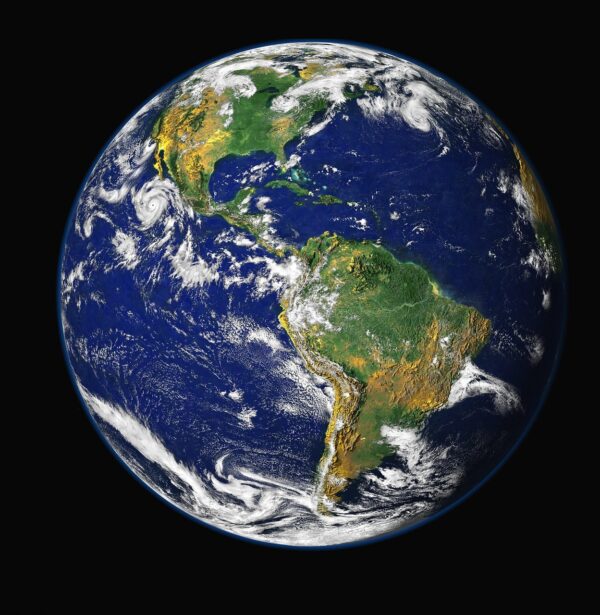
Earth-Elanka

The Earth beneath your feet is far from still. While we understand quite a bit about the Earth’s surface, the interior remains a mystery. (CREDIT: International Centre for Global Earth Models / Wikimedia, CC BY 4.0)

Source:Island

One of the most puzzling phenomena lies beneath the Indian Ocean, south of Sri Lanka, where a massive gravity anomaly known as the Indian Ocean Geoid Low (IOGL) has confounded researchers for decades, said a report published by The Brighter Side News.

It said that this anomaly, marked by a dramatic 106-meter drop in the ocean’s surface, is the lowest geoid anomaly on Earth. Its origin remains a mystery, making it one of the most intriguing unresolved problems in Earth sciences. “The existence of the Indian Ocean Geoid Low is one of the most outstanding problems in Earth Sciences,” says Prof. Attreyee Ghosh, an assistant professor at the Centre for Earth Sciences, Indian Institute of Science, Bangalore.

It said: The ground beneath you may seem stable, but the Earth is in a state of constant motion. While we have a solid understanding of the Earth’s surface, its interior remains largely unexplored. Even with all our technological advancements, we still haven’t developed probes capable of reaching the Earth’s crust, which is just 35 kilometers deep. To uncover the mysteries of the Earth’s core and mantle, we rely on indirect methods.

Though the Earth may look like a perfect blue sphere from space, it’s actually more like a lumpy, misshapen potato. This uneven shape is due to the non-uniform distribution of matter inside the planet, which creates variations in gravity. The movement of tectonic plates, which form mountains and valleys, also contributes to these deformations.

Oceans cover 71% of the Earth’s surface, so these irregularities also affect the shape of the ocean. Without tides and currents, the ocean water would settle into a smooth, wave-like form called a geoid. This geoid rises in areas where gravity is strong and sinks where gravity is weak. These variations in the ocean’s surface, known as “geoid anomalies,” are caused by the distribution of mass deep within the Earth.

One of the most intriguing geoid anomalies is located south of Sri Lanka. Known as the Indian Ocean Geoid Low (IOGL), this massive area is characterized by a significant drop in gravity, causing the ocean surface to dip 106 meters. This “gravity hole” has puzzled scientists for decades.

In a recent study published in Geophysical Research Letters, Prof. Ghosh and her colleagues, along with researchers from the GFZ German Research Centre for Geosciences, investigated the missing mass causing the geoid low.

Past studies attributed it to a remnant of an ancient plate that dived into the mantle beneath another plate millions of years ago, but there had been no convincing explanation until now.

Using numerical models of mantle convection, the researchers explained the mass deficit. Mantle convection involves movement within the Earth’s mantle, where hotter, lighter material rises, and cooler, denser material sinks due to gravity. This movement was driven by seismic tomography models, which use seismic waves to create a 3-dimensional picture of the Earth’s interior.

The researchers discovered that ‘low-density anomalies’—the presence of lighter materials in the upper to mid-mantle beneath the IOGL—caused the gravity low in this region. Mantle plumes, or rising abnormally hot rock, can result in low-density anomalies.

However, no known mantle plume exists beneath the IOGL. Instead, they found hot material rising from the African large low-shear-velocity province (LLSVP) or the African superplume, near the IOGL, which gets deflected eastward and terminates beneath the IOGL. The deflection is possibly due to the fast motion of the Indian plate.

The researchers used supercomputers to simulate how the area could have formed, going as far back as 140 million years. “The Earth is basically a lumpy potato,” said Ghosh. “Technically, it’s not a sphere, but what we call an ellipsoid, because as the planet rotates, the middle part bulges outward.”

To find a potential answer, Ghosh and her colleagues used computer models to set the clock back 140 million years in order to see the big picture, geologically. “We have some information and some confidence about what the Earth looked like back then,” she said. “The continents and the oceans were in very different places, and the density structure was also very different.”

From that starting point, the team ran 19 simulations up to the present day, recreating the shifting of tectonic plates and the behaviour of magma inside the mantle. In six scenarios, a geoid low similar to the one in the Indian Ocean formed. The distinguishing factor in all six models was the presence of plumes of magma around the geoid low, believed to be responsible for the formation of the “gravity hole.”

The plumes themselves originated from the disappearance of an ancient ocean as India’s landmass drifted and eventually collided with Asia tens of millions of years ago. “India was in a very different place 140 million years ago, and there was an ocean between the Indian plate and Asia. India started moving north and as it did, the ocean disappeared, and the gap with Asia closed,” Ghosh explained.

As the oceanic plate went down inside the mantle, it could have spurred the formation of the plumes, bringing low-density material closer to Earth’s surface.

“A geoid low or a negative geoid anomaly would be caused by a mass deficit within the deep mantle. Our study explains this low with hotter, lighter material stretching from a depth of 300 km up to ~900 km in the northern Indian Ocean, most likely stemming from the African superplume,” says Prof. Ghosh.



Click here to receive your free copy of the eLanka Newsletter twice a week delivered directly to your inbox!

TAGGED:Geophysical Research LettersIndian Ocean formedIndian Ocean Geoid LowProf. Ghosh
Share This Article
Facebook Whatsapp Whatsapp LinkedIn Email Copy Link Print
Previous Article Garlic Butter Shrimp Pasta Garlic Butter Shrimp Pasta – By Malsha – eLanka
Next Article Potassium Role of Potassium in Metabolism and Health – By Dr Harold Gunatillake
FacebookLike
YoutubeSubscribe
LinkedInFollow
- Advertisement -
eLankaproperty - sell property in Sri Lanka, Sri Lanka property for sale, Sri Lanka real estate, Sri Lanka property listings, property marketplace Sri Lanka, land for sale Sri Lanka, houses for sale Sri Lanka, apartments for sale Sri Lanka, commercial property Sri Lanka, luxury villas Sri Lanka, Sri Lankan property investment, buy property in Sri Lanka, Colombo property for sale, beachfront property Sri Lanka, development land Sri Lanka, investment property Sri Lanka, property advertising Sri Lanka, real estate agents Sri Lanka, property brokers Sri Lanka, overseas Sri Lankan property buyers, Sri Lanka property website, list property online Sri Lanka, affordable property listings Sri Lanka, Sri Lanka homes for sale, Sri Lanka land investment, property developers Sri Lanka, real estate marketplace Sri Lanka, Sri Lanka commercial real estate, sell land in Sri Lanka, sell house in Sri Lanka, Sri Lanka property portal, global property marketplace Sri Lanka, Sri Lankan real estate investment, property management Sri Lanka, buy land Sri Lanka, residential property Sri Lanka, holiday homes Sri Lanka, Sri Lanka investment opportunities, real estate advertising Sri Lanka, eLankaProperty
- Advertisement -
ALTAIR
- Advertisement -
Ad image
eLanka Wedding
Most Read
Lahiru Jayakody plastic-to-protein research

Sri Lankan-Born Scientist Lahiru Jayakody Leads Research Turning Waste Plastic into Protein-Rich µBites Cookies

Colombo International Book Fair 2026

Colombo International Book Fair 2026 Opens Today: Shehan Karunatilaka Inspires Young Writers, and Bring Your Own Bag

Sri Lanka Fitch upgrade

Central Bank Governor: Fitch Upgrade Reflects Sri Lanka’s Progress and a Shift to Sustainable Investment

Sri Lanka Welcomes 107,000 Tourists in Three Weeks as Australia Ranks Third Source Market

Sri Lanka Welcomes 107,000 Tourists in Three Weeks as Australia Ranks Third Source Market

Yohani Ziro Festival

Yohani Takes Sinhala Music to the Himalayas: Sri Lankan Star Set for Historic Ziro Festival Debut

Related News
Kaleidoscope-eLanka
Articles Savithri Rodrigo

Kaleidoscope 333 – Fitch Upgrades, Inflation, HYROX, Markets, Breakaways, Viet Nam Yums & more

A Diaspora’s Love Letter to Sri Lanka-by Harold Gunatillake
Articles Dr Harold Gunatillake

A Diaspora’s Love Letter to Sri Lanka-by Harold Gunatillake

Articles Sunil Thenabadu

Aisha Karunatilleke Wins best radio presenter in the 4th Calin awards 2026 Being herself, A Sought After Radio Presenter-by Sunil Thenabadu

Sri Lanka plantation communities education
Articles

From ‘Pulle Madu’ to Medical School: Record University Intake Signals a Turning Point for Sri Lanka’s Plantation Communities

SLIIT Honours Its Largest Ever Graduating Cohort of Over 3,500 and Opens Sri Lanka’s First Dedicated LJMU Learning Facility
Articles

SLIIT Honours Its Largest Ever Graduating Cohort of Over 3,500 and Opens Sri Lanka’s First Dedicated LJMU Learning Facility

  • Quick Links:
  • Articles
  • DESMOND KELLY
  • Dr Harold Gunatillake
  • English Videos
  • Sri Lanka
  • Sinhala Videos
  • Obituaries
  • eLanka Newsletters
  • Sunil Thenabadu
  • Dr. Harold Gunatillake
  • Trevine Rodrigo
  • Tamil Videos
  • Sinhala Movies
  • Photos
  • eLanka Newsletter

eLanka

Your Trusted Source for News & Community Stories: Stay connected with reliable updates, inspiring features, and breaking news. From politics and technology to culture, lifestyle, and events, eLanka brings you stories that matter — keeping you informed, engaged, and connected 24/7.
Kerrie road, Oatlands , NSW 2117 , Australia.
Email : info@eLanka.com.au / rasangivjes@gmail.com.
WhatsApp : +61402905275 / +94775882546
  • About eLanka
  • Terms & Conditions

Disclaimer:
eLanka is committed to sharing positive and community-focused stories. We do not publish or endorse political, religious, or ethnic viewpoints. The content published on eLanka, including articles and newsletters, reflects the opinions and views of the respective authors and not those of eLanka. eLanka accepts no responsibility or liability for the accuracy, completeness, or consequences of any content provided by contributors.

(c) 2005 – 2025 eLanka Pty Ltd. All Rights Reserved.