Raily History: Journey to Batticaloa-by Dishan Joseph
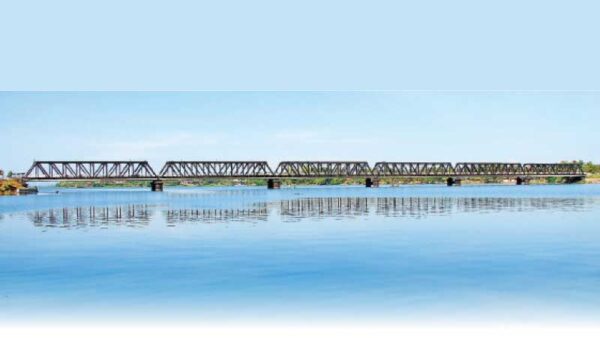
Kallady Bridge Batticaloa
Source:Dailynews
The Sri Lanka Railways has an inspiring and magnificent history. The amazing journey of almost two centuries continues to dazzle railway enthusiasts, from across the world. There are many foreigners who take time to discover and document these timeless train journeys. The fascinating routes are Colombo – Badulla, Colombo – Jaffna and Colombo – Galle. Perhaps one of the lesser-known routes is the Colombo – Batticaloa line which is bestowed with its own story, laden with determination and human endeavour.
 The Eastern Province of Sri Lanka has its unique identity with an abundance of natural scenery. As the railway lines progressed under the British administration, these pioneer engineers extended the tracks, creating the Batticaloa Line. At that time, these regions were not well connected to Colombo, given the long distance. With the opening of the Northern Line pressing towards Jaffna, the Maho Railway Station was opened in 1903, which was a boon to the people of that area. As the demand for rail travel increased the Northern Line was extended to Anuradhapura in 1926, and the Maho Station was upgraded to a Junction Station, which took on a significant position in Ceylon Government Railway (CGR) history. From then on, progress was made to construct a line to Batticaloa by 1928, covering a distance of 212 kilometres with 31 stations. Since the 1950s under the systematic planning of B.D. Rampala, General Manager, Railways, the light rail tracks were enhanced to strong single gauge tracks.
In that era, the Eastern Province was an isolated part of this island, with limited access and communication. Those travelling from Colombo to Batticaloa had only two options – to travel by steamship or journey by bullock cart carrying food and cooking utensils. It took many days to reach the destination by road, passing patches of dense jungles. Prior to this, these regions were really remote. Today readers will be surprised that steamships once operated to Batticaloa.
There is an old Anglican Church source that records how the first Bishop of Ceylon, Rev. James Chapman travelled to Batticaloa on horseback in February 1850. He had to take the route via Badulla. On reaching Batticaloa, the Government Agent (GA) Atherton had to take him a further three miles by canoe to the GA’s residence.
By the 1870s, there was a steamship named SS Serendib which charged Rs. 190 for a return ticket by sea from Colombo to Batticaloa. The vessel came only once a week. The East had two seaports – one at the Dutch Bar (where Admiral Spilbergen landed) and the second at Kalkudah Bay. In my previous article on the Udarata Menike train, it mentioned how the planters of Kandy demanded a railway line to transport their coffee stocks to the Colombo Harbour. Likewise, there was a need in Batticaloa to transport top quality rice and coconuts. Blessed with rivers and lagoons this region produced a bountiful harvest.
The famous coconut estates were Easter Seaton, Rockwood and Springfield. In the early days, bullock carts had to haul the rice sacks on the long journey. The hard-working carters faced some risk, travelling along lonely roads. I was stunned to realise that paddy was exported to South India, from these fertile lands. In 1907, a severe cyclone unleashed its fury on the coconut estates of Batticaloa. The planters continued to ask for a railway line. During this time, there was another crisis in communication. Letters were delivered by human couriers, who travelled by foot.
Owing to various situations, the hand-carried post was delayed. For example, a man had to walk an exhausting 38 miles from Moneragala to Batticaloa with the letters, which took almost 24 hours to reach the destination. Sometimes official letters were received late, to the dismay of the Governor and his staff. In 1903, Governor West Ridgeway urged the initiation of trains to Batticaloa. His arguments were supported by Balasingham, a member of the State Council and J.A. Setukavalar, an eminent proctor of the Supreme Court.
There were two routes proposed for the train to the East. The first was from Badulla, which would be a distance of 92 miles. But the route was along winding rocky roads that required new bridges. The travelling time was calculated at 24 hours, an entire day. The alternate plan was to extend the rail line from the Maho Station. The new distance was longer – nearly 160 miles. However, the travel time was faster and safer. The plus point was that the route lay on flat open plains. There were two rivers to cross, one at Manampitiya and the other at Oddammavadi. In addition, the new line from Gal Oya would facilitate the rail lines to Trincomalee. Thus, in 1928, the first train arrived at the Batticaloa Station to the joy of thousands of villagers.
Udaya Devi
In the early days, the train began at Colombo Fort and then proceeded to Maho Junction Station. From here, she journeyed past Yapahuwa, Konwewa, Morogollagama, Siyambalagamuwa, Nagama, Awukana, Kalawewa, Kekirawa, Palugaswewa, Habarana, Gal Oya Junction, Minneriya, Hingurakgoda, Jayanthipura, Parakum Uyana, Polonnaruwa, Gallella, Manampitiya, Welikanda, Punani, Valaichenai, Kalkudah, Eravur and finally reaching the terminal point at Batticaloa. Today, Udaya Devi is pulled by an M-4 Canadian diesel electric locomotive. This train journey unfolds a variety of scenes that include lush green patches of jungle, dry and parched terrain, contrasting with lakes and grasslands.
 Yapahuwa is a town that was once a regal city. The regal citadel rising majestically from a granite rock was once a formidable defence. The ornamental stairway leading to the citadel is truly awe-inspiring. As the train moves forward one can see solitary elephants meandering, a herd of sambur quickly retreating to the bushes disturbed by the approaching train or a lazy buffalo bathing in the mud. These visuals begin at Habarana passing through Minneriya. The latter is home to a wildlife sanctuary where elephants gather, attracting tourists. Udaya Devi then passes the ancient kingdom of Polonnaruwa. This area was once the most productive land of rice cultivation in Sri Lanka. Before reaching Valaichchenai, large electricity towers are visible.
The town of Valaichchenai was once the vibrant centre of the Eastern Paper Mills Corporation, which was established in 1955. Senior citizens recollected that in the 1970s, there were almost 3,000 staff engaged in the operations of this Paper Mill.
Being employed at the mill gave the men an elevated level of status in society.
Kallady Rail Bridge
Passing through this town the train heads to Eravur and then to Batticaloa. The town is a popular tourist destination with people coming to enjoy the serene Pasikuda beach. Decades ago the townspeople used to claim that they heard the sound of ‘singing fish’ near the Kallady Bridge. A retired person told me that in 1954, an audio recording was carried out near the Kallady Bridge with the help of a Catholic clergy named Fr. Lang who was attached to St. Michael’s College. The sound of the singing fish remains an aquatic mystery to this day.
The Kallady Bridge (old bridge) was erected in 1928 and named, Lady Manning Bridge after the wife of Governor William Manning. Taking the form of a truss bridge it is said to be one of the oldest iron bridges in Ceylon, primarily built to extend the rail line from the south of Batticaloa towards Kalmunai. Building this rail bridge was a daunting task at that time, as some steel components weighed around four tonnes. The bridge was prefabricated in the factory of Patent Shaft and Axletree, and transported by steamship from London. On reaching Ceylon, the parts were taken by rail to the desired site. Work crews had a challenge to secure these heavy iron parts into the moving waters of the Batticaloa Lagoon.
At that time, this was the longest railway bridge in Ceylon, before the building of the bridge across the Mahaweli River close to Manampitiya. There are many villages in Batticaloa. The vintage houses are so nice to see. The region has its own succulent cuisine. The Batticaloa Station is a busy place, like any large station. There is a captivating ornate structure at the entrance to the station. Udaya Devi continues her journey to and from Batticaloa, bringing thousands of rail commuters. She remains a vital link in the country’s overall rail network. There is also a night mail train service to Batticaloa.