Rumesh Tharanga Urges Support for Fellow Sri Lankan Athletes: ‘Please Extend That Love to Our Nation’
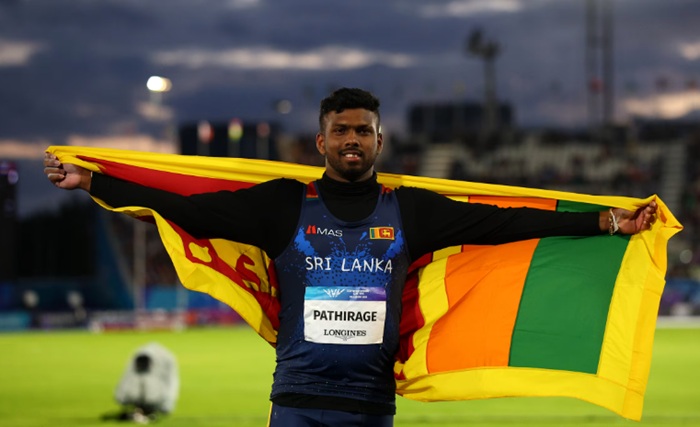
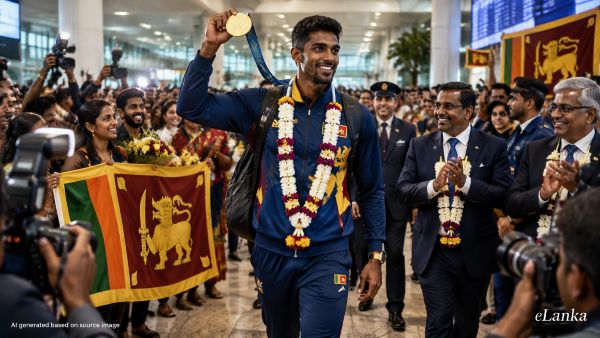
Sri Lankan javelin champion Rumesh Tharanga celebrates with the national flag. Image credit: Newswire.
Sri Lankan javelin champion Rumesh Tharanga has used the attention surrounding his damaged sporting equipment to make a wider and deeply considered appeal: that the generosity shown towards one successful athlete should also be extended to the many talented competitors who continue to face financial obstacles while pursuing their sporting ambitions.
In a statement reported by Newswire on 21 September 2026, Tharanga expressed gratitude to those who offered financial assistance after his javelins were recently damaged, but clarified that he would receive replacement equipment from the company responsible for the destruction. As a result, he said that he did not require financial support for the purchase of new javelins.
His response has placed the wider condition of Sri Lankan sport at the centre of public discussion, particularly the difficulty experienced by athletes who must personally fund equipment, travel, coaching, medical care and other essential requirements, even when they possess the ability to compete at national and international level.
A champion redirects public generosity
The scale of the public response appears to have surprised even Tharanga. According to his statement, offers of financial assistance had reached a level sufficient to purchase approximately 100 javelins, a powerful indication of the affection and respect he commands among supporters of Sri Lankan sport.
Rather than accepting the money, however, Tharanga urged well-wishers to direct similar assistance towards athletes who remain less visible, but whose potential may be equally significant. His appeal was not framed as a rejection of public kindness; instead, it represented an attempt to ensure that such kindness reaches competitors who may not yet possess an international profile or a platform capable of attracting widespread attention.
“Please extend that love to other athletes of our nation, because it is difficult to pursue sports in Sri Lanka.”
The statement carries particular weight because it has come from an athlete who understands the demands of elite competition and the importance of reliable equipment. In javelin, the quality, condition and suitability of the implement are not peripheral considerations. They form part of the athlete’s technical preparation, training consistency and competitive confidence.
For an emerging athlete, the cost of replacing a damaged or unsuitable piece of equipment may therefore represent far more than an isolated expense. It can determine whether training continues uninterrupted, whether participation in a competition is possible, or whether a promising sporting career is placed on hold.

AI-generated based on the source image. The image illustrates the concentration, technique and physical commitment required in the javelin event.
Integrity behind the appeal
Tharanga also emphasised that he had not accepted money, “or even a single rupee”, from anyone following the damage to his equipment. This clarification is central to the meaning of his statement, since his purpose was not to create a personal fundraising campaign, but to highlight the financial pressures confronting other athletes.
His position demonstrates a notable sense of responsibility. Public attention can easily become concentrated on a single individual, particularly when that person has achieved distinction in an event that has historically received less mainstream coverage than cricket or other major team sports. Tharanga has instead used his visibility to draw attention to competitors who may train on inadequate surfaces, share limited equipment, travel long distances to access facilities, or rely on family members who are already under financial pressure.
Many young Sri Lankans enter sport with considerable discipline and ability, while their families make sacrifices to provide footwear, clothing, transport and competition fees. In some cases, even basic equipment must be purchased privately, despite the athlete representing a school, club, district or the nation. These expenses can accumulate steadily, creating an uneven pathway in which talent alone is insufficient to guarantee sustained participation.
The challenge is particularly acute in athletics, where specialists require sport-specific equipment and coaching, and where progress is often built over years rather than achieved through a single competition. Javelins, throwing implements, training shoes, strength equipment and access to safe practice facilities all contribute to performance, yet many aspiring athletes must navigate these requirements without dependable institutional support.
The wider opportunity for Sri Lankan sport
Tharanga’s appeal offers an opportunity for a more organised approach to supporting emerging athletes. Individual donations can provide immediate relief, but long-term progress would be strengthened by transparent partnerships involving sporting bodies, schools, universities, businesses, charitable organisations and Sri Lankan communities overseas.
A corporate sponsorship programme, for example, could provide equipment grants to athletes selected through clearly published criteria. Businesses could support specific disciplines, regional training centres or junior development programmes, while community organisations could assist with travel, competition entry fees and educational support.
Such assistance would not need to be limited to elite competitors. A modest equipment fund for promising school-aged athletes could help preserve participation during the crucial transition from school sport to senior competition. Support for coaches and local facilities could also help ensure that young people from provincial areas are not excluded simply because they live far from the country’s principal sporting centres.
The business community has an important role to play in this process. Sponsorship of athletes is not merely a charitable activity; it can represent a meaningful investment in national identity, youth development and international recognition. Sri Lankan athletes who compete abroad carry the national colours into arenas that are watched by audiences across the world, and their achievements can encourage younger generations to pursue excellence in sport, education and professional life.
For Sri Lankan Australians and other members of the global Sri Lankan community, Tharanga’s message may also create a practical avenue for engagement. Community associations, sporting clubs, alumni groups and businesses abroad could consider supporting equipment drives, scholarship schemes or carefully administered athlete development funds, provided that the process remains accountable and the beneficiaries are identified transparently.
A promise after the 2026 Asian Games
Tharanga added that he intends to undertake a significant initiative following the ongoing 2026 Asian Games, although details of that initiative have not yet been announced. The announcement suggests that his present appeal may form part of a broader effort to assist athletes beyond the immediate circumstances surrounding his damaged equipment.
The initiative will be watched with interest because Tharanga’s personal experience gives him a clear understanding of both the technical requirements of high-performance sport and the financial limitations that affect many competitors. His success has provided him with a credible platform, but his latest statement indicates that he wishes to use that platform in a manner that benefits the wider sporting community.
The principle is straightforward: when one athlete receives public attention, the sporting system should use that moment to identify and support others. A javelin champion can inspire a generation through performance, but can serve that generation even more effectively by helping to create the conditions in which new champions are able to emerge.

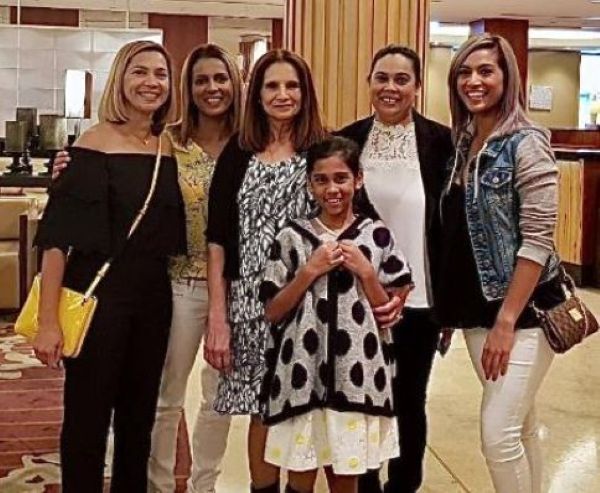
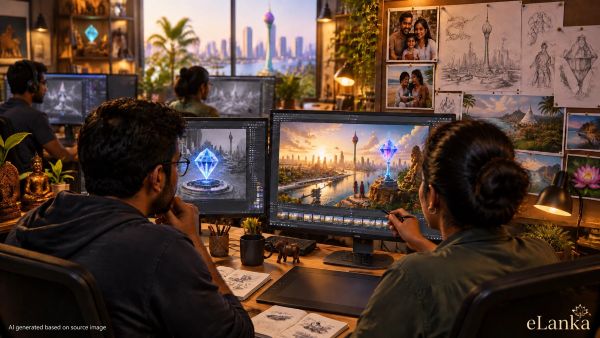
AI-generated based on the source image. The image represents the shared effort, discipline and community support required to develop emerging sporting talent.
A message that extends beyond one event
Rumesh Tharanga’s appeal has transformed a personal equipment difficulty into a broader conversation about fairness, opportunity and national responsibility. His gratitude towards supporters remains evident, but his decision not to accept money, together with his request that assistance be extended to other athletes, has given the statement an uncommon moral clarity.
Sri Lanka possesses considerable sporting talent across athletics, swimming, boxing, weightlifting, badminton, volleyball, cricket and numerous other disciplines. Yet talent requires consistent nourishment. Without equipment, coaching, competition exposure and financial stability, many promising athletes may never reach the level at which their abilities can be recognised.
Tharanga’s words therefore deserve to be considered not only as a request for donations, but as an invitation to develop a more comprehensive culture of sporting support. The most effective response would combine the generosity of individuals with the resources of the corporate sector and the administrative capacity of sporting institutions.
His message is ultimately one of national solidarity: the affection shown to a champion should not end with the champion. It should be carried towards the training grounds, school fields and modest sporting facilities where the next generation of Sri Lankan athletes is working towards its own opportunity.
For more positive stories about Sri Lankan athletes and sporting achievements, readers can explore eLanka’s sports coverage, as well as the platform’s wider collection of community news, events and inspiring stories from Sri Lankans around the world.
Source: https://www.newswire.lk/2026/09/21/sri-lankas-javelin-star-rumesh-tharanga-urges-support-for-fellow-athletes/
This article was written based on the source https://www.newswire.lk/2026/09/21/sri-lankas-javelin-star-rumesh-tharanga-urges-support-for-fellow-athletes/, kindly email us at info@eLanka.com.au if any information needs to be corrected.
At eLanka, we respect the rights of creators. If we have used an image you own and you’d like it removed, please email us at info@elanka.com.au and we’ll handle it promptly.