S. P. Foenander: Remembering the Sri Lankan Cricket Writer Known as ‘Ceylon’s Walking Wisden’

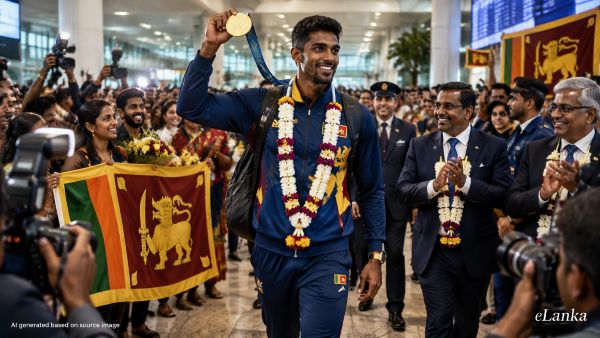
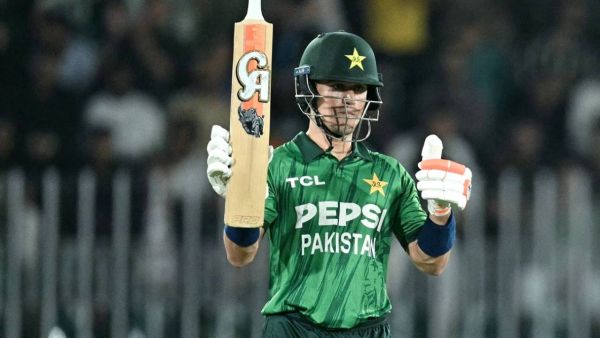
AI-generated illustration, not an archival photograph or a depiction of a documented match. No authentic photograph of Foenander is embedded in this article. The State Library of South Australia holds a well-documented photograph of him with Don Bradman in Colombo in 1930: view the catalogue record.
The story of cricket in Sri Lanka was recorded not only by players and administrators, but also by writers who gathered its scores, personalities and turning points into a lasting history. Among them was Samuel Peter Foenander, the Ceylonese cricket writer and historian known internationally as S. P. Foenander. A World-Class Sri Lankans feature shared by eLanka identifies him as “Sonny” and recalls the description “Ceylon’s Walking Wisden”, a tribute to the breadth of his knowledge of the game.
Foenander’s place in cricket heritage is particularly notable because, when he began documenting the sport, literature on cricket in Ceylon was sparse. His work helped preserve the local game’s record in a form that, according to the feature, also found readers beyond the island. Remembering him is therefore a way of recognising the importance of the writers and organisers whose efforts gave Ceylon cricket a recorded history and a wider audience.
Recording six decades of Ceylon cricket
Foenander’s best-known early work, Sixty Years of Ceylon Cricket, was published in 1924. It chronicled the period from 1863 to 1923 and included an introduction by P. F. Warner, the prominent English cricketer and writer. The book’s long historical span offered readers a guide to the development of cricket in Ceylon at a time when accounts of the island’s game were relatively limited.
The value of such a work extends beyond its match-by-match details. A sporting history gathers evidence of how a game develops: which institutions sustain it, how local players and clubs gain influence, and how encounters with visiting teams shape public interest. Foenander’s writing gave later readers a substantial record through which to understand Ceylon cricket’s early growth.
The sobriquet “Ceylon’s Walking Wisden”, reported in the eLanka feature, suggests the esteem in which his knowledge was held. It also conveys the particular role of a journalist who could interpret performances and series in a context where few locally produced cricket histories were available. The phrase should be understood as a reported description rather than a formal title, but it reflects the enduring reputation attached to his contribution.

AI-generated illustration of a period study. The person shown is fictional and is not a portrait of S. P. Foenander.
A writer, historian and cricket administrator
Foenander’s contribution was not confined to authorship. He is reported to have served as the first honorary recorder of what later became the Board of Control for Cricket in Sri Lanka, and newspaper obituaries published in 1962 described him as having shared in the administration of cricket in Ceylon from its earliest days. Those accounts also record service as honorary secretary of the Ceylon Cricket Association and honorary life membership of that association.
The story of cricket’s administration in Ceylon is also associated with efforts to give local clubs a stronger role in directing the game. Foenander is reported to have enlisted Dr John Rockwood in a campaign for cricket administration to pass into local hands. A committee drawn from Colombo’s cricket-playing clubs was established for that purpose, in a step described as marking the beginning of Ceylonese control of the game’s administration.
Rockwood, in turn, is reported to have travelled to England at his own expense in 1920 to encourage the Marylebone Cricket Club to send a team to Ceylon. These accounts place Foenander within a wider institutional history: cricket’s growth depended not only on matches and notable players, but also on the often less visible work of building organisations and advocating for local leadership.
Books that travelled beyond the island
Foenander’s later publications extended his record of cricket history and personalities. The eLanka feature identifies Famous Cricketers I Have Met, published in 1934, among his works. It also recounts that he presented a copy to the Australian cricket team, which included Sir Donald Bradman, as the team travelled to England. The account is a reminder that Foenander’s writing connected Ceylon’s cricket world with players and readers abroad.
His 1949 work, The History of Royal College vs St Thomas’ Cricket: Three Score and Ten, documented the long-running school rivalry. The Robert Menzies Collection records Foenander as the author and describes a copy inscribed to Robert G. Menzies in Colombo on 11 July 1950. That record identifies the book’s location as the Melbourne Cricket Club Library, giving Australian readers a tangible link to Foenander’s work.

AI-generated illustration of cricket heritage material; it does not reproduce Foenander’s books or any specific archival collection.
Foenander is also reported to have been appointed a Member of the Order of the British Empire for his services. His recognition, alongside his reported administrative roles and extensive writing, points to a career that bridged sports journalism, historical record-keeping and the organisation of cricket in Ceylon.
A documented connection with Don Bradman
For readers in Australia, one particularly vivid link is a photograph held by the State Library of South Australia. Its catalogue identifies S. P. Foenander with Don Bradman in Colombo in October 1930, during the Australian team’s tour of Ceylon. The image records Foenander presenting Bradman with a replica of the Temple of the Tooth.
The photograph is valuable not simply because it brings together two recognisable names in cricket history, but because it places Foenander within an international sporting encounter on home ground. It offers a documented point of connection between Ceylon’s cricketing community and Australian cricket, while illustrating the role of a local journalist and historian in that shared story.
The Australian connection continues through the surviving records of Foenander’s publications. The verified Robert Menzies Collection entry documents the 1949 Royal–St Thomas’ history at the Melbourne Cricket Club Library. However, the National Library of Australia catalogue URL supplied for this article currently resolves to a record for a different publication; it therefore does not confirm a Canberra holding of Foenander’s work. That distinction matters: archival references help readers trace a legacy, but they should be represented only as precisely as the catalogue evidence allows.
Why Foenander’s legacy matters
Foenander’s story honours more than a prolific writer. It recalls a period when cricket in Ceylon was still building the institutions, literature and local authority that would help it gain recognition. By chronicling the game from 1863 to 1923, writing about its celebrated figures and contributing to its administration, he helped preserve a record that could be read well beyond the island.
Sporting memory is sustained through both public milestones and careful documentation. The work of historians and journalists may be less visible than a century’s great innings, yet it allows each generation to understand how the game took shape. Foenander’s books, reported service and documented meeting with Bradman all form part of that inheritance.
A warm tribute to S. P. Foenander is, ultimately, a tribute to the people who gave Sri Lankan cricket a history on the page as well as on the field. His legacy invites renewed interest in the writers, organisers and local institutions that helped place Ceylon on the cricket map of the world.
Sources
- World-Class Sri Lankans feature shared by eLanka: https://www.facebook.com/eLanka.com.au/posts/pfbid02mBUzCBKRm1K8Zyi6V3qfumZrLZ24pPmWZTNYKQg1yMNRzg4d7UzdhfnwdruDYSgNl
- State Library of South Australia, Foenander and Bradman photograph record: https://collections.slsa.sa.gov.au/resource/PRG+682/16/108
- Robert Menzies Collection, biographical entry for Samuel Peter Foenander: https://menziescollection.esrc.unimelb.edu.au/biogs/E004286b.htm
- Robert Menzies Collection, History of Royal vs St Thomas’ Cricket: Three Score and Ten: https://menziescollection.esrc.unimelb.edu.au/biogs/E004284b.htm
- National Library of Australia catalogue record supplied for cross-checking; the record currently resolves to a different publication: https://nla.gov.au/nla.cat-vn2384942
This article was written based on the sources linked above, kindly email us at info@eLanka.com.au if any information needs to be corrected.
At eLanka, we respect the rights of creators. If we have used an image you own and you’d like it removed, please email us at info@elanka.com.au and we’ll handle it promptly.
Thanks.
eLanka team
eLanka Disclaimer
Content published on eLanka may be created by the eLanka team, submitted by contributors or third parties, reproduced or adapted from other sources with appropriate source acknowledgement, or provided as promotional/advertising material by our clients. While eLanka takes reasonable care in preparing and publishing content, we do not warrant its completeness or accuracy. Views expressed are those of the respective authors or contributors and do not necessarily represent the views of eLanka. Third-party contributors, content providers and advertisers are responsible for the accuracy of material they supply and for ensuring they hold the necessary rights and permissions for its publication. Advertising and promotional content should not be regarded as an endorsement by eLanka of any product, service or claim.