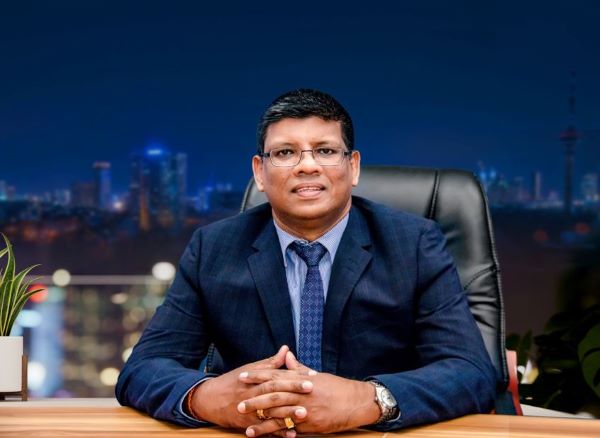
At the 2026 Macquarie Australia Conference, Macquarie Group Chief Executive Officer Shemara Wikramanayake delivered a detailed opening address that moved well beyond a conventional market update, setting out a broad thesis on Australia’s economic durability, the country’s strategic position within the Indo-Pacific, the practical lessons emerging from recent geopolitical tensions, and the immense industrial implications of artificial intelligence. As one of the most prominent Sri Lankan-Australian business leaders in global finance, she presented Australia not simply as a stable developed economy, but as a jurisdiction whose institutional settings, capital base, geography, and resource endowment have combined to create unusually strong foundations for the next phase of global growth.
The speech, when considered in full, was notable for its balance between reassurance and urgency. On the one hand, Australia was portrayed as possessing substantial macroeconomic strength, fiscal flexibility, and a resilient investment environment. On the other, it was argued that these advantages would only be fully realised if business and government continued to work in concert on infrastructure, permitting, energy, logistics, and strategic industrial development. For the global Sri Lankan community, and for investors and professionals following Australian markets, the address offered a valuable and highly contemporary account of where the country stands and where major opportunities may yet emerge.
Australia’s Macroeconomic Position Remains Unusually Strong
A central argument of Wikramanayake’s remarks was that Australia enters the present global period of uncertainty from a position of relative strength. She pointed to GDP growth of 2.6 per cent, a low net federal debt-to-GDP ratio of about 20 per cent, and a very small fiscal deficit of roughly 1.3 per cent of GDP, all of which compare favourably with many advanced economies now carrying materially heavier public debt burdens and weaker fiscal flexibility.

These figures were used to illustrate more than a healthy national scorecard. They were presented as evidence that Australia retains robust monetary and fiscal capacity at a time when many governments abroad are constrained by legacy debt, structural deficits, and diminished policy room. In practical terms, that capacity matters because it allows policymakers to respond to shocks, support strategic industries when necessary, and maintain market confidence even during episodes of global dislocation.
Wikramanayake’s formulation of Australia as a safe, resilient, and well-capitalised economy was also linked to the country’s institutional credibility. Stable regulation, deep capital markets, a sophisticated banking system, and a long-established rule-of-law environment continue to make Australia attractive to both domestic and offshore investors. In periods of geopolitical instability, such characteristics are not peripheral advantages; they become instrumental in determining where capital is preserved, deployed, and expanded.
The $4.5 Trillion Superannuation System and the Depth of Domestic Capital
Another critical pillar of the speech was the scale and structure of Australia’s retirement savings pool. Wikramanayake highlighted the nation’s approximately $4.5 trillion superannuation system, now the fourth largest in the world, as one of the country’s most underappreciated strategic strengths. Unlike smaller markets that rely heavily on foreign capital for long-duration investment, Australia possesses a vast and continuously replenished domestic capital reservoir.
A particularly important feature of that system, as noted in the address, is its heavy domestic weighting. That means large portions of Australian retirement capital remain substantially invested in Australian assets and Australian opportunities, creating a natural base of patient funding for infrastructure, utilities, transport, property, technology, and other nationally significant sectors. This domestic bias can at times be debated from a portfolio construction perspective, yet it also provides a stabilising characteristic during global turbulence, because capital is not wholly dependent on offshore flows or short-term sentiment.
For major long-horizon projects, including energy transition assets, logistics systems, digital infrastructure, and industrial platforms connected to AI, such a superannuation base gives Australia a significant comparative advantage. It allows local opportunities to be matched with large-scale institutional funding in a way that many competing economies would struggle to replicate.
Geography, Demography, and the Indo-Pacific Opportunity
Wikramanayake also framed Australia’s prospects through geography. Australia, she argued, sits adjacent to the fastest-growing region in the world: the Indo-Pacific. This is not merely a cartographic observation. It is an economic fact with enormous implications for trade, capital deployment, migration, energy demand, digital connectivity, food security, and strategic supply chains.
In a century increasingly shaped by Asian consumption, regional industrialisation, and shifting trade corridors, Australia benefits from being both politically stable and geographically proximate to those growth engines. The country is positioned to service expanding regional demand not only through commodity exports, but also through capital, advisory services, infrastructure development, energy systems, education, and advanced technical capability.
This geographic logic reinforces the broader message of the speech: Australia is not a peripheral participant waiting for opportunities generated elsewhere. It is a country embedded in the commercial and strategic architecture of the world’s most dynamic growth zone, with the capacity to serve as financier, supplier, builder, and partner across multiple sectors.
Middle East Conflict, Supply Chains, and the Avoidance of Availability Shocks
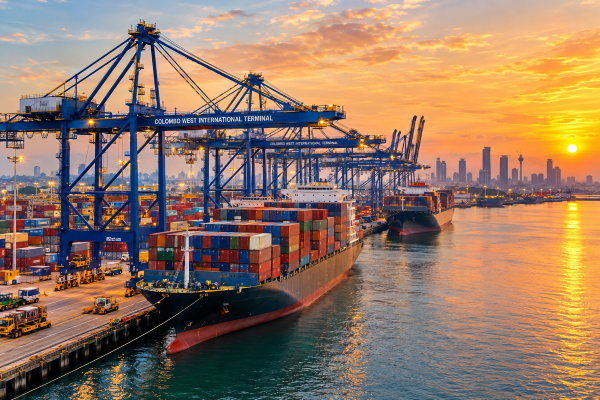
One of the most practical sections of Wikramanayake’s address concerned the consequences of conflict in the Middle East and the way Australian institutions and companies have responded to risks affecting fuel, freight, and supply continuity. Rather than presenting the conflict solely as a source of abstract global anxiety, she explored how geopolitical disruption must be translated into operational planning and inventory security.
Her analysis emphasised that Australia’s challenge is not simply exposure to international price volatility, but the need to prevent physical availability shocks in critical inputs. In this context, collaboration between the private and public sectors was presented as essential. Specific reference was made to major corporates and institutions including Ampol, Viva, Incitec Pivot, and Export Finance Australia, illustrating how supply chain resilience is strengthened when commercial operators, financiers, and government agencies share information, coordinate logistics, and support strategic stockholding and import pathways.

Fuel reserves and broader supply preparedness were therefore treated as matters of national economic resilience, not merely industry-specific concerns. Wikramanayake’s point was that by working early and collaboratively, Australia can reduce the risk that international conflict translates into domestic shortages. Price shocks may still occur in globally traded markets, but availability shocks, which are often more disruptive to households and industry, can be mitigated through planning, storage, diversified sourcing, and effective execution.
This distinction was important. It reflected a sober reading of geopolitical risk while also underscoring confidence in Australia’s capacity to manage disruptions when institutions coordinate properly. For sectors dependent on transport fuels, fertiliser inputs, industrial feedstocks, and imported equipment, that message would have carried particular weight.
The AI Boom and the Extraordinary Surge in Compute Demand
From geopolitics and macroeconomics, Wikramanayake turned decisively toward artificial intelligence, identifying it as one of the defining industrial trends of the period. Her argument was not confined to software enthusiasm or speculative equity narratives. Instead, she focused on the physical consequences of AI adoption: a sharp and continuing surge in demand for compute capacity, along with the infrastructure required to house, power, cool, connect, and finance that compute.
This framing is especially significant because it treats AI as a full-stack economic phenomenon. Data centres, high-capacity transmission, firmed energy supply, advanced cooling systems, fibre networks, semiconductors, and logistics assets all become part of the value chain. The winners, in this view, will not be determined only by application-layer ingenuity; they will also be shaped by who can provide the foundational infrastructure at scale.
Wikramanayake noted that demand for compute is rising rapidly as AI systems become more capable and more deeply embedded in commercial workflows. That trend, if sustained, implies enormous investment needs across the built environment and utility networks. The expansion of data centres alone has implications for land use, electricity generation, water and cooling technology, permitting timelines, and long-duration capital formation.
Energy, Cooling, and Australia’s Resource Base
The speech also linked AI infrastructure to a second major theme: resource advantage. Compute does not exist independently of energy, and large-scale digital systems depend on secure, affordable, and scalable power. Cooling, likewise, is not a secondary technical detail but a core component of data centre economics and operational reliability.
In this respect, Australia’s position may be stronger than many assume. The country combines a sophisticated energy market, significant renewable potential, engineering capability, and abundant mineral wealth that sits upstream of the technologies required for electrification and digital expansion. Wikramanayake pointed to critical minerals such as lithium, copper, and rare earths, all of which are central to batteries, electrification systems, advanced electronics, network equipment, and the broader industrial ecosystem supporting modern technology.

This convergence of resources and demand creates an intriguing strategic opening. Australia is not only capable of supplying minerals into global technology chains; it is also well placed to host elements of the infrastructure stack itself. If supported by sensible policy, timely approvals, and adequate investment, the country can occupy a more influential position in the AI era, spanning extraction, processing, energy provision, infrastructure ownership, and digital services.
Corporate-Government Collaboration Will Be Decisive
A recurring theme throughout the speech was that strong fundamentals alone will not guarantee success. Wikramanayake argued, implicitly and at times explicitly, that coordination between corporations and government will be decisive in translating opportunity into realised investment. This is particularly relevant in areas where the private sector may be willing to commit capital, but where project timelines are slowed by approval complexity, fragmented regulation, or uncertainty around infrastructure support.
Regulatory permitting was therefore cast as an economic competitiveness issue. If Australia wishes to accelerate investment in data centres, transmission, storage, processing facilities, ports, or critical mineral projects, then approvals and enabling frameworks must be efficient without compromising proper standards. Likewise, capital catalyzation by government, whether through finance agencies, co-investment structures, or strategic underwriting, can help crowd in much larger pools of private capital where early-stage risk would otherwise delay action.
This part of the speech carried a practical message for policymakers and industry leaders alike. Australia already has many of the ingredients required for leadership in the next investment cycle. The remaining challenge lies in connecting them: capital with projects, regulation with urgency, infrastructure with demand, and public purpose with commercial discipline.
A Wider Significance for Australian Enterprise and the Global Sri Lankan Community
For eLanka readers, Wikramanayake’s address resonated on several levels. It was, first, a significant contribution to the national conversation about Australia’s economic future. It was, second, a sophisticated interpretation of how geopolitics, capital markets, logistics, and technology are increasingly intertwined. And it was, third, another reminder of the influence that Sri Lankans abroad continue to exert across global business, finance, and policy discussions.
As a business leader of Sri Lankan heritage at the helm of one of Australia’s most consequential financial institutions, Shemara Wikramanayake exemplifies a form of leadership grounded in analytical discipline, institutional responsibility, and long-range strategic thinking. Her remarks were notable not because they indulged in optimism for its own sake, but because they identified concrete strengths, identifiable risks, and actionable areas where improvement and coordination are still required.
Conclusion
The full speech delivered at the 2026 Macquarie Australia Conference presented a far richer and more detailed account of Australia’s prospects than a simple keynote summary might suggest. Australia was portrayed as a country with 2.6 per cent GDP growth, low net federal debt of about 20 per cent of GDP, a modest 1.3 per cent fiscal deficit, and substantial monetary and institutional capacity, all reinforced by a $4.5 trillion superannuation system that remains heavily invested at home.
At the same time, the speech made clear that macroeconomic strength is only one part of the national equation. Geography in the Indo-Pacific, careful handling of supply chains during periods of Middle East instability, coordinated work on fuel security and industrial resilience, and an ambitious response to the infrastructure demands of AI will together shape the next chapter of Australian growth. With the right blend of private initiative and public support, the country is well positioned not merely to absorb global change, but to help define it.
Source: https://www.youtube.com/watch?v=D2f5XM9c640
This article was written based on the source https://www.youtube.com/watch?v=D2f5XM9c640, kindly email us at info@eLanka.com.au if any information needs to be corrected.
At eLanka, we respect the rights of creators. If we have used an image you own and you’d like it removed, please email us at info@elanka.com.au and we’ll handle it promptly.