Sri Lanka and Thailand Sign Landmark Labour Agreements for 10,000 Sri Lankan Workers
Sri Lanka and Thailand have further strengthened bilateral cooperation in the field of labour through the signing of a Memorandum of Understanding and a Memorandum of Agreement concerning the employment of Sri Lankan workers in Thailand, creating a structured pathway for new employment opportunities while reinforcing the commitment of both countries to safe, regular and mutually beneficial labour mobility.
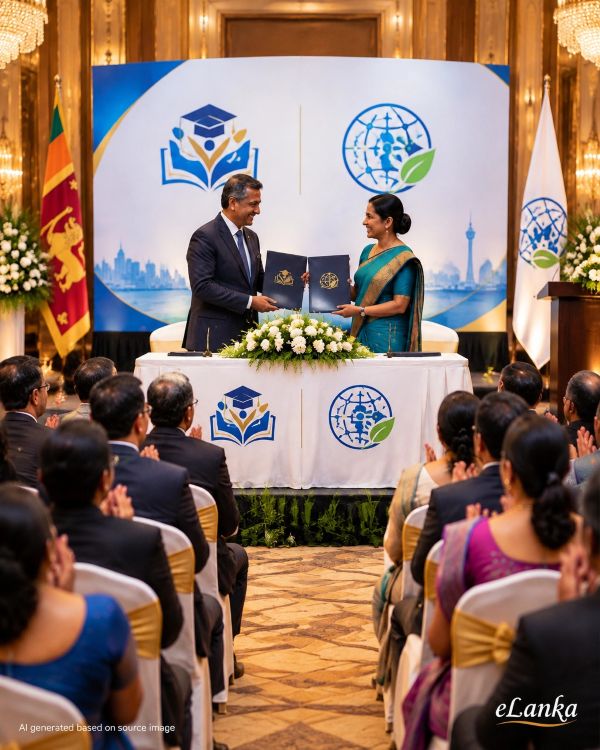
The two agreements were signed in Bangkok on 15 September 2026 by Sri Lanka’s Minister of Foreign Affairs, Foreign Employment and Tourism, Vijitha Herath, and Thailand’s Minister of Labour, Julapun Amornvivat. The development was reported by the Sri Lanka Rupavahini Corporation national news telecast and represents an important milestone in the continuing relationship between the two countries.
The agreements have followed sustained negotiations between the relevant authorities of Sri Lanka and Thailand, during which attention was given to the recruitment process, employment conditions, worker protection and the responsibilities of institutions involved in facilitating labour movement. A formal framework of this nature is expected to provide greater clarity for prospective workers, employers and government agencies, while reducing the uncertainty that can arise when overseas employment is pursued without transparent procedures.

A structured pathway for employment
The Memorandum of Understanding establishes a foundation for broader labour cooperation between Sri Lanka and Thailand, while the accompanying Memorandum of Agreement provides a more specific framework for the employment of Sri Lankan workers in Thailand.
Together, the agreements are intended to ensure that recruitment is conducted through recognised and transparent channels, with appropriate attention given to the rights, welfare and protection of workers. The framework is also expected to support closer coordination between the relevant authorities of both countries, allowing employment-related matters to be addressed through established institutional mechanisms rather than informal or unregulated arrangements.
For Sri Lankan workers, the agreement may provide a more secure basis from which to consider employment opportunities in Thailand. Overseas employment can make a significant contribution to household incomes and national economic activity, but its benefits are most effectively realised when recruitment is properly regulated, employment terms are clearly communicated and workers have access to appropriate assistance throughout the employment period.
The new framework therefore carries significance beyond the initial number of placements. It establishes a platform through which labour cooperation can be monitored, reviewed and improved, while also creating the possibility of deeper collaboration in skills development, workforce planning and employment standards.

Initial approval for 10,000 Sri Lankan workers
The Thai Cabinet has approved the recruitment of an initial 10,000 Sri Lankan workers through the established legal framework, in response to labour shortages in Thailand.
The initial approval provides a substantial opportunity for Sri Lankan workers who are seeking lawful employment abroad and possess skills that may be relevant to Thailand’s labour requirements. It also demonstrates that the agreements are intended to move beyond diplomatic declarations and towards a practical programme with measurable outcomes.
The recruitment of workers under the new arrangement will require careful coordination between the Sri Lankan and Thai authorities, including the verification of employment opportunities, the communication of contractual terms and the confirmation that prospective workers are processed through approved channels.
For workers and their families, the availability of accurate information will be instrumental. Employment seekers will need to confirm the identity of authorised recruitment agencies, understand the nature of the employment being offered and examine all contractual conditions before making financial or personal commitments. The value of the new agreement will depend not only on the number of workers recruited, but also on the transparency and integrity of the process through which each worker is placed.

Rights, welfare and social security
Minister Vijitha Herath expressed appreciation for the opportunity provided by the Royal Thai Government for Sri Lankan workers to seek employment in Thailand. In recognising the importance of the agreement, he emphasised that employment opportunities must be accompanied by adequate safeguards for workers’ rights, welfare and social security.
That emphasis is particularly relevant in the context of international employment, where workers may be separated from their families and required to navigate unfamiliar administrative, linguistic and workplace environments. Proper access to information, assistance and protection can help ensure that workers are treated fairly and that concerns are addressed through recognised channels.
Minister Herath also called for the establishment of a joint working group to monitor and review the implementation of the agreements. Such a mechanism could provide an important institutional safeguard, allowing both countries to assess progress, identify practical difficulties and respond to issues that may emerge during the recruitment and employment process.
A joint working group could also assist in maintaining regular communication between the relevant ministries, reviewing the experience of workers and employers, and recommending improvements where necessary. The creation of an ongoing review process would help ensure that the agreement remains responsive to changing labour-market conditions and continues to serve the interests of both countries.
Strengthening Sri Lanka–Thailand relations
The labour agreements form part of the wider relationship between Sri Lanka and Thailand, which has been supported by longstanding diplomatic, cultural and economic connections. Labour cooperation adds a practical and people-centred dimension to those ties, as it directly affects workers, families, employers and communities in both countries.
Thailand’s decision to approve the initial recruitment of 10,000 Sri Lankan workers indicates confidence in the potential contribution of Sri Lankan employees to sectors experiencing labour shortages. For Sri Lanka, the agreement creates a new avenue through which workers may obtain overseas employment under a formal bilateral arrangement.
The success of the programme will depend on several factors, including the accuracy of job information, the prevention of excessive recruitment fees, the protection of contractual rights and the availability of consular and institutional support. Transparent implementation will be essential if the initiative is to develop into a durable model of labour cooperation.
The agreements may also encourage a broader recognition of the skills, discipline and professional capacity of Sri Lankan workers. When employment is properly matched to qualifications and supported by fair conditions, international labour mobility can benefit workers and employers alike, while contributing to stronger economic links between participating countries.

A positive opportunity for Sri Lankan workers
The signing of the Memorandum of Understanding and Memorandum of Agreement marks a significant step in the expansion of safe and regular employment pathways for Sri Lankan workers in Thailand. The initial approval for 10,000 workers provides a clear indication of the immediate scale of the opportunity, while the proposed joint working group offers a means of ensuring that implementation remains subject to review and accountability.
For prospective workers, the development presents an opportunity to pursue employment through a legally recognised framework rather than relying on informal arrangements. For both governments, it creates a responsibility to ensure that recruitment is transparent, employment conditions are properly explained and worker welfare remains central throughout the process.
The agreement is therefore best understood as both an employment initiative and a foundation for stronger Sri Lanka–Thailand cooperation. With careful implementation, effective monitoring and clear communication, it could provide meaningful opportunities for Sri Lankan workers while deepening the constructive relationship between the two nations.
Readers seeking further positive news and updates concerning Sri Lankans worldwide can subscribe to the eLanka newsletter, which shares community stories, events and useful information with members in Australia and around the world.
Source: https://www.youtube.com/live/7OmKevRXuMY?si=C7JTzbIaqtMWnobL
This article was written based on the source https://www.youtube.com/live/7OmKevRXuMY?si=C7JTzbIaqtMWnobL, kindly email us at info@eLanka.com.au if any information needs to be corrected.
(adsbygoogle = window.adsbygoogle || []).push({});
At eLanka, we respect the rights of creators. If we have used an image you own and you’d like it removed, please email us at info@elanka.com.au and we’ll handle it promptly.