Sri Lanka Moves to Relax Rooftop Solar Rules Nationwide, Opening Cheaper Power for Homes and Businesses
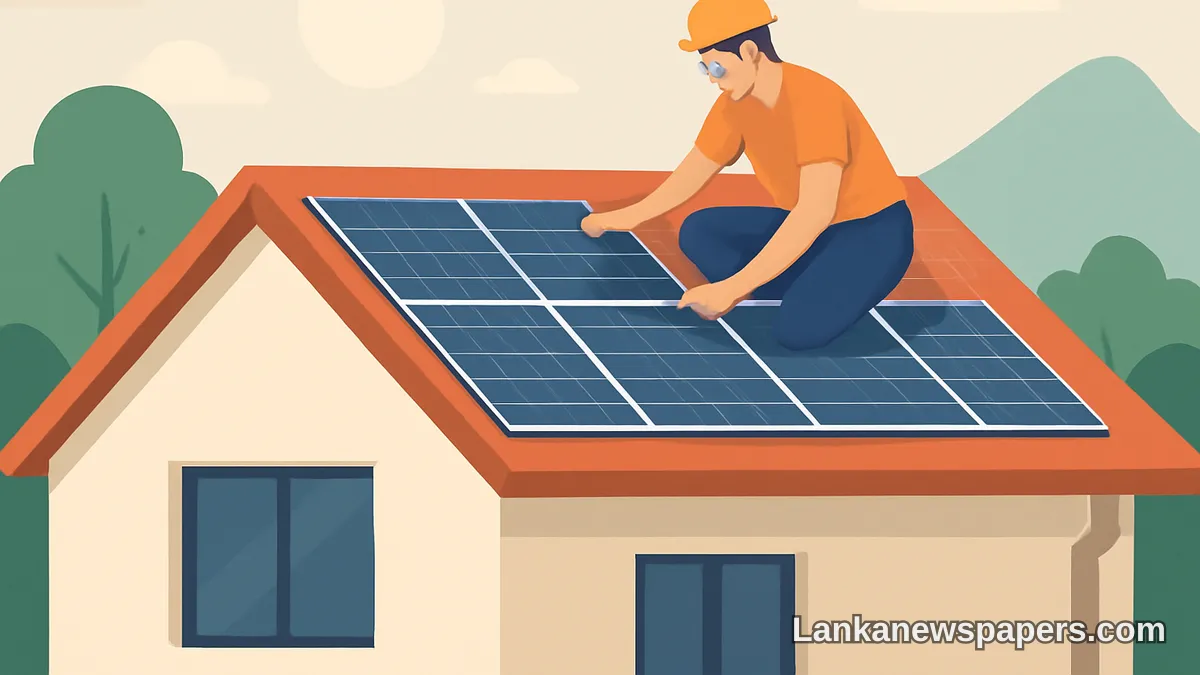
Image Source : www.lankanewspapers.com
Sri Lanka is preparing to ease existing restrictions on rooftop solar power systems, in a policy direction that could broaden access to renewable energy for households, small businesses and larger commercial premises across the island. The proposed changes, reported by Lankanewspapers.com on 20 September 2026, are expected to address several bureaucratic and technical barriers that have limited the wider installation and connection of rooftop solar systems.
The announcement is significant because rooftop solar has increasingly been viewed as an instrumental part of Sri Lanka’s response to high electricity costs, energy insecurity and the need to reduce reliance on imported fossil fuels. By enabling more property owners to generate electricity where it is consumed, the proposed policy could support a more decentralised national energy system while providing families and businesses with a practical opportunity to manage long-term household and operating expenses.
A policy shift towards broader solar access
For many years, Sri Lankan households and businesses have shown strong interest in installing solar panels, particularly as electricity prices have placed sustained pressure on family budgets and business cash flow. However, the installation and connection process has been affected by regulatory requirements, technical conditions, grid limitations and uncertainty regarding how surplus electricity can be handled.
The government’s proposed relaxation is intended to make the process more accessible by reducing unnecessary administrative obstacles and creating a clearer framework for the connection of rooftop solar installations to the national grid. Although the precise amendments have not yet been published, the policy direction suggests that greater flexibility could be made available to property owners who wish to invest in clean electricity generation.
The proposed changes are also expected to encourage competition among solar installers and service providers. If more households and businesses become eligible to proceed with installations, providers may be required to compete more actively on equipment quality, installation charges, maintenance services, warranties and financing arrangements. In time, that competition could help reduce upfront costs and make solar power more attainable for middle-income families and small enterprises.

AI-generated illustration based on the source image; eLanka branding included.
Why rooftop solar matters to Sri Lanka’s energy future
Sri Lanka has been working to expand its renewable energy capacity as part of broader efforts to reduce dependence on costly fossil fuel imports and establish a more stable electricity system. While large-scale renewable projects remain important, rooftop solar provides a complementary solution because generation can be distributed across thousands of homes, shops, offices, schools and industrial buildings.
This decentralised model offers several potential advantages. Electricity can be generated close to the point of use, which may reduce pressure on parts of the national transmission network, while surplus power may be supplied to the grid when production exceeds immediate consumption. As more systems are installed, the national electricity mix could gradually include a larger share of locally generated clean energy.
Rooftop solar is particularly suited to Sri Lanka’s geographical and climatic conditions, where strong sunlight is available for much of the year. Nevertheless, the success of a nationwide expansion will depend on careful grid management, reliable installation standards, appropriate consumer protections and transparent arrangements for the treatment of surplus electricity.
The proposed relaxation therefore represents more than a simple change to the installation process. It signals a potential shift from a heavily restricted model towards one in which households and businesses are encouraged to participate more directly in the national energy system.
Potential benefits for households
For Sri Lankan families, the most immediate attraction of rooftop solar is the prospect of reducing electricity bills over the longer term. The initial installation cost can be considerable, but a properly designed system may generate electricity for many years, allowing a household to reduce its reliance on power purchased from the national grid.
The benefit may be especially relevant to families that use electricity-intensive appliances, including refrigeration, water pumps, air conditioning, electric cooking equipment and home-office technology. Where the system is correctly sized and responsibly maintained, solar generation can help reduce daytime electricity consumption and provide a degree of protection against future price increases.
The proposed policy could also make it easier for more households to connect their systems to the grid, thereby creating additional options for managing electricity that is not used immediately. Depending on the final regulatory framework, surplus energy could potentially be transferred to the national network under approved arrangements.
However, the financial outcome for each household will depend on several factors, including roof orientation, shade, system capacity, equipment quality, installation charges, financing costs, electricity consumption patterns and the final rules governing grid connections. Families should therefore assess the complete lifetime cost of an installation rather than relying solely on advertised savings.
Opportunities for small businesses
Small businesses, which frequently operate under tight margins, may also benefit from a more accessible rooftop solar framework. Retail shops, restaurants, workshops, offices, pharmacies, tuition centres and small manufacturing facilities often consume substantial quantities of electricity during daylight hours, when solar panels are producing power.
A reduction in daytime grid consumption could assist businesses in controlling operating costs, while a visible solar installation could demonstrate a practical commitment to cleaner energy. For enterprises that own their premises, rooftop solar may also become a long-term infrastructure investment that supports business continuity and reduces exposure to fluctuating utility expenses.

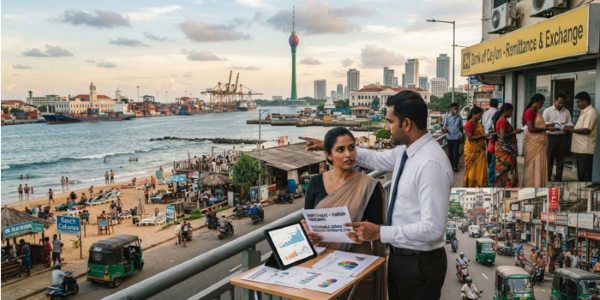
AI-generated illustration based on the source image; eLanka branding included.
The expansion of the market could further encourage service providers to offer tailored packages for small businesses, including system design, installation, monitoring, maintenance and battery options. Such developments would be valuable, although businesses should continue to verify the credentials of installers, the origin and warranty of equipment, and the technical suitability of each proposed system.
Relevance to Sri Lankans living abroad
The proposed changes may be of particular interest to Sri Lankan expatriates in Australia, the United Kingdom, Canada, New Zealand, the United States and other countries who own property or are building homes in Sri Lanka. Many overseas Sri Lankans contribute to the construction, renovation and upkeep of family homes, and energy efficiency is increasingly becoming part of those decisions.
A rooftop solar system could be considered alongside roofing, water storage, electrical wiring, security equipment and other essential elements during the design or renovation stage. Early consideration may allow the roof structure, cabling and inverter location to be planned more effectively, rather than requiring expensive alterations at a later date.
Property owners abroad may also wish to ensure that relatives or local project managers obtain several written quotations, confirm the installation company’s licensing and experience, and request clear information about maintenance, system monitoring and after-sales support. eLanka’s Property portal provides a dedicated platform for Sri Lankan property opportunities and may be relevant to overseas owners considering improvements to homes and other buildings on the island.
What consumers should watch for next
The government is expected to announce further details regarding the specific regulatory amendments and the timetable for implementation in the coming weeks. Until those details are released, consumers should treat the announcement as a positive policy development rather than as an immediate guarantee that every restriction has already been removed.
Important matters are likely to include the technical standards for installations, the process for connecting new systems to the grid, the treatment of surplus electricity, requirements for smart meters or other monitoring equipment, and any conditions applying to battery storage. Clarity in these areas will be essential if households and businesses are to make informed financial decisions.
Consumer protection will also be important. As demand grows, the authorities and industry bodies should ensure that installers meet appropriate standards, that warranties are honoured, and that customers receive accurate information about expected generation and savings. Transparent pricing and accessible complaint procedures would further strengthen public confidence.
A constructive step towards affordable energy
The proposed relaxation of rooftop solar rules offers Sri Lanka an opportunity to align household affordability with national energy objectives. If implemented carefully, the policy could help families reduce electricity costs, enable small businesses to operate more efficiently, attract private investment into clean-energy infrastructure and encourage a more resilient electricity network.
The long-term value of the initiative will depend upon the quality of its implementation, yet the direction is encouraging. By allowing more citizens to participate in renewable energy generation, Sri Lanka could move towards an electricity system in which households and businesses are not merely consumers of power, but active contributors to a cleaner and more sustainable national energy future.
This article was written based on the source https://www.lankanewspapers.com/2026/09/20/sri-lanka-set-to-relax-rules-on-rooftop-solar-installations-nationwide, kindly email us at info@eLanka.com.au if any information needs to be corrected.
(adsbygoogle = window.adsbygoogle || []).push({});
At eLanka, we respect the rights of creators. If we have used an image you own and you’d like it removed, please email us at info@elanka.com.au and we’ll handle it promptly.