Sri Lanka to Teach Entrepreneurship and Financial Literacy to Grade 6 Students from 2027

Prime Minister Harini Amarasuriya speaks at the Colombo Stock Exchange bell-ringing ceremony. Photo courtesy of Newswire. Featured image.
Sri Lanka is set to introduce a new subject covering entrepreneurship and financial literacy for all Grade 6 students from 2027, marking the first phase of a broader curriculum reform designed to provide young people with practical knowledge about money, enterprise and responsible economic participation.
The initiative was announced by Prime Minister Harini Amarasuriya while addressing a bell-ringing ceremony held to promote financial literacy. According to Newswire, the wider reforms are intended to provide students from Grades 6 to 9 with structured knowledge of entrepreneurship and financial literacy, while the new Grade 6 subject will serve as the initial stage of implementation.
As separately reported by Hiru News, the Prime Minister also rang the market opening bell at the Colombo Stock Exchange on 5 October to mark World Investor Week 2026, adding a symbolic public dimension to the wider push for financial awareness and investor education.
The announcement represents a significant development in the way financial education may be approached within Sri Lanka’s school system, shifting attention beyond traditional academic subjects towards the practical capabilities that students may require as consumers, employees, business owners, investors and members of their communities.
A new focus for junior secondary education
Under the proposed reforms, students in Grades 6 to 9 are expected to receive knowledge relating to entrepreneurship and financial literacy. The first stage will begin in 2027, when the new subject is scheduled to be introduced to Grade 6 students across the country.
At this level, financial literacy may be presented through age-appropriate lessons that help children understand basic concepts such as saving, spending, budgeting, planning and distinguishing between needs and wants. Entrepreneurship education may similarly encourage students to identify problems, develop practical ideas, work cooperatively and understand how goods and services are created for the benefit of others.
The initiative is therefore broader than teaching children how to handle pocket money. It has the potential to introduce a structured understanding of how personal decisions, business activity and wider economic systems are connected, while helping students develop confidence in making considered choices.
For parents, the forthcoming subject will provide an opportunity to understand more clearly how financial concepts are being introduced within the education system. Families may be able to reinforce classroom learning through everyday activities, including planning a small household budget, comparing prices, setting savings goals or discussing how a business provides value to its customers.
Practical exposure through market and investment programmes
Prime Minister Amarasuriya also highlighted practical exposure programmes, including the Stock Market Game and school capital market clubs. These initiatives are intended to help schoolchildren and young people gain an early understanding of entrepreneurship and investment through participation, observation and guided learning.
A market simulation can enable students to explore how investment decisions are made without exposing them to the consequences of using real money. Through such activities, pupils may learn how to examine information, compare possible outcomes, consider risk and recognise that financial decisions require patience and responsibility.
School capital market clubs could provide a continuing environment in which students discuss business ideas, learn about investment principles and examine how companies operate. When appropriately designed and supervised, such clubs may also encourage teamwork, communication and analytical thinking, while making financial education more engaging than a purely theoretical lesson.
The practical character of these programmes is particularly important because financial understanding is often developed through repeated application. A child who has learned the meaning of saving in a classroom may gain a deeper appreciation of the concept when required to plan a purchase, record expenditure or decide how limited resources should be allocated.

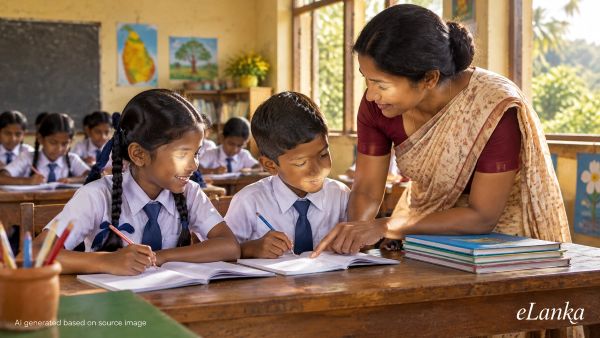
AI-generated illustration showing a classroom activity based on practical enterprise, budgeting and cooperative learning.
Ethics at the centre of financial education
The Prime Minister’s remarks also placed strong emphasis on ethics and responsible financial behaviour. Young people, she said, should understand that earning money must not involve exploiting or deceiving others, and that economic activity should be conducted responsibly and ethically.
This emphasis provides an important dimension to the proposed reforms. Financial literacy without ethical understanding could become limited to the pursuit of profit, whereas responsible financial education can help students appreciate the consequences of dishonesty, manipulation and unfair conduct.
Young people who are introduced to entrepreneurship should therefore be encouraged to consider not only whether an idea can generate income, but also whether it is fair, sustainable and beneficial to the people who use the resulting product or service. Such an approach could support a generation of business founders who understand that trust, transparency and reliability are valuable forms of long-term capital.
The same principle applies to personal finance. Responsible financial behaviour includes making informed decisions, meeting obligations, avoiding misleading claims and recognising the difference between a genuine opportunity and an arrangement that may cause harm to others. These lessons are increasingly relevant in a digital environment where financial products, online promotions and commercial offers are accessible to young people at an early age.
Potential benefits for Sri Lankan families worldwide
The new subject will be introduced in Sri Lanka, but its significance will also be followed by Sri Lankan families living in Australia, the United Kingdom, Canada, New Zealand, the United States and elsewhere. Many families abroad maintain close educational, cultural and professional links with Sri Lanka, and curriculum developments at home can influence conversations about the skills children require for the future.
For Sri Lankan parents overseas, the initiative may encourage discussion about how children can learn financial responsibility across different education systems. Although school curricula vary between countries, the underlying principles of budgeting, ethical enterprise, saving and informed decision-making remain widely relevant.
The reform may also be of interest to Sri Lankan professionals and business owners abroad who support educational initiatives in Sri Lanka. Members of the global Sri Lankan community may be able to contribute through mentorship, workplace visits, entrepreneurship talks or carefully designed learning activities, provided that such engagement is conducted through appropriate educational channels and with the welfare of students as the priority.
In this respect, the reform could create a bridge between classroom learning in Sri Lanka and the experience of Sri Lankan business and professional communities overseas. Young people may benefit from hearing how enterprises are developed, how challenges are managed and why ethical standards matter in different markets.

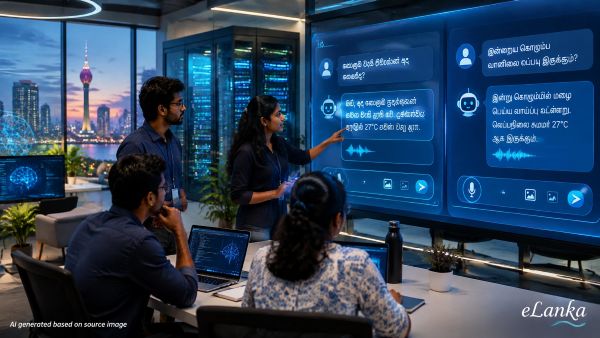
AI-generated illustration of a student applying financial literacy concepts through a savings and planning exercise.
Preparing future founders and responsible citizens
The introduction of entrepreneurship and financial literacy at Grade 6 level could help establish practical habits well before students enter higher education or the workforce. Early learning may encourage children to become more confident in asking questions about money, evaluating opportunities and considering how their decisions affect others.
It may also broaden the idea of achievement. While academic performance remains important, the ability to plan, collaborate, solve problems and act with integrity is equally instrumental to personal and professional development. Students who learn to develop a modest business idea, calculate its costs or explain its value may begin to see how creativity can be connected with service and sustainable income.
For Sri Lanka, the long-term potential is considerable. A generation that understands both enterprise and responsibility may be better prepared to establish businesses, manage organisations, create employment and participate constructively in the economy. For Sri Lankan communities abroad, these skills may also support future founders who operate across borders and contribute to commercial, social and cultural connections between Sri Lanka and the wider world.
The success of the initiative will depend on careful curriculum design, teacher preparation, suitable learning materials and equal access for students in different regions and school settings. Practical activities must be age-appropriate, inclusive and clearly separated from commercial promotion. With those safeguards in place, the planned subject could become an instrumental addition to school education.
The Grade 6 introduction in 2027 will be the first step in a wider reform programme for Grades 6 to 9. Its enduring value will be measured not only by whether students can understand a budget or describe an investment, but also by whether they grow into adults who recognise that financial success is strongest when it is built upon knowledge, fairness and responsible conduct.
Source: https://www.newswire.lk/2026/10/05/new-entrepreneurship-and-financial-literacy-subject-for-grade-6-from-2027/ | https://hirunews.lk/goldfmnews/492656/pm-rings-cse-bell-to-promote-financial-literacy
This article was written based on the sources https://www.newswire.lk/2026/10/05/new-entrepreneurship-and-financial-literacy-subject-for-grade-6-from-2027/ and https://hirunews.lk/goldfmnews/492656/pm-rings-cse-bell-to-promote-financial-literacy, kindly email us at info@eLanka.com.au if any information needs to be corrected.
At eLanka, we respect the rights of creators. If we have used an image you own and you’d like it removed, please email us at info@elanka.com.au and we’ll handle it promptly.
Thanks.
eLanka team
eLanka Disclaimer
Content published on eLanka may be created by the eLanka team, submitted by contributors or third parties, reproduced or adapted from other sources with appropriate source acknowledgement, or provided as promotional/advertising material by our clients. While eLanka takes reasonable care in preparing and publishing content, we do not warrant its completeness or accuracy. Views expressed are those of the respective authors or contributors and do not necessarily represent the views of eLanka. Third-party contributors, content providers and advertisers are responsible for the accuracy of material they supply and for ensuring they hold the necessary rights and permissions for its publication. Advertising and promotional content should not be regarded as an endorsement by eLanka of any product, service or claim.