



Category: Articles
A nationwide technical community-service programme has demonstrated how vocational education can be translated into practical public benefit, as the Sri Lanka Vocational Training Authority (SLVTA) marked its 31st anniversary through a technical Shramadana conducted at 33 hospitals across the country.
The programme, reported on 17 August 2026, brought together Generation Z volunteers and vocational training students, enabling them to apply their technical knowledge in environments where careful maintenance, cleanliness and responsible use of public property remain essential. Rather than limiting the anniversary observance to a ceremonial occasion, the initiative connected institutional recognition with direct service to hospitals and the wider community.
The main event was held at Castle Street Women’s Hospital in Colombo under the patronage of Deputy Minister of Vocational Education Nalin Hewage. The activity was conducted in collaboration with the Clean Sri Lanka national programme, and its stated purpose extended beyond routine cleaning. It was designed to support hospital infrastructure, improve sanitation and contribute to the public healthcare system through the practical abilities of young people undergoing vocational training.

Practical education placed at the service of the community
Vocational education is often associated with employment preparation, technical certification and the development of specialised skills. The SLVTA anniversary programme illustrated an equally important dimension: the ability of vocational students to use those skills in support of institutions serving the public.
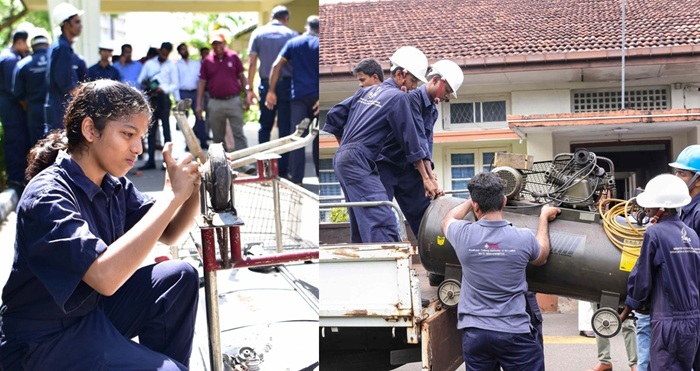
According to the source report, the participating students and Generation Z volunteers applied knowledge in electronics, electrical work, plumbing, building maintenance, mechanical repairs and environmental cleaning. These areas represent a broad range of practical disciplines, and their inclusion allowed the programme to address hospital needs through a coordinated technical effort rather than a conventional volunteer campaign focused only on general labour.
The work was therefore presented as a technical Shramadana, with skills and service operating together. Electrical and electronic knowledge, plumbing capability, building-maintenance experience and mechanical understanding were brought into a public-service setting, while environmental cleaning reinforced the importance of maintaining safe and orderly surroundings.
No individual repairs or specific hospital facilities were identified in the report, and the significance of the programme rests on its overall scope: 33 hospitals were supported through a single nationwide initiative, giving vocational students an opportunity to demonstrate that their training has value well beyond the classroom or workshop.
Castle Street Women’s Hospital hosts the main event
Castle Street Women’s Hospital in Colombo served as the location for the principal event. The hospital provided the setting in which the anniversary programme’s central themes were brought together: technical competence, sanitation, infrastructure support and youth participation.
The event also gave public visibility to a form of contribution that can sometimes remain unnoticed. Hospital services depend not only on medical professionals and clinical staff, but also on buildings, equipment, utilities, maintenance systems and clean surroundings. When these elements are properly supported, the broader healthcare environment is strengthened.
The SLVTA programme recognised this practical reality by directing vocational expertise towards hospital settings. It also offered students the experience of applying their knowledge in a public institution, where safety, care and attention to detail are particularly important.

Supporting infrastructure and sanitation
The stated focus of the programme was to strengthen hospital infrastructure, improve sanitation and support the public healthcare system. These objectives are closely connected. A hospital’s effectiveness is influenced by the condition of its physical environment, the reliability of its facilities and the cleanliness of areas used by patients, families and staff.
The inclusion of environmental cleaning within the programme broadened its purpose further. It indicated that public service includes both technical maintenance and the responsible care of shared surroundings. Through this approach, infrastructure and environmental stewardship were treated as complementary responsibilities.
The programme was also associated with the protection of public property and attitudinal change. These themes suggest that the initiative sought to encourage a long-term sense of responsibility, rather than presenting community service as a one-day activity with no continuing relevance. Public facilities are shared national assets, and their protection requires the participation of institutions, workers, students and citizens alike.
The contribution made by the students was consequently practical and educational at the same time. While hospitals benefited from technical and environmental support, the students gained an opportunity to see how their disciplines can be applied in a setting where their work contributes to public wellbeing.
Young people as opportunity creators
One of the most constructive messages associated with the programme was the emphasis on young people as “opportunity creators”, rather than merely “opportunity seekers”. This distinction places greater value on initiative, capability and contribution.
For Generation Z volunteers and vocational training students, the programme provided a visible platform through which their skills could be used to identify and address community needs. The students were not portrayed simply as recipients of training or as future employees waiting for opportunities to appear. They were recognised as people capable of creating value through their own knowledge, effort and willingness to serve.
This perspective is particularly relevant in a rapidly changing employment environment, in which technical adaptability and practical problem-solving are increasingly important. A young person trained in electronics, electrical work, plumbing, building maintenance or mechanical repairs can contribute to many forms of development, including the preservation and improvement of essential public institutions.
The programme also demonstrated that community contribution does not require every participant to possess the same abilities. Different vocational disciplines can be brought together around a common purpose, with each area of expertise supporting a wider institutional objective. Such cooperation is an important part of building confidence among students and strengthening respect for skilled technical work.

A positive anniversary message
The SLVTA’s 31st anniversary was therefore marked through an initiative that combined education, service and environmental responsibility. By extending the programme to 33 hospitals, the anniversary became an occasion for practical engagement across the country rather than a celebration confined to a single venue.
The collaboration with the Clean Sri Lanka national programme further connected vocational training with environmental cleanliness, protection of public property and sustainable national development. The source also noted the commitment of the Navy and other state agencies to environmental stewardship, placing the hospital programme within a wider framework of public responsibility.
For Sri Lankan communities in Australia and around the world, the initiative offers an encouraging example of how youth skills can be directed towards constructive outcomes. It presents vocational education as an instrumental part of national development and shows that technical knowledge has a meaningful social purpose when it is applied with discipline and care.
The programme’s central lesson is straightforward: young people are capable of contributing to their communities when they are given the opportunity to use their training. At the same time, the initiative illustrates that hospitals and other public institutions can benefit from partnerships that recognise the value of practical education.
Through the 31st anniversary technical Shramadana, the SLVTA placed skilled youth participation at the centre of a positive community message. The work carried out at hospitals across Sri Lanka demonstrated that education, service and responsible citizenship can be brought together in a manner that strengthens both individual confidence and the institutions on which communities depend.
For the global Sri Lankan community, it is a story of young people applying knowledge with purpose, while helping to maintain the public spaces that serve the nation.
Explore more Sri Lankan community news and stories through eLanka.
Source: https://www.newswire.lk/2026/08/17/slvta-marks-31st-anniversary-with-nationwide-technical-shramadana/
This article was written based on the source https://www.newswire.lk/2026/08/17/slvta-marks-31st-anniversary-with-nationwide-technical-shramadana/, kindly email us at info@eLanka.com.au if any information needs to be corrected.
(adsbygoogle = window.adsbygoogle || []).push({});
At eLanka, we respect the rights of creators. If we have used an image you own and you’d like it removed, please email us at info@elanka.com.au and we’ll handle it promptly.