Streamlining Sri Lanka’s Health System: President AKD’s Primary-Care Reform Vision-by Harold Gunatillake

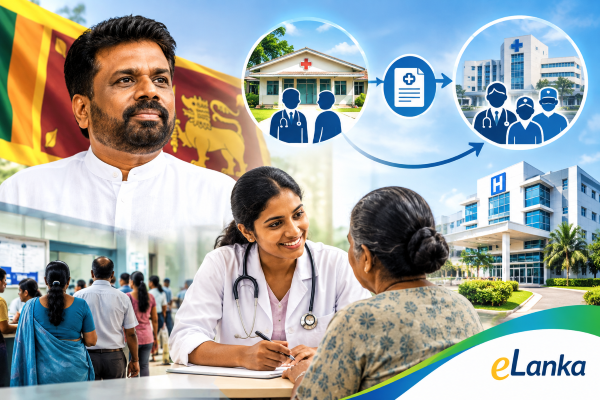
Sri Lanka’s healthcare sector is once again at the centre of national debate — this time sparked by President Anura Kumara Dissanayake’s proposal to restructure how citizens access medical care.
The plan, inspired by the Australian Medicare model, has drawn strong support from Sri Lankan medical practitioners who have returned from developed nations and long advocated for a more coordinated system.
At its core, the reform seeks to shift Sri Lanka away from an open-access model—where patients can visit any hospital or specialist directly —toward a structured, referral-based primary-care system.
A Move Toward Organised, Patient-Centred Care President Dissanayake’s proposal emphasises a simple but transformative principle:
Every citizen should first consult a designated general practitioner (GP) before accessing specialist or hospital care.
This mirrors the Australian Medicare framework, where the GP acts as the patient’s primary medical custodian — diagnosing, treating, and referring only when necessary.
Under such a system:
- Patients cannot directly book appointments with
- The GP evaluates the condition and issues a formal referral
when specialist intervention or surgery is required.
- After specialist treatment, the patient is sent back to the GP
for follow-up and long-term care.
To operationalise this, the Health Ministry would supply free referral-form pads to all registered practitioners, ensuring uniform documentation and streamlined communication between primary care and specialist services.
The Role of the 1000 “Arogya” Centres
A cornerstone of the reform is establishing 1000 Arogya primary-care centres, each staffed by family physicians who serve as the first point of contact for surrounding communities.
President Dissanayake argues that this will:
- Give every family a dedicated primary-care doctor
- Reduce unnecessary visits to major hospitals
- Improve continuity of care
- Strengthen preventive medicine and early diagnosis
In essence, the Arogya network is designed to anchor the referral system and restore order to a healthcare landscape currently overwhelmed by patient volume.
The Problem: Overcrowding and Fragmentation
Sri Lanka’s public hospitals record nearly 80 million outpatient visits annually, despite a population of only 22 million. This staggering
figure reflects a system where patients bypass primary care entirely and head straight to hospital OPDs or private specialists.
The consequences are well known:
· Overloaded OPDs
with long queues
- Specialists juggling both public duties and private consultations
- Extremely short consultation times, often just a few minutes
- Poor coordination between different levels of care
- Limited follow-up and fragmented patient histories
In contrast, countries like Australia mandate a minimum of
30-minute specialist consultations to ensure quality, thoroughness, and patient safety.
Sri Lankan specialists, constrained by sheer numbers, cannot offer comparable time or attention.
How the Referral System Can Ease the Burden
By routing specialist access through GPs, the proposed system aims to:
· Reduce unnecessary specialist visits
- Allow specialists to spend more time per patient
- Improve diagnosis accuracy and treatment outcomes
- Decongest OPDs in public hospitals
- Ensure that only patients who genuinely require specialist care reach tertiary facilities
- Strengthen long-term patient management through the GP
This model also encourages a healthier doctor-patient relationship, where families rely on a trusted primary-care physician rather than navigating a maze of hospitals and private clinics.
A Reform That Aligns With Global Best Practices
Many Sri Lankan doctors who have worked in Australia, the UK, and Europe have welcomed the proposal, noting that
referral-based systems are standard in advanced healthcare environments.
They argue that Sri Lanka’s current open-access model is outdated, inefficient, and unsustainable.
President Dissanayake’s plan, if implemented effectively, could:
- Modernise Sri Lanka’s healthcare architecture
- Improve equity and access
- Reduce national healthcare costs
- Strengthen preventive and community-based medicine
- Enhance patient safety and treatment quality
The Road Ahead
Transforming Sri Lanka’s health system will require:
- Strong administrative coordination
- Adequate staffing of Arogya centres
- Public awareness campaigns
- Digital referral tracking systems
- Clear guidelines for specialists and hospitals
- Continuous monitoring and evaluation
But the vision is clear: a streamlined, coordinated, and patient-centred healthcare system that mirrors global best practices while addressing Sri Lanka’s unique challenges.
President AKD’s proposal marks a significant step toward that future — one that promises better care, less chaos, and a healthier nation.
End