The Age of AI Demands New Models for Soft Power and Public Diplomacy – By Naren Chitty

Source : blog.anthempress.com
This is a guest post by Naren Chitty, series editor of Anthem Studies in Soft Power and Public Diplomacy.
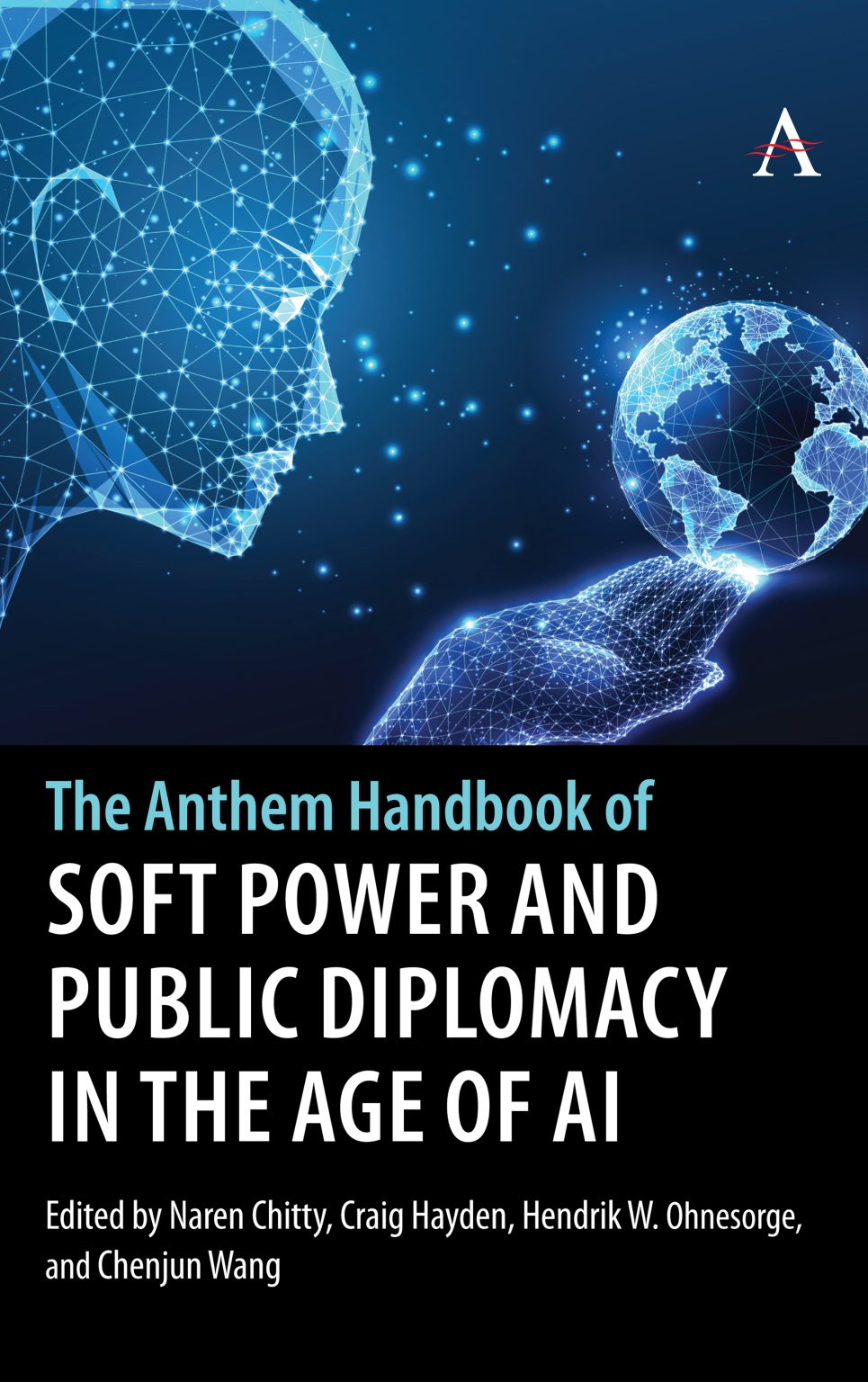
Practice related to soft power has always been a subtle art. Yet in the age of artificial intelligence, it is becoming a science as well. As AI systems increasingly mediate global communication, identity formation and political persuasion, the traditional foundations of soft power – culture, values and policies – are being reshaped by algorithmic logics and biometric data flows. The Anthem Handbook of Soft Power and Public Diplomacy in the Age of AI responds to this moment of transformation by offering a comprehensive, interdisciplinary map of how influence operates when human and machine agency intertwine.
A central argument of the Handbook is that soft power can no longer be understood solely as a resource that states project outward. Instead, it must be conceptualised as an experiential, relational and measurable phenomenon, shaped by the cognitive and emotional experience of audiences navigating highly mediated environments. This is where one of the volume’s most distinctive contributions emerges: a biometrically testable model of soft power grounded in a theory of attraction-based influence experienced in ‘hearts and minds’.
The model proposes that soft power is not merely an abstract preference shift but a biopsychosocial experience that can be empirically observed through biometric indicators of cognition, emotion and motivation. In an era where AI systems already track and infer emotional states, a rigorous, ethically grounded framework – for understanding how influence is felt, embodied and enacted – is offered. Scholars and practitioners are challenged to rethink what responsible persuasion looks like when digital technologies can both illuminate and manipulate the inner life of publics.
Across its five sections – Theory, Narratives, Culture, Governance and Conflict – contributors examine how generative AI destabilises authorship and authenticity, how strategic narratives circulate through algorithmic platforms and how cultural diplomacy is increasingly co-created by celebrities, grassroots actors and machine agents. Case studies from South Korea, China, the Baltic states and the Russia–Ukraine war illustrate how AI-enhanced influence tools operate in contexts ranging from democratic engagement to hybrid conflict.
A recurring theme is the fragility of trust. As AI-generated content proliferates, publics face growing epistemic uncertainty about what – and whom – to believe. Soft power in this environment depends less on projecting a polished national image and more on cultivating credible, dialogic relationships across fragmented information ecosystems. The biometrically testable experiential model reinforces this shift by emphasising that attraction is not a static asset but a dynamic, measurable interaction shaped by lived experience.
Ultimately, the Handbook argues that the future of soft power will be defined by how effectively states, institutions and societies navigate the ethical tensions of AI-enabled influence. The challenge is not simply to harness new technologies but to ensure they serve human dignity, autonomy and well-being. By integrating conceptual innovation with empirical insight, the volume offers a timely guide for scholars and practitioners seeking to understand – and shape – the evolving terrain of global influence.
I encourage exploration of questions related to the intersection of neuroscience and technology with soft power and public diplomacy for future volumes.
At eLanka, we respect the rights of creators. If we have used an image you own and you’d like it removed, please email us at info@elanka.com.au and we’ll handle it promptly.
Thanks.
eLanka team