


The Hidden Treasure – By Dodwell Keyt
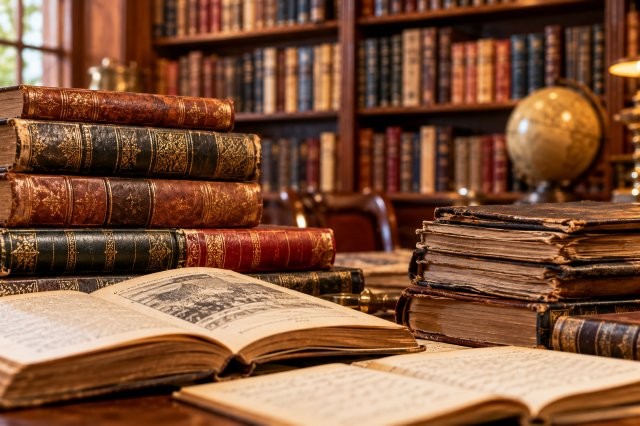
There is a treasure in Australia worth more than the jewels of ancient Ceylon. It is not made of gold or precious stones. It was gathered over a lifetime.
Today, that treasure lies packed away in crates, in storage, beyond the reach of the curious eyes. Hidden inside those crates are thousands of books, magazines, journals and periodicals gathered across decades, preserving fragments of Ceylon and Sri Lanka through its history, literature, people and culture. Some record a country that has changed almost beyond recognition; others preserve the observations, ideas and voices of people long gone. Taken individually, they are books. Taken together, they form something far rarer: a remarkable written memory of a country, assembled piece by piece over a lifetime.
Collections such as this cannot simply be recreated. Books disappear from circulation, small publications are forgotten, old editions become scarce, and knowledge once thought commonplace can quietly vanish with the generations that possessed it. The value of such a collection therefore lies not merely in the individual volumes, but in their having been found, preserved and kept together.
Behind this accumulated treasure is a man who has devoted much of his life to preserving the written memory of Sri Lanka and Ceylon.
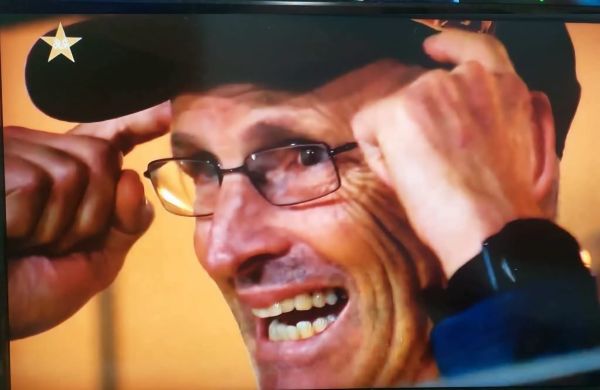
I recently watched a video, and in it I saw the face of a man confronting the sadness of having to let go of something very dear to him. His expression revealed a depth of emotion that needs no explanation. Sometimes a face tells us far more than words ever could.
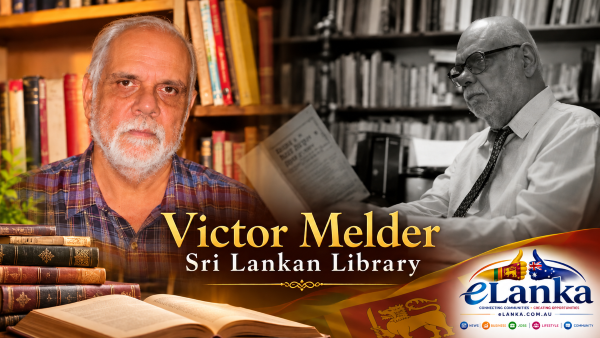
The man in that video was Victor Melder.
I have known Victor for many years. He has always been a gentleman in the truest sense of the word, courteous, generous with his encouragement and genuinely interested in the work of others. Over the years, I sent much of my writing to Victor, and he was always interested in what I was doing. He has supported my music and other creative ventures as well. We are distantly related, another small thread connecting two people with a shared affection for Sri Lanka and its history.
But there is another side to Victor’s story, one that reaches far beyond my own acquaintance with him. For decades, he has quietly collected and preserved an extraordinary body of material relating to Sri Lanka and Ceylon. Book by book, year after year, he built the collection that today bears his name, the Victor Melder Sri Lankan Library.
At ninety-one, however, Victor has reached a point that eventually comes to all of us. The mind may still care deeply, but the years begin to impose their own limitations. The library that had occupied such an important part of his life could no longer be cared for by him as it once had been.
And that was the face I saw in the video.
A face not of regret, but of letting go.
Perhaps there is a treasure in your own life.
It may not be a library of thousands of books. It might be a collection of photographs, letters written by people no longer with us, family documents, a grandfather’s diary, a grandmother’s recipes, or simply the stories and memories that exist nowhere except in your own mind.
What will happen to your treasure?
Will you pass it on to your children or grandchildren? Will they understand why you kept it, what it meant to you, and why you believed it was worth preserving? Or will something precious to one generation quietly disappear when the next generation does not know its value?
A collection such as Victor’s has value only if its knowledge survives beyond the person who created it. Books locked away in crates may be safe, but they cannot be read, studied, discovered or passed on. The voices they contain remain silent.
That, perhaps, is why the image of Victor packing his books affected me so deeply. It was not simply the closing of one chapter in an old man’s life. It raised a much larger question about what we do with the things people spend their lives preserving for those who come after them.
Victor has done his part. For decades he searched, collected, preserved and kept together a remarkable written record of the country he loved. The question of what happens to that legacy now remains unanswered.
A treasure has little purpose if future generations never have the opportunity to discover it.
And perhaps, somewhere amongst those thousands of pages, they will discover a Sri Lankan treasure and something of the gentleman who thought they were worth saving.
Anyone wishing to assist in this great cause, can you kindly contact Mr. Hemal Gurusinghe on: 0427 725 740