


The Most Important Lessons in My Life Were Formed Under Pressure By-Dr Sarath Jayawardana

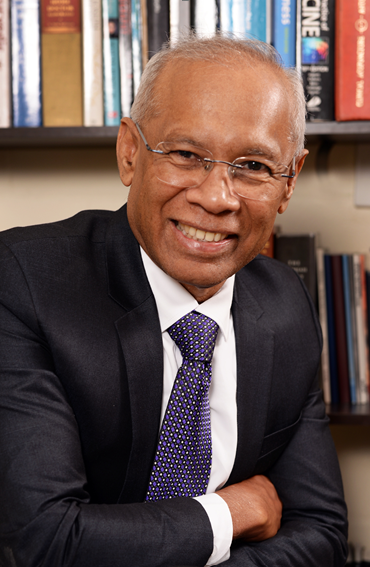
Some of the most valuable lessons in my life did not come from classrooms, qualifications or professional achievements. They came from experiences I would never have willingly chosen.
Looking back over nearly 70 years, I have realised that success can sometimes reinforce what we already believe. Adversity, on the other hand, often forces us to question our assumptions, reconsider our priorities and discover qualities in ourselves and others that we might otherwise never recognise.
I certainly did not understand this when I was younger.
When humanity mattered more than identity
One experience profoundly changed the way I see other people.
While practising medicine in Sri Lanka during a period of serious political unrest, I was forced at gunpoint to treat a wounded JVP member. As a doctor, I believed my responsibility was to treat the injured person in front of me, regardless of his political affiliations.
That incident subsequently placed me in serious difficulty and eventually contributed to my decision to leave Sri Lanka in 1990.
Yet something remarkable happened during that frightening period. Several people came forward to help me. Some were not close friends. Some did not share my religion or ethnic background. A few even took personal risks to assist me.
They simply recognised another human being in difficulty.
Looking back over my entire life, I now realise that this was not an isolated experience.
I have been helped, guided, encouraged and supported by countless wonderful people. They came from different ethnic backgrounds, spoke different languages, followed different religions and belonged to different cultures. They were of different ages, genders and skin colours.
Despite all those differences, they contributed to my journey in ways both large and small.
The more I reflect on this, the more grateful I become—not simply to particular individuals, but to humanity itself.
Perhaps that is why, as I grow older, identity has become less important to me. I increasingly see people beyond the labels we attach to ourselves and one another.
Our differences are real, and our cultures and traditions deserve respect. But beneath them, I have discovered something far more meaningful: our shared humanity.
An unexpected beginning
Leaving Sri Lanka meant leaving behind a familiar life and beginning again in Australia.
At the time, I could not have imagined where that journey would lead.
My life gradually moved from medicine into education, entrepreneurship, further study, law and eventually writing.
Had circumstances unfolded differently, perhaps none of those experiences would have occurred.
I do not suggest that the difficulties were desirable or that I would have chosen them. But I can now recognise that an event which initially appeared to close one chapter eventually opened others.
Sometimes what appears to be an ending becomes an unexpected beginning.
Failure taught me to ask better questions
Not every difficult experience in my life came from circumstances beyond my control. Some resulted from my own decisions.
I have experienced substantial financial losses through investments I entered without sufficient research and due diligence.
At the time, I regarded those experiences simply as failures. Looking back, they taught me something important: enthusiasm is not the same as understanding, and confidence should never replace careful investigation.
Today, before making important decisions, I spend more time researching, questioning assumptions, considering what could go wrong and seeking advice from people who know more than I do.
I have also learnt to ask better questions when things do not go according to plan.
Instead of asking only, “Why did this happen to me?”, I try asking, “What can I learn from this? What could I have done differently? What is within my control now?”
Sometimes our failures teach us what our successes never could.
Learning when to let go
When I was younger, I believed that working hard enough and planning carefully enough should produce the outcomes I wanted.
I now understand that I am only one small part of an enormous, interconnected world.
My actions, preparation and attitude are largely within my influence. Outcomes depend on many other people and circumstances.
That understanding has helped me spend less time worrying about things I cannot change.
It has also taught me that persistence and letting go are not opposites.
There are times when we must stand firm and continue despite difficulties. But there are also times when continuing to fight merely prolongs our suffering.
Recognising when to let go is something I am still learning.
For me, letting go does not mean indifference or abandoning responsibility. It means accepting what cannot be changed and releasing the unnecessary emotional burden of trying to control it.
There can be considerable peace in that acceptance.
The lessons I carry at 70
I do not regret the decisions I made when I was younger. I believe I did the best I could with the knowledge, experience and resources available to me at the time.
But I see adversity differently today.
I have learnt that setbacks can teach us humility, mistakes can improve our judgement, and difficult circumstances can reveal unexpected kindness in others.
I have also learnt not to define myself—or anyone else—by a particular failure, experience, qualification, nationality or title.
Those things may form part of our stories, but they need not determine the rest of our lives.
I cannot promise that every difficulty will lead to a better outcome. Life offers no such guarantees. But even when we cannot change what has happened, we can often discover something valuable in how we respond.
Looking back, I realise that some of my most precious gems were not discovered through achievement, but through adversity—and through the extraordinary kindness of ordinary people who helped me along the way.