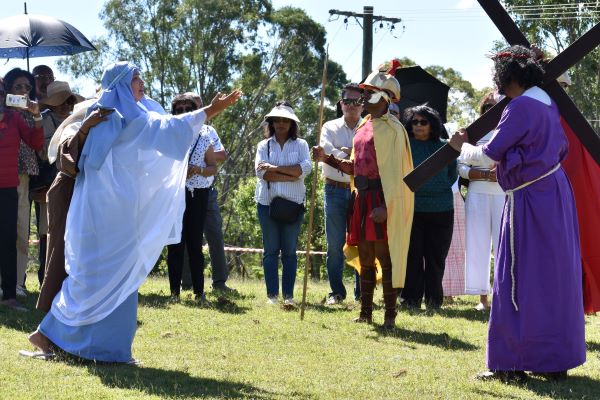
The intersection of religious devotion and cultural heritage often serves as a profound catalyst for community cohesion, particularly within the expatriate Sri Lankan community in Australia. On the occasion of Palm Sunday, the Sri Lankan NSW Catholic Association (SLNSWCA) orchestrated a theatrical presentation of “The Passion of Christ” at the Mount Schoenstatt Shrine in Mulgoa, a performance that resonated deeply with those in attendance. This production was not merely a dramatic retelling of historical and ecclesiastical events but functioned as a testament to the enduring spirit of a community committed to preserving its spiritual roots whilst navigating the complexities of life in a modern, secular environment.
The selection of the Mount Schoenstatt Shrine as the venue for this performance was instrumental in establishing an atmosphere of contemplative solemnity. Situated on approximately 50 acres of undulating bushland and expansive fields at 230 Fairlight Road, the shrine has been a cornerstone of the spiritual landscape in New South Wales since its dedication in May 1968. The shrine itself is an architectural replica of the original Schoenstatt Shrine in Germany, established in 1914 by Father Joseph Kentenich. As one of over 200 such replicas worldwide, the Mulgoa site is managed by the Schoenstatt Sisters of Mary and is recognised as a designated pilgrimage destination within the Diocese of Parramatta. The three pilgrim graces associated with the shrine, Home, Transformation, and Witness, provided a poignant backdrop for a narrative focused on sacrifice and redemption.
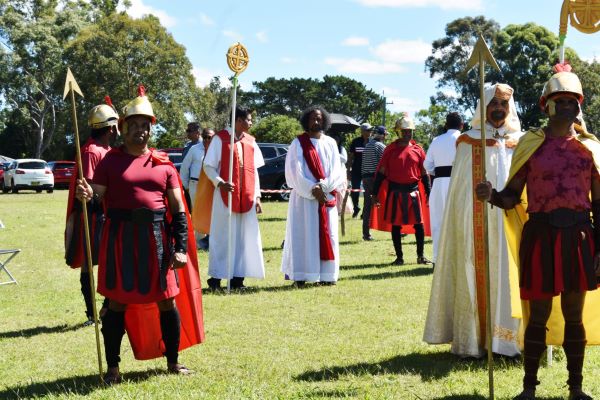
The production was directed by Maliza De Silva, operating under the insightful guidance of Father Treesen. Perhaps the most remarkable aspect of this community endeavour was the brevity of its preparation; the entire performance was consolidated through a mere two rehearsals. Such a feat is the antithesis of contemporary professional theatre, which often requires months of meticulous planning and practice. Nevertheless, the amateur cast, comprised entirely of community members, imbued their roles with a level of heart and authenticity that far exceeded the limitations of their preparation time. The audience was reportedly left amazed by the calibre of the performance, which managed to capture the emotional gravity of the Passion narrative through earnest participation and shared conviction.
The visual and auditory elements of the production were replete with detail, reflecting a significant collaborative effort behind the scenes. Sucharitha Perera was responsible for the costume work, ensuring that the attire of the actors reflected the historical context of the narrative while remaining practical for an outdoor performance. The props, which are essential in grounding a biblical drama in a sense of physical reality, were meticulously handled by Aubrey Joachim and Claude Perera. Furthermore, the narrative structure of the play was enhanced by the narration of Senani Gunasekara, whose voice guided the audience through the chronological events leading to the crucifixion and resurrection.
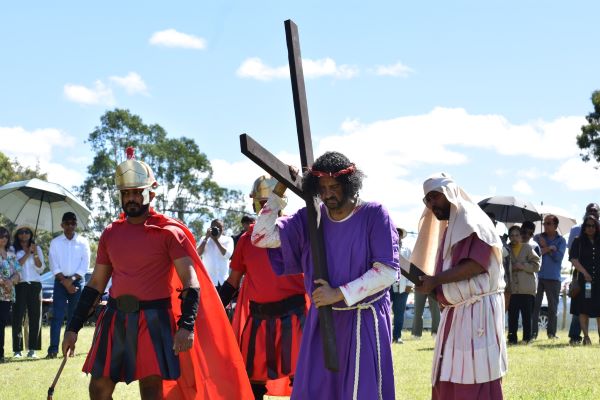
Dialogue for the production was crafted by a trio of contributors, including Father Treesen, Aubrey Joachim, and Vernon Peiris. Their script sought to balance theological accuracy with accessibility, ensuring that the message of the Passion remained central to the experience. This linguistic effort was paired with the musical contributions of Malith De Silva, whose compositions served to underscore the dramatic tension and emotional release inherent in the story. In a performance of this nature, music acts as a bridge between the visual action and the internal reflections of the audience, a task that was executed with great sensitivity.
The programme for the day extended beyond the theatrical performance, encompassing a full liturgical experience that is central to the observance of Palm Sunday. Following the conclusion of the play, participants and spectators alike engaged in the Blessing of the Palms and the celebration of Holy Mass. These traditional rites serve to connect the local community with the broader global Catholic Church, reaffirming their shared identity through ancient rituals. The day culminated in a community lunch, providing an opportunity for fellowship and the strengthening of social bonds within the diaspora.
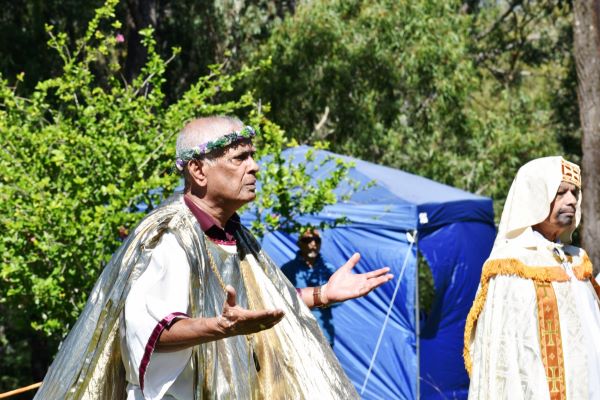
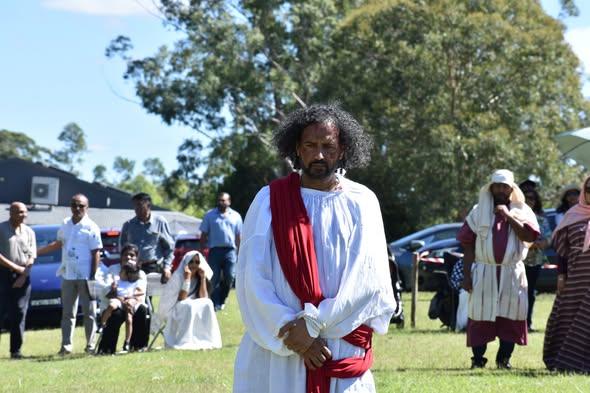
For the Sri Lankan NSW Catholic Association, events of this nature are vital in maintaining a sense of cultural continuity. As the community grows and evolves within Australia, the deliberate effort to engage in traditional religious performances ensures that the values and stories of their heritage are passed down to younger generations. The success of “The Passion of Christ” at Mulgoa highlights the untapped potential of community-led arts programmes to foster a sense of belonging and purpose. It is through these collective efforts, where members contribute their time, talent, and resources, that the spirit of the community is most vividly expressed.
Special acknowledgement must be given to Claude Perera, whose photography documented the event, capturing the nuances of the performance and the interactions of the community members. In an era where digital presence is paramount, such visual records are essential for sharing the stories of the diaspora with a global audience. eLanka, as a premier digital hub for the Sri Lankan community, remains dedicated to highlighting these positive stories and celebrating the achievements of Sri Lankans worldwide.
Whether it is through the eLanka Business Directory or our specialised portals such as eLanka Weddings and eLanka Property, our mission is to support the financial and social success of our members. The Passion play in Mulgoa is a shining example of the service excellence and social consciousness that we value, demonstrating that when a community unites with a common purpose, the results are nothing short of extraordinary.
As we look forward to future events, the memory of this Palm Sunday performance will undoubtedly remain a source of inspiration. It serves as a reminder that devotion, when coupled with community talent, has the power to transform a simple bushland shrine into a theatre of profound spiritual significance.
Source: https://web.facebook.com/share/p/1XP4ai8omr/
Please visit eLanka Facebook page for more photos (click here)
This article was written based on the source https://web.facebook.com/share/p/1XP4ai8omr/, kindly email us at info@eLanka.com.au if any information needs to be corrected.
At eLanka, we respect the rights of creators. If we have used an image you own and you’d like it removed, please email us at info@elanka.com.au and we’ll handle it promptly.