Thunder and Lightning: The Science Behind Nature’s Powerful Storms and How to Stay Safe
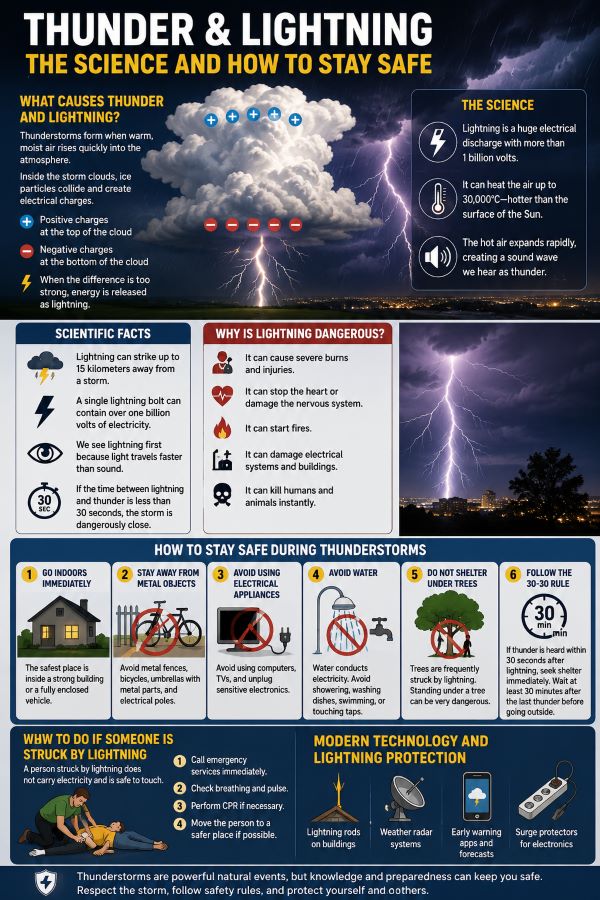
Thunderstorms are among the most powerful and fascinating weather events on Earth. They can produce heavy rain, strong winds, hail, lightning, and thunder within a very short time. Although thunderstorms are common in many parts of the world, they can also be dangerous and sometimes deadly if proper safety measures are not followed.
What Causes Thunder and Lightning?
Thunderstorms form when warm, moist air rises rapidly into the atmosphere. As the air rises, it cools and condenses into water droplets and ice particles, forming large storm clouds called cumulonimbus clouds.
Inside these clouds, collisions between ice particles create electrical charges. Positive charges gather at the top of the cloud while negative charges build up at the bottom. When the electrical difference becomes too strong, the energy is released as lightning.
Lightning is an enormous electrical discharge that can heat the surrounding air to temperatures hotter than the surface of the Sun — around 30,000°C. This sudden heating causes the air to expand rapidly, creating the sound wave we hear as thunder.
Why Is Lightning Dangerous?
Lightning is extremely dangerous because it carries millions of volts of electricity. It can:
- Cause severe burns and injuries
- Stop the heart or damage the nervous system
- Start fires
- Damage electrical systems and buildings
- Kill humans and animals instantly
Every year, thousands of people around the world are injured or killed by lightning strikes.
Scientific Facts About Thunderstorms
- Lightning can strike up to 15 kilometers away from a storm.
- A single lightning bolt can contain over one billion volts of electricity.
- Thunder travels slower than lightning, which is why we see lightning before hearing thunder.
- If the time between lightning and thunder is less than 30 seconds, the storm is dangerously close.
How to Stay Safe During Thunderstorms
1. Go Indoors Immediately
The safest place during a thunderstorm is inside a strong building or a fully enclosed vehicle. Avoid open fields, beaches, and hilltops.
2. Stay Away from Metal Objects
Metal conducts electricity. Avoid:
- Metal fences
- Bicycles
- Umbrellas with metal parts
- Electrical poles
3. Avoid Using Electrical Appliances
Lightning can travel through electrical wiring. During a storm:
- Avoid using computers and televisions
- Do not charge phones
- Stay away from plugged-in devices
4. Avoid Water
Water conducts electricity very well. Avoid:
- Showering
- Washing dishes
- Swimming
- Touching taps or pipes
5. Do Not Shelter Under Trees
Trees are frequently struck by lightning. Standing under a tree can be extremely dangerous.
6. Follow the 30-30 Rule
- If thunder is heard within 30 seconds after lightning, seek shelter immediately.
- Wait at least 30 minutes after the last thunder before going outside again.
What to Do If Someone Is Struck by Lightning
A person struck by lightning does not carry electricity and is safe to touch.
Steps to follow:
- Call emergency services immediately.
- Check breathing and pulse.
- Perform CPR if necessary.
- Move the person to a safer place if possible.
Quick medical attention can save lives.
Modern Technology and Lightning Protection
Scientists and engineers have developed many systems to reduce lightning damage, including:
- Lightning rods on buildings
- Weather radar systems
- Early warning apps and forecasts
- Surge protectors for electronics
These technologies help protect people, homes, and infrastructure from severe storm damage.
Conclusion
Thunder and lightning are powerful natural phenomena created by complex atmospheric processes. While thunderstorms can be beautiful to observe, they must always be treated with caution and respect. Understanding the science behind storms and following proper safety measures can greatly reduce the risk of injury and save lives.
Nature is powerful, but knowledge and preparedness are our best protection.