News & Community eLanka

eLanka

Monday, 25 May 2026
  • Home
  • Read History
  • Articles
    • eLanka Journalists
  • Events
  • Useful links
    • Obituaries
    • Seeking to Contact
    • eLanka Newsletters
    • Weekly Events and Advertisements
    • eLanka Testimonials
    • Sri Lanka Newspapers
    • Sri Lanka TV LIVE
    • Sri Lanka Radio
    • eLanka Recepies
  • Gallery
  • Contact
Newsletter
Sri lankan news
  • eLanka Weddings
  • Property
  • eLanka Shop
  • Business Directory
eLankaeLanka
Font ResizerAa
Search
  • Home
  • Read History
  • Articles
    • eLanka Journalists
  • Events
  • Useful links
    • Obituaries
    • Seeking to Contact
    • eLanka Newsletters
    • Weekly Events and Advertisements
    • eLanka Testimonials
    • Sri Lanka Newspapers
    • Sri Lanka TV LIVE
    • Sri Lanka Radio
    • eLanka Recepies
  • Gallery
  • Contact
Follow US
© 2005 – 2026 eLanka Pty Ltd. All Rights Reserved.
Home » Goodnews Stories Srilankan Expats » Articles » Why Sri Lanka’s export basket should take a welcome tilt to Oil Palm-By Steve A. Morrell
Articles

Why Sri Lanka’s export basket should take a welcome tilt to Oil Palm-By Steve A. Morrell

eLanka admin
Last updated: August 23, 2021 2:08 pm
By
eLanka admin
ByeLanka admin
Follow:
Share
7 Min Read
SHARE
Views: 14

Why Sri Lanka’s export basket should take a welcome tilt to Oil Palm-By Steve A. Morrell

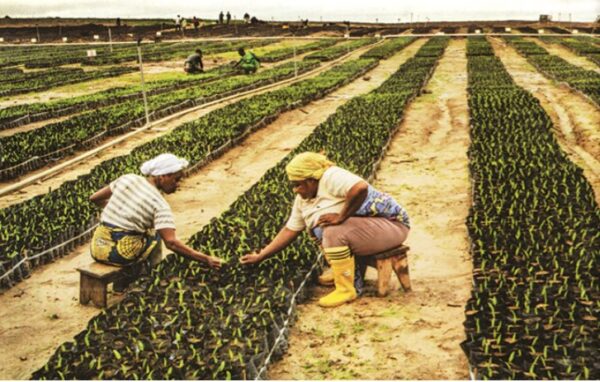
Oil Palm

Source:Island

The National Geographic Magazine in their publication of December 2018, had a lot to say about the benefits of oil palm.

‘The abundant oil from the fruit of oil palm can be found under different ingredient names in everything from cookies to soap to lipstick. A natural alternative to trans fats. It provides many other benefits. It is cheap to produce, stable in processing, and slow to smoke it has a long shelf life’

The African oil palm, a native to Africa has been introduced all over the world. The tree is an oil producing machine with some 20 fruit bunches found at the top of its trunk each containing up to 3000 palm fruit.

Late Ranjan Wijeratne, when he was chairman of Sri Lanka State Plantations Corporation ( SLSPC) introduced and promoted planting oil palm in the wet zone areas and in plantations in the South. Land topography, and weather conditions were ideally suited to propagate the crop. He selected a few estates to introduce the crop, Nakiyadeniya Estate, was one of them. He was on record to inspire the Plantation industry that oil palm was beneficial to the country and considering its many uses was a product of the future.

Following detailed expert study that the water table would not be affected, and low lying plantation areas were suited for the crop, he embarked on its propagation.

Professor Asoka Nugawela, Department of Plantation Management Faculty of Agriculture, and Plantation Management, Wayamba University of Sri Lanka, said Palm oil is rapidly the world’s most widely used vegetable oil. He confirms beneficial findings by Hilary Rosner, author of the National Geographic story, that palm oil is found in a vast range of products from confectioneries and baked goods, to cereals, washing powders cosmetics, and even first generation bio fuels.

Indonesia is the largest producer of palm oil. However, smaller nations like Sri Lanka now have an unprecedented opportunity to offer valuable alternatives to international markets in the form of sustainably cultivated oil palm.

Quite in contrast to the ‘slash and burn’, policy of nations like Borneo, and Indonesia, where admittedly its harmful repercussions were experienced to the fauna and flora of these areas, and also the decimation of wild life, plantations areas identified by Ranjan Wijeratne were un profitable rubber lands, that did not need decimation or environmental damage to establish the crop.

Due to his farsighted policy to establish the crop, his efforts have now resulted in plantation areas successfully established about 11,000 hectares in southern plantation lands.

Those lands situated in the wet zone areas of the South, did not damage the water table; and were not environmentally damaging. It is also of relevance that arable rubber lands were not destroyed to accommodate oil palm.

Travelling to Galle on the highway, we have observed small holders, too established some land space to oil palm, which should be encouraged,

This was confirmed by Professor Nugawela. He is reported to have said the government’s stated aim for cultivating 20,000 hectares of oil palm would auger well from the perspective of the progressive future for the domestic economy.

Sri Lanka’s annual edible oil requirement is 160,000 metric Tonnes (MT). conversely the country produces a total of 53,000 MT for example coconut oil, and other oils, leaving a deficit of 89,000 MT of edible oils. The actual, oil requirement could be much higher, he said.

He further said, ‘ While these dynamics present notable challenges to the Sri Lankan economy particularly in terms of the depletion of foreign exchange, they also speak to vast untapped potential for import substitution and export development. In 2015,Sri Lanka spent Rs.20.8 Billion on oil and fats imports with a significant majority of those imports being for oil palm. Collectively, palm kernel, palm oil, palm stearin, and crude palm oil, accounted for 164,835 MT or nearly 30 percent of all edible oil and fats imported to Sri Lanka.

The competing oils are soya bean, canola, sunflower Additionally, of course, Coconut oil.

Import substitution is one aspect for its benefits, but of greater relevance is its export potential and above all comparatively minimal cost.

Our readings have revealed the crop is native to African countries, For example Benin, and Gabon. However it is of consequence that Sri Lanka too could add to its export product and reap such benefits which in the current context of things, the economy looks to the plantations to sustain the economy.

Profits earned could benefit the worker population for social welfare development, ensuring more comfortable circumstances for the workers on estates.

As was established by the Plantation Trust, an organization established by the Dutch Government, under an aid programme, workers could be ensured good living circumstances.

Palm oil uses far less in cultivable extents but with far greater profit margins. Coconut, with a cost of production (COP) of Rs.15. per nut, and an net sales average (NSA) of Rs, 40. Coconut produces yields per hect, of 7000, nuts, but, Oil Palm produces 18,000 kg, per hectare.

Similarly Tea and rubber are costly to produce. In comparison oil palm costs far less..

Professor Nugawela’s findings need serious consideration for export potential of the oil palm industry and its future as a valuable foreign exchange earner.


TAGGED:Asoka NugawelaNakiyadeniya EstateNational Geographic Magazine
Share This Article
Facebook Whatsapp Whatsapp LinkedIn Email Copy Link Print
Previous Article The Ballet School of Colombo making history in Sri Lanka-by PRIYAN DE SILVA
Next Article Sri Lanka Tourism highlighted by CNN Travel-by Kimarli Fernando
FacebookLike
YoutubeSubscribe
LinkedInFollow
eLanka Wedding
- Advertisement -
Ad image
Most Read
Vesak 2026 Melbourne, Millennium Imports Australia, Vesak Bath Dansala Melbourne, Drive-Thru Vesak Dansala, Sri Lankan community Australia, Buddhist celebrations Melbourne, Vesak Sri Lanka Australia, Dandenong South Vesak event, Dana tradition Buddhism, Vesak almsgiving Australia, Sri Lankan Australians, Melbourne Sri Lankan events, Vesak lanterns Melbourne, Buddhist community Australia, Sri Lankan culture in Australia, Vesak Full Moon Poya Day, Sannasa Digital, community service Melbourne, Sri Lankan diaspora Australia, Buddhist charity event, Vesak rice dansala, Melbourne Buddhist events, Sri Lankan heritage Australia, eLanka news, Australian Sri Lankan community, cultural events Melbourne, Buddhist generosity tradition, Vesak food donation, Millennium Imports Dandenong, Sri Lankan Vesak celebration

Millennium Imports Serves Over 5,000 in Successful 3rd Annual Drive-Thru Vesak Almsgiving

Artificial Intelligence (AI)

Artificial Intelligence and workforce vulnerability-by Dr. Chandrika Subramaniyan

Pentecost Global Day of Prayer-by Charles Schokman

The Ghosts of Mount Mary-A Forgotten Railway Legacy

The Ghosts of Mount Mary: A Forgotten Railway Legacy

Concerns regarding the occurrence of foamy urine-eLanka

Concerns regarding the occurrence of foamy urine, its causes, and Remedies-by Harold Gunatillake

Related News
The annals of Sri Lankan sporting history are punctuated by moments of profound triumph, yet few resonate with as much enduring power as the victory in the 1996 Cricket World Cup. On Saturday, 16 May 2026, the global cricket community gathered at the historic Royal Selangor
Articles

Legends Reunite: chaTax® Accountants Sponsors Sri Lanka’s 1996 World Cup 30th Anniversary Celebration in KL

Sri Sambuddha Raja Wadim
Articles

Shri Sambuddha Raja Wadim (ශ්‍රී සම්බුද්ධ රජා වදිම්) – Cover by Ruvee Nimnadi

Sri Lanka rugby, Asia Rugby Men’s Championship 2026, Sri Lanka vs Hong Kong China rugby, Tuskers rugby team, Colombo Racecourse Grounds, Sri Lankan rugby news, Asia Rugby Championship, Hong Kong China rugby, Sri Lanka sports news, rugby in Sri Lanka, Viduna Amaneth, Navin Marasinghe, Thenuka Nanayakkara, Sri Lanka rugby highlights, Asian rugby tournament, Sri Lankan sports pride, rugby championship 2026, Colombo rugby match, Sri Lanka national rugby team, eLanka sports news, Sri Lankan rugby fans, international rugby Asia, Sri Lanka rugby performance, rugby match report, Asia rugby updates, Sri Lankan athletes, rugby community Sri Lanka, Sri Lankan sporting achievements, Colombo sports events, rugby supporters Sri Lanka
Articles

Heartbreak for the Tuskers: Sri Lanka Pushed Hong Kong China to the Brink in Thrilling Finish

ALL TIME RELEVANCE OF BHAJA GOVINDAM PROPOUNDED BY INDIAN SAINT ADI SANKARA FOR UNIVERSAL PEACE
Articles N.S.Venkataraman

ALL TIME RELEVANCE OF BHAJA GOVINDAM PROPOUNDED BY INDIAN SAINT ADI SANKARA FOR UNIVERSAL PEACE-by N.S.Venkataraman

eLanka Newsletter -24th May 2026 - 4t Edition - Sri Lankans In Australia
Articles eLanka Newsletters

eLanka Newsletter -24th May 2026 – 4t Edition – Sri Lankans In Australia

  • Quick Links:
  • Articles
  • DESMOND KELLY
  • Dr Harold Gunatillake
  • English Videos
  • Sri Lanka
  • Sinhala Videos
  • eLanka Newsletters
  • Obituaries
  • Sunil Thenabadu
  • Dr. Harold Gunatillake
  • Tamil Videos
  • Sinhala Movies
  • Trevine Rodrigo
  • Photos
  • eLanka Newsletter

eLanka

Your Trusted Source for News & Community Stories: Stay connected with reliable updates, inspiring features, and breaking news. From politics and technology to culture, lifestyle, and events, eLanka brings you stories that matter — keeping you informed, engaged, and connected 24/7.
Kerrie road, Oatlands , NSW 2117 , Australia.
Email : info@eLanka.com.au / rasangivjes@gmail.com.
WhatsApp : +61402905275 / +94775882546
  • About eLanka
  • Terms & Conditions

Disclaimer:
eLanka is committed to sharing positive and community-focused stories. We do not publish or endorse political, religious, or ethnic viewpoints. The content published on eLanka, including articles and newsletters, reflects the opinions and views of the respective authors and not those of eLanka. eLanka accepts no responsibility or liability for the accuracy, completeness, or consequences of any content provided by contributors.

(c) 2005 – 2025 eLanka Pty Ltd. All Rights Reserved.