2026 MHCS Winter Polyglot Newsletter
Welcome to the Winter edition of Polyglot for 2026. The NSW Multicultural Health Communication Service is excited to share information, events, and other opportunities to improve the health and wellbeing of culturally and linguistically diverse communities.
Video: Recording of the Engaging Effectively with Refugee Communities Forum 2026
Refugee Week 2026 provided an opportunity to celebrate the resilience, strength and contributions of people from refugee backgrounds through a series of events focused on partnership and health equity. A highlight of the week included the
Engaging Effectively with Refugee Communities Forum
presented by the NSW Multicultural Health Communication Service (MHCS) in partnership with the NSW Refugee Health Service (RHS) and Settlement Services International (SSI) with the support of Social Policy and Health Equity Branch and Strategic Communication and Engagement (SCE) Branch at NSW Ministry of Health. The online forum brought together health and community leaders to mark the launch of new measles and influenza vaccination
resources translated into 20 refugee languages.
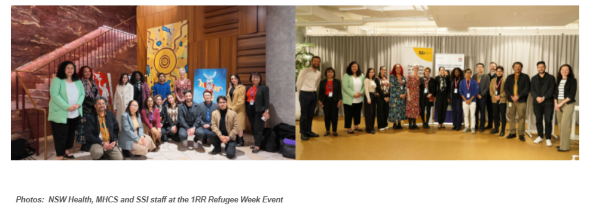
In addition, NSW Health staff, MHCS and SSI gathered together at the NSW Ministry of Health Refugee Week Event to highlight the importance of collaboration in supporting people from refugee backgrounds for better health outcomes. Featured resources included the
Refugee Camp In My Neighbourhood and the Translated Health Resources for Refugee Communities Project
The event also featured live musical performances, followed by a screening of the award-winning animated film Dalal’s Story, and an exhibition of artwork created by refugee artists, reflecting on the Refugee Week 2026 theme, A Million Stories.
Earlier in the year, MHCS was also proud to present at the Australia and New Zealand Refugee Trauma Recovery in Resettlement Conference. As part of the Building Bridges: Interpreters and Translators session, MHCS showcased the Translated Health Resources for Refugee Communities Project, a collaborative initiative focused on improving access to important health information for people from refugee backgrounds.
Finally, MHCS is grateful to be featured in Multicultural NSW’s NSW Settlement Hub, a new online resource designed to support people from refugee backgrounds as they build their lives in NSW. The Hub provides health information and access to healthcare services, alongside resources on education, employment, community support, transport and more, available in multiple languages and accessible formats.
Translated respiratory illness resources
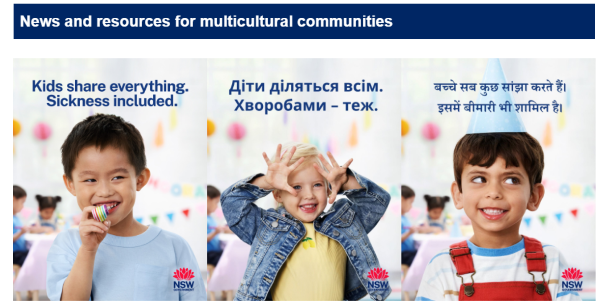
Timely vaccination gives your child the best protection against serious diseases like measles, whooping cough and more. You can stay on track with their vaccinations by downloading your child’s personalised schedule today. To find out more, talk to your doctor or visit the NSW Health website. You can also access multilingual resources to support your community.
Influenza (flu) is serious but isn’t as scary if you’re vaccinated. The yearly flu vaccine is the best way to protect yourself, your family and your community from serious illnesses.
The flu vaccine is quick, easy and recommended for everyone aged 6 months and over. The flu vaccine is free for:
- Children aged 6 months to under 5 years.
- Pregnant women.
- Aboriginal people aged 6 months and over.
- Anyone aged 65 years and over.
- People with serious health conditions.
Book your flu vaccine at your GP, pharmacy, or Aboriginal Medical Service. Everyone aged 2 years or over can get vaccinated at a pharmacy. Parents or carers with children aged 6 months to under 2 years old should see their GP for their flu vaccine.
This year, there is also a free RSV vaccine (Arexvy) available for adults aged 75 and over and Aboriginal people aged 60 years and over.
Respiratory syncytial virus or RSV is a highly infectious illness that mostly affects younger children and older adults.
Translated resources are available for download to help us encourage the multicultural communities to get vaccinated this winter:
- Social media tiles and posters – Influenza Vaccination Campaign in English, Arabic, Chinese Simplified, Korean, Indonesian and Vietnamese.
- Influenza factsheet in multiple languages.
- Posters for 65+ audiences in Arabic, Chinese Simplified, Indonesian and Vietnamese.
- Factsheet about pregnancy vaccinations, including influenza and RSV. Available in 13 languages.
- If you’re a healthcare professional, please download flu vaccination prompt pack in Arabic, Burmese, Chinese Simplified, Chinese Traditional, Dari, Farsi, Korean, Kurdish-Kurmanji, Macedonian, Nepali, and Vietnamese.
Carbon monoxide poisoning awareness
This winter, NSW Health is reminding everyone never to use BBQs or outdoor heaters inside the home. Outdoor heaters and BBQs make carbon monoxide, a poisonous gas you can’t see, taste, or smell. Translated carbon monoxide safety factsheets and resources are available in more than 20 languages. Share these important resources with your family, friends and community to help spread the word and stay safe this winter.
No Smoking means No Vaping free resources
‘No Smoking means No Vaping’ resources are available from NSW Health to increase community awareness that vaping is banned in all smoke-free areas. The posters are available in 10 community languages, and can be downloaded, or a selection of printed copies are available to order for free on the NSW Health website.
The ‘No Smoking means No Vaping’ posters can be displayed alongside the ‘No Smoking’ signs but cannot replace them. ‘No Smoking’ signs are mandated to be displayed under the Smoke-free Environment Act 2000. For more information, visit the NSW Health website.
Regular dental check-ups are important for your child’s health
Regular dental visits help children maintain healthy teeth and gums so they can smile, eat, speak and feel confident! Children aged 0-17 years that are eligible for Medicare may be able to get free dental care under the Child Dental Benefits Schedule (CDBS) at both private and public dental clinics.
To find out more, visit the NSW Health website. You can also access a multilingual poster and postcard to help increase awareness among your community.
Regional health assistance for families
The Isolated Patients Travel and Accommodation Assistance Scheme (IPTAAS) provides financial assistance to people from regional NSW to access specialist care and healthcare services. The IPTAAS online system is now easier and safer for you to use with an improved security system. To find translated resources and learn more about how IPTAAS can help your patients, visit the IPTAAS website or call your local team on 1800 478 227.
Raise It
When you or a loved one is in hospital, it can be a stressful and uncertain time. You may notice changes about you or your loved one’s condition that might worry you. This could be as simple as changes in how they are looking, breathing, talking or acting. If you’re worried your or your loved one’s condition is getting worse in hospital, you can Raise It at any time. Raise It is a simple process available in NSW public hospitals and health services to support you to raise concerns about your or your loved one’s condition getting worse. To learn more, visit the NSW Health website. Translated social media tiles and posters are also available to download.
Training, opportunities and professional development
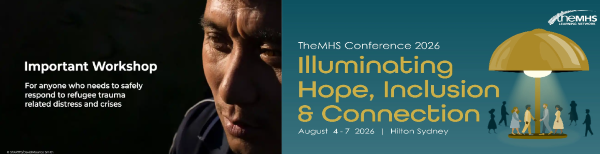
Images: Accidental Counsellors Workshop – STARTTS / David Maurice Smith & TheMHS Conference 2026
24 July 2026: Accidental Counsellors: Responding to Refugee Trauma Related Distress and Crises. The NSW Service for the Treatment and Rehabilitation of Torture and Trauma Survivors (STARTTS) is providing evidence-informed training to equip health professionals and community workers with essential skills to offer immediate, compassionate and culturally safe support.
4 August 2026: TheMHS Conference 2026. This event invites health workers and community workers to discuss the needs of people most impacted by their mental health challenges and experiences of social inclusion.
15 August 2026: Dr Paula Sanchez – A Nursing Journey from Chile to South Western Sydney. Drawing on over two decades of clinical and academic experience, Dr Paula Sanchez from Western Sydney University reflects on changes in healthcare delivery while championing accessible education and advancing research in oral health within cardiac care.
31 August – 6 September 2026: Multicultural Health Week 2026. Save the date and stay tuned for announcements coming soon.
9-11 September 2026: Australian Institute of Family Studies (AIFS) Conference 2026. As Australia’s leading national event on family wellbeing, the conference showcases the latest evidence, research and ideas shaping the lives of families.
15-16 October 2026: Older Persons Mental Health First Aid. The Older Person Mental Health First Aid course teaches participants who work with, care for or support adults aged 65+ how to provide initial support to someone who may be experiencing a mental health problem or mental health crisis, until professional help is received or the crisis resolves.
Publications
Gargya, D. et al (2026)
Challenges of multicultural healthcare practice in type 2 diabetes care: a qualitative study of Australian healthcare professionals,Diabetes and endocrinology
Harrison, C. et al (2026)
Exploring health information needs and preferences of culturally and linguistically diverse (CALD) women during pregnancy: A mixed methods studySSRN
Miosku, L. et al (2026) Barriers and facilitators affecting mental health service use among migrants and refugees in Australia: a systematic review
Nicholls, T. et al (2026)
Engaging Culturally and Linguistically Diverse Communities to Prepare for Lung Cancer Screening Implementation in Australia: A Qualitative Focus Group Study Health Expectations
Welcome to this edition of the Polyglot quarterly newsletter. We aim to make your news as targeted and relevant as possible. If you have any questions or suggestions for future topics or campaigns, please send us your feedback and comments: SESLHD-MHCSNEWS@health.nsw.