What happens after a river becomes a legal person?
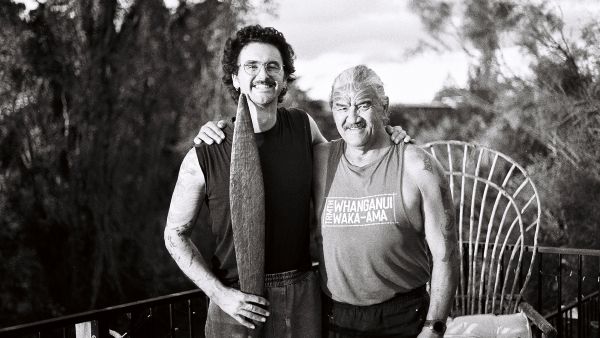
A Yale PhD candidate moved to Whanganui to investigate what nearly a decade of legal personhood has meant for Te Awa o Whanganui and its people.
As it winds through bush-clad valleys and farmland towards the ocean, picking up kayakers, silt and stories along the way, Aotearoa’s longest navigable river, Te Awa o Whanganui, slows as it prepares to flow through the city of Whanganui before connecting with the sea.
On its northern bank, just off State Highway four near the eastern edge of the city, sits Te Ao Hou marae, a place of connection and learning. Its main hapū is Ngāti Tupoho of the iwi Te Āti Haunui-a-Pāpārangi.
It’s here on the banks of the river that Yale School of the Environment PhD candidate Raffaele Sindoni spent much of his time, learning from kaumātua, kaiārahi and rangatahi, playing guitar and absorbing stories and knowledge about the region, particularly Te Awa o Whanganui.
Raffaele, who is also a writer and folk musician, spent five months living in Whanganui, never far from the Whanganui River, the first in the world to be recognised as a legal person in 2017.
The groundbreaking legislation, honouring te ao Māori, inspired communities around the world to explore legal protections for rivers and mountains. It also drew Raffaele to Aotearoa.
His research, in collaboration with Native American tribes and prior scholarship in the United States, led him to investigate the impact of the Te Awa Tupua (Whanganui River Claims Settlement) Act nearly a decade after the river was granted legal personhood.
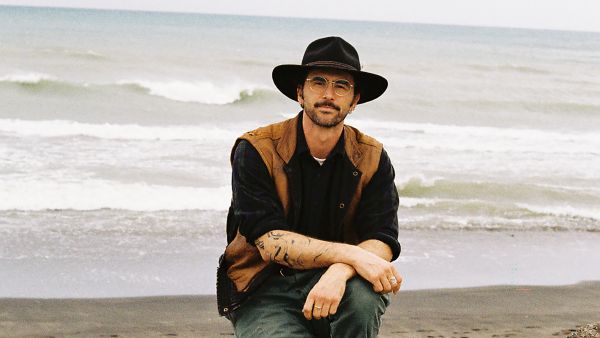
“I’m most curious about where the Act generates promising advancements, where it meets resistance, what it’s used for, and where it reaches its limits as both an expression of Indigenous relational worldviews and as an Act of Parliament operating within the structures of the New Zealand state.”
On paper, says Raffaele, granting legal personhood to a river appears to profoundly challenge colonial-capitalist understandings of land as property, water as resource, and humans and nature as separate. But, he points out, there’s a caveat.
“Rights of nature frameworks still operate within and engage with the very Western legal systems they seek to challenge. This poses an important question: how are Indigenous worldviews being translated into forms that the state recognises, and how does such a translation affect centuries of embedded legal and political Western colonial power structures?
“My research sits at this fault line. The Te Awa Tupua Act is an important entry point into scholarly and political inquiries across the world concerned with the expropriation of land, the objectification of water, climate change, and, of course, decolonisation and Indigenous sovereignty.
“These debates about legal personhood are essential for the next generation of students, activists, and lawyers as we grapple with changing relationships between people and nature. More importantly, though, they matter for all communities working to challenge the ways Western law has long shaped land, belonging, and political power.”
Over five months of fieldwork in Whanganui, he interviewed around 40 people with unique perspectives on the Act, including leaders of Whanganui hapū, farmers, members of entities that speak with or for the awa, heads of iwi settlement entities, Members of Parliament, district and regional councillors, environmental lawyers, and foresters.
Such a breadth of voices proved invaluable, says Raffaele, who’s now back in the US transcribing interviews and preparing a book based on his findings. Read more.
For interviews with Raffaele: raffaele.sindoni@yale.edu
Media contact: sophie.boladeras@auckland.ac.nz, 022 4600 388
At eLanka, we respect the rights of creators. If we have used an image you own and you’d like it removed, please email us at info@elanka.com.au and we’ll handle it promptly.
Thanks.
eLanka teamnbsp;