Kusal Mendis’ Career-Best 87* Powers Sri Lanka to Eight-Wicket Win Over Pakistan in the Third T20I

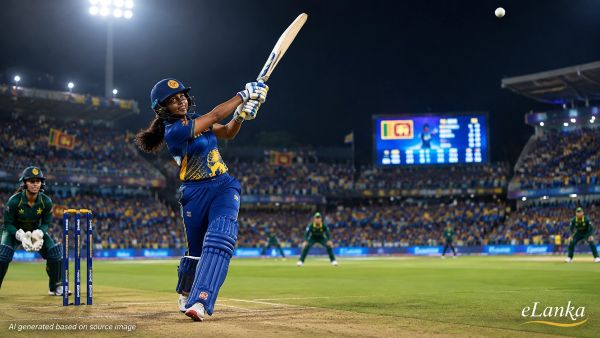
AI-generated illustration based on the source image. No authentic match photograph has been reproduced; photographs accompanying the source reports are rights-protected.
Sri Lanka finished its T20I tour of Pakistan with a performance built around composure, precision and an outstanding innings from Kusal Mendis, who struck an unbeaten 87 to guide the visitors to an eight-wicket victory in the third match at Rawalpindi on Tuesday, 13 October 2026.
Chasing a target of 169, Sri Lanka reached 172 for two with 17 balls remaining. Kusal’s career-best score in T20 internationals anchored the pursuit, while Kamindu Mendis provided fluent support with 40 from 27 deliveries. The result gave Sri Lanka a strong finish to the series, which Pakistan had already secured 2–1.
The match also brought an individual milestone for Kusal: his innings lifted his Sri Lanka T20I career tally to 2,791 runs, taking him past Pathum Nissanka’s previous national record of 2,784. It was a notable achievement on a night when the captain’s contribution proved decisive.
Shanaka’s spell shapes Pakistan’s innings
After winning the toss, Sri Lanka chose to field, and its bowlers made an early impact. Pakistan’s Sahibzada Farhan supplied the innings’ most substantial contribution, scoring 76 from 47 balls, but he received limited assistance from the top and middle order.
Eshan Malinga’s double strike in the fourth over began the slide, disrupting Pakistan’s early progress and increasing the importance of Farhan’s resistance. The opener continued to score at a brisk pace, yet Sri Lanka’s disciplined spells kept the home side from building a sustained platform.
Dasun Shanaka led the bowling effort, finishing with three wickets for 21 runs at an economy rate of 5.25. His figures made him Sri Lanka’s most effective bowler, and his controlled spell helped prevent Farhan’s innings from carrying Pakistan substantially beyond reach.
Late contributions gave the total greater substance. Abdul Samad scored 15 from 10 deliveries, while Arafat Minhas added 34 from 20, helping Pakistan reach 168 for eight from its 20 overs. The recovery ensured Sri Lanka still faced a meaningful chase, but the total remained within reach if the visitors could establish a partnership.

An AI-generated illustration of a bowling spell under stadium lights.
An early wicket, then a measured response
Pakistan found an opportunity to place pressure on the chase almost immediately. Mohammad Imran removed Lahiru Udara off the fifth ball of the innings, leaving Sri Lanka with an early wicket to replace and little time to settle.
Kusal responded with the kind of measured aggression that would define the innings. Rather than allowing the early dismissal to dictate the tempo, he built a resistance in two stages: first alongside Sineth Jayawardene, and then in partnership with Kamindu, whose confident stroke play helped shift the contest firmly towards the visitors.
The contrast between the opening setback and the eventual control of the chase was central to Sri Lanka’s performance. Kusal took responsibility for steering the innings, while the support at the other end ensured that Pakistan could not concentrate its bowling plans on a single batter.

An AI-generated illustration representing Sri Lanka’s batting partnership.
Kusal reaches a career-best and a national milestone
Kusal’s unbeaten 87 was his highest score in T20 internationals. He struck 48 deliveries, including nine fours and four sixes, combining boundary-hitting with the judgement required to keep the chase on schedule. The innings was recognised with the Player of the Match award.
Beyond the immediate result, the achievement also carried a place in Sri Lanka’s T20I record books. By reaching 2,791 career runs for the national side, Kusal moved ahead of Pathum Nissanka, whose previous tally stood at 2,784. The record reflected sustained contribution across the format, with this latest innings providing an especially emphatic addition.
Kamindu’s 40 from 27 balls complemented the captain’s work with pace and assurance. Their partnership helped take Sri Lanka from a position of early repair to a comfortable finish, with the target surpassed in 17.1 overs. It was a productive example of a chase in which one batter provided the innings’ foundation and another strengthened its momentum.
A positive finish for supporters at home and abroad
For Sri Lankan supporters in the country and across the global Sri Lankan community, the Rawalpindi result offered a fitting occasion to celebrate the team’s resilience and individual excellence. Kusal’s record-breaking score, Kamindu’s valuable support and Shanaka’s incisive bowling gave the victory several defining contributions rather than a single moment of success.
Pakistan’s Sahibzada Farhan was named Player of the Series, while Pakistan took the three-match series 2–1. Sri Lanka’s final-match win did not change that overall outcome, but it ensured the tour closed with a performance of considerable quality and a clear achievement for its captain.
The result also underlined how a T20 chase can be shaped by complementary skills: disciplined bowling to contain a formidable opponent, a calm response to an early wicket, and partnerships that steadily reduce the distance to the target. Sri Lanka delivered each element in Rawalpindi, with Kusal’s innings giving the effort its lasting headline.
Readers interested in Sri Lankan cricket coverage can also explore eLanka’s feature on Sri Lankan schoolboy cricketers in action at the T20 World Cup.

An AI-generated illustration celebrating the connection supporters share with Sri Lankan cricket.
Sources:
This article was written based on the sources Sportstar, ESPNcricinfo, and AP News, kindly email us at info@eLanka.com.au if any information needs to be corrected.
At eLanka, we respect the rights of creators. If we have used an image you own and you’d like it removed, please email us at info@elanka.com.au and we’ll handle it promptly.
Thanks.
eLanka team
eLanka Disclaimer
Content published on eLanka may be created by the eLanka team, submitted by contributors or third parties, reproduced or adapted from other sources with appropriate source acknowledgement, or provided as promotional/advertising material by our clients. While eLanka takes reasonable care in preparing and publishing content, we do not warrant its completeness or accuracy. Views expressed are those of the respective authors or contributors and do not necessarily represent the views of eLanka. Third-party contributors, content providers and advertisers are responsible for the accuracy of material they supply and for ensuring they hold the necessary rights and permissions for its publication. Advertising and promotional content should not be regarded as an endorsement by eLanka of any product, service or claim.