Improving Lankan women’s access to economic opportunities: The business case-by Subhashini Abeysinghe and Sumini Siyabalapitiya
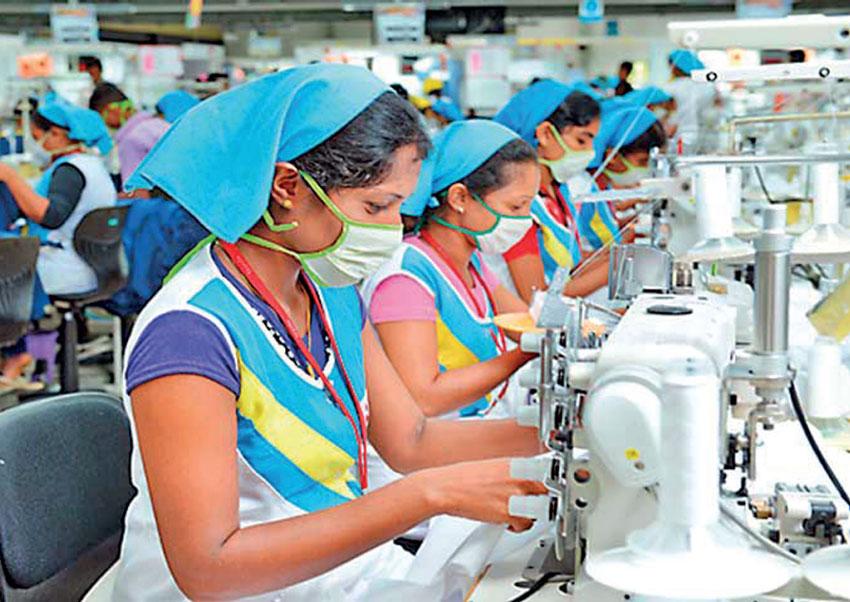
Source:Dailymirror

Sri Lanka’s own female labour force rate has hovered in the low 30% for decades – in 2021, just 31% of women were in the labour force compared to 71% of men, says the author
If 2023 is just like any other year, as women’s history month wraps up this Friday, slowly but surely, women’s faces slowly fall off the panels, roundtables, stages and meeting rooms, and everyone’s favourite buzzword, “empowerment” is retired for another year.
It is easy to make light of this corporate spectacle of course, but the myriad of barriers and challenges that women uniquely experience is very real, and because of it we are all losers – you, me, women and the economy.
As we in Sri Lanka explore the pathways out of the current crisis, it is imperative that we acknowledge the mammoth contributions that women make to the economy, hidden and unpaid, and seriously consider how to improve their access to paid, formal economic opportunities. If the evidence is anything to go by, very few countries (if any) have achieved successful economic development without creating and leveraging fair economic opportunities for women. In East and South-East Asia, women have powered their export-led manufacturing growth; over the past three decades, Vietnam’s female labour force participation rate has consistently remained over 70%, Thailand’s over 60%, and South Korea and Indonesia’s over 50%. It isn’t just a happy coincidence that across all of Asia’s rapidly developing economies, women have access to and take up formal employment.
It is generally (and fairly) assumed that equitable access to education results in equitable economic participation as well. This has unfortunately and clearly not been the case for Sri Lanka; significant investments in women’s education have not translated to economic benefits for women, nor the country.
Sri Lanka’s own female labour force rate has hovered in the low 30% for decades – in 2021, just 31% of women were in the labour force compared to 71% of men. According to the 2022 Global Gender Gap Report, Sri Lanka has the 13th largest gender gap in labour force participation in the world, dropping four positions since 2021. This poor performance is particularly notable because Sri Lanka fares remarkably well in terms of women’s access to and performance in education. Sri Lanka has achieved gender parity far ahead of others in the South Asian region in terms of literacy rates and enrolment in primary, secondary and university education. A recent study by the World Bank revealed that girls outperform boys in educational outcomes at every level of the education system and across all national examinations. Most notably, women have made up over 50% of state university enrolments since 2001, taking up a share of over 60% at present.
It is generally (and fairly) assumed that equitable access to education results in equitable economic participation as well. This has unfortunately and clearly not been the case for Sri Lanka; significant investments in women’s education have not translated to economic benefits for women, nor the country.
Why is this?
The short answer is thatit’s just not seen as worth it. The long answer is that when employment is conceived as a rational choice, the “costs” Sri Lankan women have to incur to take up a job, outweigh the rupee remuneration they receive.
A study by Verité Research conducted in 2021 looked at exactly this, and the findings are startling. On average, every Rs.100 that employed (urban) women earn in Sri Lanka costs them Rs.160; costs exceedearnings. This study is unique because it considers both rupee costs that women incur like transport and childcare, and implicit non-monetary costs like the physical and emotional cost of the double burden. In Sri Lanka, much like the rest of the world, family and society is disproportionately reliant on the unpaid labour of women for household and care work. Women are often the primary caregiver for children, andspend 2.5 times more time on household tasks than men, according to the most recent time-use survey. Because of the patriarchal nature of the society we live in, these expectations remain unchanged even when women take up full-time paid work outside the home. This comes at a “cost” obviously, even if it is seemingly hidden. According to the previously quoted study, 57% of the total cost of doing a job for women is non-monetary.
The barriers that serve to restrict women’s access to economic opportunities in Sri Lanka are multi-fold. This includes structural barriers like the lack of accessible, affordable, and quality childcare options, attitudinal and cultural barriers like the patriarchal norms that expect women to prioritize and perform a lion’s share of household and care labour, and discrimination in recruitment itself. Tackling these barriers is long overdue, not just for women at the top of the corporate ladder, but grassroots up. Stakeholders including policymakers and employers have long made excuses to avoid reform saying that it wasn’t the right time. But if the economic success of our Asian peers is any indication, it is not just the right thing to do to improve women’s access to economic activities, but the smart thing to do business-wise.
Progress in Sri Lanka is not non-existent.
A few of the heartening examples of progress made in recent years include the drafting of guidelines for quality childcare service provision by the government along with the involvement of experts, and the inclusion of state-funded maternity leave benefits in the 2018 national budget, although it was not implemented. A growing trend from the private sector also signals a shift to more inclusive policies with policies such as parental leave and remote working becoming more mainstream.
However, this is just the beginning and both the state and the private sector are yet to adopt policies that truly facilitate equitable economic opportunities for women.
The time to seize the opportunity is now – we can’t afford not to.
Subhashini Abeysinghe a Research Director attached to Verité Research, holds a B.Econ (first class honors), a Master’s Degree in Economics from University of Colombo. Sumini Siyambalapitiya a Senior Research Analyst at Verité Research, holds a dual B.A. in Mathematics/ Economics and Women, Gender and Sexuality studies from Lafayette
College (USA)