News & Community eLanka

eLanka

Monday, 29 Jun 2026
  • Home
  • Read History
  • Articles
    • eLanka Journalists
  • Events
  • Useful links
    • Obituaries
    • Seeking to Contact
    • eLanka Newsletters
    • Weekly Events and Advertisements
    • eLanka Testimonials
    • Sri Lanka Newspapers
    • Sri Lanka TV LIVE
    • Sri Lanka Radio
    • eLanka Recepies
  • Gallery
  • Contact
Newsletter
Sri lankan news
  • eLanka Weddings
  • Property
  • eLanka Shop
  • Business Directory
eLankaeLanka
Font ResizerAa
Search
  • Home
  • Read History
  • Articles
    • eLanka Journalists
  • Events
  • Useful links
    • Obituaries
    • Seeking to Contact
    • eLanka Newsletters
    • Weekly Events and Advertisements
    • eLanka Testimonials
    • Sri Lanka Newspapers
    • Sri Lanka TV LIVE
    • Sri Lanka Radio
    • eLanka Recepies
  • Gallery
  • Contact
Follow US
© 2005 – 2026 eLanka Pty Ltd. All Rights Reserved.
Home » Goodnews Stories Srilankan Expats » Articles » The Ceylon Breadfruit Tree: An Endemic Sri Lankan Treasure – By Nadeeka – eLanka
ArticlesNadeeka Kumari

The Ceylon Breadfruit Tree: An Endemic Sri Lankan Treasure – By Nadeeka – eLanka

eLanka admin
Last updated: October 18, 2025 2:35 pm
By
eLanka admin
ByeLanka admin
Follow:
Share
8 Min Read
SHARE
Views: 132

The Ceylon Breadfruit Tree: An Endemic Sri Lankan Treasure – By Nadeeka – eLanka

Ceylon Breadfruit Tree

The Ceylon breadfruit tree, known in Sri Lanka as “Del” or “Wal-Del”, is one of the island’s most beautiful and valuable endemic trees. Its scientific name, Artocarpus nobilis, reveals its noble status among Sri Lanka’s native flora. Belonging to the Moraceae family, the same family as jackfruit and mulberry, this evergreen giant can reach heights of up to 25 metres and is found mainly in the wet and intermediate zones of the country. The Del tree is an essential part of Sri Lankan biodiversity, heritage, and daily life, offering shade, food, medicine, and strong timber for generations.

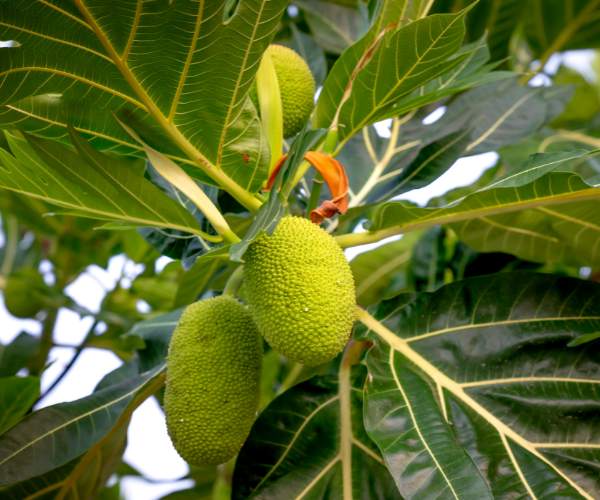
The Del tree is recognized by its large, dark green leaves which are glossy on top and lighter beneath. Young plants have deeply lobed leaves, while mature trees develop broader, smooth leaves. When the bark or branches are cut, the tree produces a thick, milky latex. Its fruits are long, cylindrical, and covered with small pointed projections, turning yellowish when mature. Inside, the fruit contains numerous seeds surrounded by a fibrous edible pulp. Both the seeds and pulp have been part of Sri Lankan diets for centuries, especially in rural areas where the tree is commonly found near homesteads.

Endemic to Sri Lanka, Artocarpus nobilis is found only on this island and nowhere else in the world. It thrives in humid environments and prefers well-drained soils. In the wild, it grows in the understory of wet evergreen forests, while villagers also plant it in home gardens for its many uses. In Sinhala, the tree has several local names such as Wal-Del, Bedi-Del, and Hingala-Del, while in Tamil it is known as Irappala. English speakers call it the Ceylon breadfruit tree, although it is distinct from the commonly cultivated breadfruit (Artocarpus altilis).

The tree’s edible seeds are one of its most valuable parts. When roasted or boiled, they resemble chestnuts in flavour and texture. Modern studies by Sri Lankan researchers have found that Del seeds are rich in protein, fibre, and essential minerals such as potassium, magnesium, and iron. They also contain beneficial fatty acids and natural antioxidants that help fight inflammation and may support heart health. Because of this nutritional profile, scientists believe the seeds could be developed as a sustainable food source or health product. Traditional Sri Lankan households often roast the seeds as a snack or boil them in curries, highlighting how ancient practices already recognized their value.

The fruit of the Del tree, though not as widely eaten as jackfruit or regular breadfruit, is also edible when cooked. It is sometimes used in local cuisine as a boiled or curried vegetable, especially in remote areas. The tree’s latex has been used as a natural adhesive, and its large leaves can serve as eco-friendly wrappers for food. The trunk of the Del tree yields a high-quality timber that is durable, moderately heavy, and resistant to decay. This makes it valuable for furniture, construction, and traditional wooden crafts. For centuries, Sri Lankans have relied on Del timber for strong beams and tools that last generations.

Beyond its practical uses, the Del tree has deep cultural and medicinal importance. In Ayurveda and folk medicine, nearly every part of the plant is used. The bark is prepared as a decoction to treat wounds, ulcers, and skin diseases. The latex is applied externally to heal cracked skin and fungal infections. The seeds and leaves are sometimes used in remedies for respiratory conditions, digestive problems, and intestinal worms. Scientific studies have confirmed that extracts from Artocarpus nobilis contain bioactive compounds such as flavonoids, xanthones, and phenolic acids, which show antioxidant, anti-inflammatory, and antibacterial properties. These discoveries prove that the traditional knowledge surrounding the tree has genuine pharmacological value.

However, despite its usefulness, the Ceylon breadfruit tree faces several challenges. Being endemic to Sri Lanka means that its entire natural population is restricted to one island. Deforestation, land conversion for agriculture, and timber extraction have all contributed to habitat loss. In some areas, the tree is cut down for its valuable wood faster than it can regenerate. Diseases like white root rot also pose threats. As a result, conservation organizations such as the IUCN list Artocarpus nobilis as a vulnerable species. Protecting this tree is therefore crucial not only for ecological balance but also for preserving Sri Lanka’s natural heritage.

Conservation can be achieved through a combination of reforestation and sustainable cultivation. Encouraging farmers and homeowners to plant Del trees in agroforestry systems can provide both environmental and economic benefits. Because the tree grows tall and wide, it offers excellent shade for understory crops, while its fruits and seeds can provide food or income. Seed propagation is simple when fresh seeds are used, and young plants thrive in moist, fertile soil. Once established, the tree requires little maintenance and can live for decades. By promoting its use as a nutritious seed crop and sustainable timber source, Sri Lanka can ensure that Artocarpus nobilis remains abundant for future generations.

Beyond its ecological and practical importance, the Del tree also carries symbolic meaning. It represents resilience, rootedness, and quiet abundance—values that reflect the spirit of Sri Lanka’s rural communities. Villagers often associate large trees like Del with protection, generosity, and continuity, as they shelter homes and nourish families for years. In today’s world of rapid urbanization, rediscovering and preserving such species offers a reminder of harmony between humans and nature.

The potential for developing Del into a sustainable commercial crop is promising. With global interest in plant-based nutrition and natural antioxidants, the seeds of Artocarpus nobilis could find a place in health food markets. Processed seed flours, roasted snacks, or functional beverages made from Del could attract consumers seeking organic and traditional alternatives. Moreover, the timber industry can adopt responsible harvesting and replanting programs to maintain supply without harming ecosystems. Such innovations would not only support Sri Lanka’s green economy but also raise awareness of this endemic gem.

In summary, the Ceylon breadfruit tree, or Del, is more than just a forest species—it is a living symbol of Sri Lanka’s natural beauty, wisdom, and potential. From its nutritious seeds and healing bark to its durable wood and ecological role, every aspect of Artocarpus nobilis contributes to the balance between humans and their environment. Protecting and promoting this tree means celebrating an ancient connection to the land while embracing modern sustainability. As people worldwide look for climate-resilient and culturally rich crops, Sri Lanka’s noble Del tree stands tall as both guardian and gift.


Click here to receive your free copy of the eLanka Newsletter twice a week delivered directly to your inbox!

TAGGED:Artocarpus nobilisbreadfruit nutritionCeylon breadfruit treeDel tree Sri Lankaendemic trees of Sri Lankamedicinal trees of Sri LankaSri Lankan BiodiversitySri Lankan breadfruitWal Del
Share This Article
Facebook Whatsapp Whatsapp LinkedIn Email Copy Link Print
Previous Article Chikku Bukku Full Movie Chikku Bukku Full Movie
Next Article SUNDAY CHOICE SUNDAY CHOICE – His Name is Jesus – By Charles Schokman
FacebookLike
YoutubeSubscribe
LinkedInFollow
- Advertisement -
Luxury Apartments & An Exclusive Duplex Penthouse for Sale in BAY ONE Residences Colombo-eLanka
- Advertisement -
eLankaproperty - sell property in Sri Lanka, Sri Lanka property for sale, Sri Lanka real estate, Sri Lanka property listings, property marketplace Sri Lanka, land for sale Sri Lanka, houses for sale Sri Lanka, apartments for sale Sri Lanka, commercial property Sri Lanka, luxury villas Sri Lanka, Sri Lankan property investment, buy property in Sri Lanka, Colombo property for sale, beachfront property Sri Lanka, development land Sri Lanka, investment property Sri Lanka, property advertising Sri Lanka, real estate agents Sri Lanka, property brokers Sri Lanka, overseas Sri Lankan property buyers, Sri Lanka property website, list property online Sri Lanka, affordable property listings Sri Lanka, Sri Lanka homes for sale, Sri Lanka land investment, property developers Sri Lanka, real estate marketplace Sri Lanka, Sri Lanka commercial real estate, sell land in Sri Lanka, sell house in Sri Lanka, Sri Lanka property portal, global property marketplace Sri Lanka, Sri Lankan real estate investment, property management Sri Lanka, buy land Sri Lanka, residential property Sri Lanka, holiday homes Sri Lanka, Sri Lanka investment opportunities, real estate advertising Sri Lanka, eLankaProperty
- Advertisement -
ALTAIR
- Advertisement -
Ad image
eLanka Wedding
Most Read
My breakfast today-by Harold Gunatillake

My breakfast today-by Harold Gunatillake

Inside a Sri Lankan Buddhist Temple in the UK

Inside a Sri Lankan Buddhist Temple in the UK: What Vesak Really Looks Like

Poson Poya 2026, Poson Festival, Poson Full Moon, Buddhism in Sri Lanka, Mahinda Thera, Arahat Mahinda, King Devanampiyatissa, Mihintale, Anuradhapura, Buddhist festival Sri Lanka, Sri Lankan culture, Buddhist traditions, Poson celebrations, Poson Dansal, Dana, Buddhist heritage, Sri Lanka history, Buddhist pilgrimage, Mihintale pilgrimage, Buddhist teachings, Theravada Buddhism, Poson lanterns, Poson religious observance, Buddhist temples Sri Lanka, Poson significance, Poson customs, Sri Lankan festivals, Full Moon Poya Day, Poson article, Global Sri Lankan community

eLanka Newsletter -28th June 2026 – 4th Edition – Sri Lankans In Australia

Sir Harry Dias Bandaranaike , Bandaranaike family history , Sri Lankan colonial history , first Sinhalese barrister , Ceylon Supreme Court judges

Sir Harry Dias Bandaranaike: The Trailblazing Pioneer Who Opened Doors for Generations

IMF Sri Lanka , Sri Lanka IMF , IMF US$695 million , Sri Lanka economic reforms , IMF Extended Fund Facility

US$695 Million IMF Disbursement Credited to Sri Lanka Treasury – A Major Economic Boost

Related News
Zydus Sunshine Lifesciences , Zydus Lifesciences , Sunshine Healthcare Lanka , Sri Lanka pharmaceutical industry , pharmaceutical manufacturing Sri Lanka
Articles

Zydus Lifesciences & Sunshine Healthcare Launch $20 Million Pharmaceutical Plant in Sri Lanka

Sri Lanka rooftop solar, Virtual Net Metering Sri Lanka, Asian Development Bank, renewable energy Sri Lanka, clean energy Sri Lanka, solar power Sri Lanka, green energy investment, rooftop solar aggregation, LECO Sri Lanka, Electricity Distribution Lanka, renewable electricity, sustainable energy Sri Lanka, climate action Sri Lanka, greenhouse gas reduction, distributed solar energy, Sri Lanka power sector, smart grid Sri Lanka,
Articles

ADB Approves $57.4 Million for Clean Energy: Rooftop Solar & Virtual Net Metering Coming to Sri Lanka

Campaign Asia-Pacific 40 Under 40 , Campaign APAC 40 Under 40 2026 , Sri Lankan marketing leader , First Sri Lankan woman Campaign APAC 40 Under 40
Articles

Praveena Perera Makes History as First Sri Lankan Woman in Campaign APAC’s 40 Under 40

The Ceylon Society of Australia (CSA) Reborn
Articles

The Ceylon Society of Australia (CSA) Reborn – By Nimal Chandrasena and Jitto Arulampalam

High Commission of Sri Lanka in Canberra
Articles

Sri Lankan Passport Renewal from Australia: A Complete Step-by-Step Guide

  • Quick Links:
  • Articles
  • DESMOND KELLY
  • Dr Harold Gunatillake
  • English Videos
  • Sri Lanka
  • Sinhala Videos
  • eLanka Newsletters
  • Obituaries
  • Sunil Thenabadu
  • Dr. Harold Gunatillake
  • Tamil Videos
  • Trevine Rodrigo
  • Sinhala Movies
  • eLanka Newsletter
  • Photos

eLanka

Your Trusted Source for News & Community Stories: Stay connected with reliable updates, inspiring features, and breaking news. From politics and technology to culture, lifestyle, and events, eLanka brings you stories that matter — keeping you informed, engaged, and connected 24/7.
Kerrie road, Oatlands , NSW 2117 , Australia.
Email : info@eLanka.com.au / rasangivjes@gmail.com.
WhatsApp : +61402905275 / +94775882546
  • About eLanka
  • Terms & Conditions

Disclaimer:
eLanka is committed to sharing positive and community-focused stories. We do not publish or endorse political, religious, or ethnic viewpoints. The content published on eLanka, including articles and newsletters, reflects the opinions and views of the respective authors and not those of eLanka. eLanka accepts no responsibility or liability for the accuracy, completeness, or consequences of any content provided by contributors.

(c) 2005 – 2025 eLanka Pty Ltd. All Rights Reserved.