Sri Lanka remains resilient, shining brightly despite the turbulence in the Middle East-by Harold Gunatillake

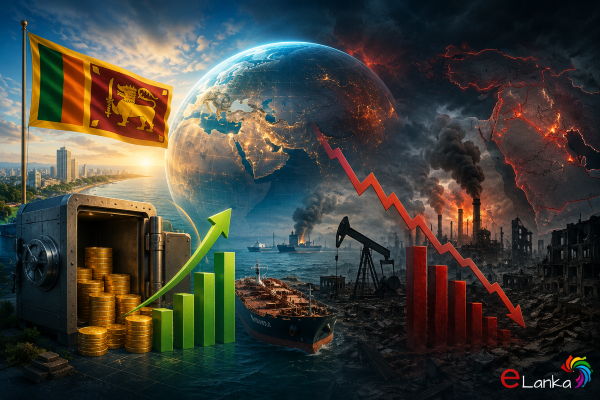
Its steady economy is a testament to the country’s strong resilience and determination. Even amidst global uncertainties, Sri Lanka continues to hold its ground, inspiring hope and confidence for the future.
Amidst the ongoing turmoil in global markets caused by the closure of the Strait of Hormuz and rising oil prices, Sri Lanka has quietly shared some positive news. The country’s gross official reserves grew to US$ 6.873 billion in May, a slight 1.6% increase from April’s US$ 6.766 billion.
This US$107 million increase is more than just a number—it shows that Sri Lanka’s economic recovery is really starting to pick up speed, even with external shocks happening around the world.
By May 2026, economic data show that the Middle East conflict is causing a tough economic downturn across many regions.
Developing countries, energy-dependent nations, and Middle Eastern countries are feeling the hardest impact.
The largest declines and contractions are observed in the Middle East and Western Asia, particularly in Qatar and Kuwait. These Gulf countries are facing sharp GDP declines of up to 14%, mainly because energy production has been heavily curtailed, infrastructure has been damaged, and traditional export routes are blocked. Iraq is also struggling with significantly declining revenues due to blocked oil exports and a gas shortage for its electricity sector caused by regional strikes.
In the Levant and MENA region, conflict zones like Lebanon, Syria, and Yemen are experiencing deep humanitarian and economic crises. Reports from the UN and World Bank indicate setbacks in development over multiple years and rising poverty levels.
Meanwhile, countries like the UAE and Bahrain are under severe economic stress from direct strikes on energy facilities and disruptions to their important tourism, aviation, and financial sectors.
Now coming back to Sri Lanka-
A Reserve Boost Built on Local Strengths
- Growing Strong Without IMF Funds
It’s truly encouraging to see that this increase in reserves happened without relying on the latest IMF tranche. The progress made in May was thanks to vibrant domestic economic activity and positive external inflows — not bailout money. This shows that Sri Lanka’s stabilisation efforts are becoming more self-reliant, building confidence in its journey towards economic stability.
- Central bank stabilisation efforts are becoming more self-reliant, which is great news for building confidence in its foreign exchange market and maintaining currency Although this required higher dollar sales, reserves continued to grow — a sign that inflows remain strong enough to offset market activity.
- Remittances: The Unsung Hero
Sri Lankan migrant workers once again truly demonstrated their vital support for the economy. Worker remittances reached an impressive US$ 847 million in May, marking the highest monthly total in recent times. These inflows played a crucial role in mitigating the effects of rising oil prices and helped the country prepare for upcoming foreign debt obligations.
Tourism:
The Central Bank of Sri Lanka (CBSL) and the Sri Lanka Tourism Development Authority (SLTDA) have shared preliminary data for May 2026. However, the final foreign exchange revenue figures are usually released in mid-June. Even so, industry insights indicate that in May 2026, Sri Lanka recorded a record-breaking 145,745 international visitors, representing a 9.65% increase over the previous year. It’s worth noting that tourism revenue has experienced some ups and downs recently, influenced by
geopolitical tensions in the Middle East and by changes in how much visitors spend each day — which has fallen to $148. For comparison, April 2026 brought in about $157.1 million from tourism. On the whole, despite these fluctuations, the country’s foreign exchange situation remains strong, thanks in part to workers’ remittances that reached $847 million in May.
Sri Lanka’s tourism industry is bouncing back strongly in terms of visitor numbers, showing a solid recovery in technical volume.
However, revenue growth has been somewhat slower, influenced by shifts in visitor demographics and geopolitical concerns that affect spending patterns. It’s exciting to see the country welcoming over 1 million visitors in just the first five months of 2026! Still, according to an update from First Capital Research (FCR), there’s a slight dip in forecast earnings for 2026, now expected to be around USD 3.7 billion — about 22.6% lower — mainly because visitors are spending a bit less per day on average.
Support from China became a helpful boost, giving Sri Lanka extra room to manage its finances during a challenging time, thanks to the People’s Bank of China’s swap arrangement.
The People’s Bank of China (PBoC) and the Central Bank of Sri Lanka (CBSL) maintain a CNY 10 billion (approx. $1.4 billion) bilateral currency swap agreement to bolster Sri Lanka’s foreign exchange reserves and provide vital liquidity.
Swap Details & History Original Agreement: First established in March 2021 to promote bilateral trade, direct investment, and assist with pandemic-related financial pressures.
Renewal: Renewed for a period of three years under the administration of President Anura Kumara Disanayake.
Usage Constraints:
The swap facility operates with specific guidelines; it is designed to facilitate trade and stability, though its use for general imports is restricted when gross international reserves fall below critical thresholds. This facility is among the most substantial term financing arrangements for Sri Lanka and underscores the ongoing financial cooperation between the two nations.
Why This Matters Now
The conflict in the Middle East has disrupted worldwide shipping routes, increased insurance costs, and made energy markets more competitive.
For a country like Sri Lanka, which relies almost entirely on fuel imports, these risks are very real.
But in the midst of these challenges, Sri Lanka’s resilience in building reserves highlights:
Strengthening macroeconomic discipline, improving foreign exchange management, and fostering growing confidence among overseas Sri Lankans contribute to a more stable currency environment. This resilience is particularly vital as the country prepares for foreign debt repayments in the coming months.
Understanding how disbursements influence reserves and the rupee can help us see their importance.
When a country receives financial disbursements such as multilateral loans, international development aid, or IMF Extended Fund Facility tranches, these constitute significant external capital inflows. They give a boost to the country’s financial health by positively affecting foreign reserves and the value of the local currency, making a real difference in the economy.
Sri Lanka maintains a cautious yet optimistic outlook. While challenges remain, the latest data highlights that the country is gradually learning to navigate the complexities of global turbulence with increased stability and maturity. If remittances stay strong, tourism continues to grow, and fiscal reforms proceed as planned, Sri Lanka can sustain this positive momentum even amid ongoing global uncertainties.
Many people firmly believe that Sri Lanka, which its citizens often call a blessed and protected land, will continue to endure and thrive thanks to its faith and rich cultural heritage. Throughout the island’s long history, faith has been a vital source of strength and hope for its people, inspiring them to face challenges with resilience.
End