Over 160 MOH areas declared as high-risk dengue zones-By Arundathie Abeysinghe

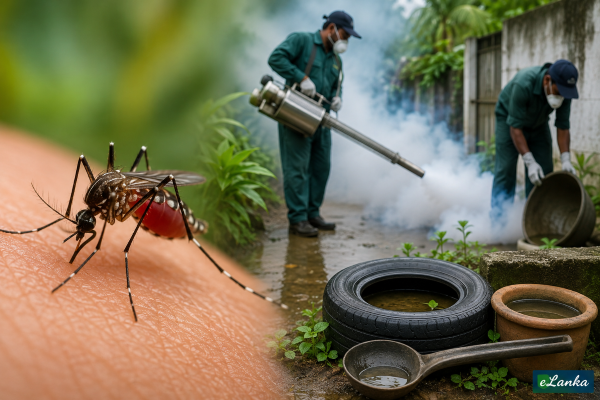
According to data released by National Dengue Control Unit (NDCU), this year, Sri Lanka has reported over 76,044 dengue cases up to now, with the disease continuing to spread rapidly across the country. According to NDCU data, 2,895 new cases were reported on July 21 alone. In response to the worsening situation, 162 Medical Officer of Health (MOH) areas have been identified as high-risk dengue zones. Health officials pointed out that dengue cases have increased sharply over the past few months, following the onset of the southwest monsoon. A total of 8,590 cases were reported in May, while the number more than doubled to 21,537 in June. The NDCU also said 20,666 cases have already been reported during the first 19 days of July. A total of 56 dengue-related deaths has been reported this year, with a case fatality rate of 0.07%.
Meanwhile, the Western Province remains the most affected region, accounting for over 50% of the nationwide infections, with Gampaha and Colombo districts experiencing the highest number of patients.
According to NDCU, special dengue control programs are being continuously implemented in 63 high-risk dengue MOH divisions.
According to senior medical consultants “Western Province accounts for over 50% of all reported cases, with 40,009 infections, representing 52.61% of the national total. The Southern Province has recorded 11,707 cases (15.40%), followed by the Central Province with 6,431 cases (8.46%). At the district level, Gampaha District has reported the highest number of cases, with 15,910, followed by Colombo with 15,110. Of the cases reported in Colombo District, 3,073 were recorded within the Colombo Municipal Council (CMC) area. Other districts reporting high numbers of dengue cases include Matara (5,330), Kandy (5,111) and Kalutara (5,010). Health authorities have urged the public to eliminate mosquito breeding sites in and around their homes and workplaces. We also advise anyone experiencing fever or symptoms such as flu not to self-medicate and to seek medical attention without delay.”
“Due to high population density, rapid urbanization, construction activities, including environmental conditions favorable for mosquito breeding as well as increased human mobility, the Western Province, especially, Colombo, Gampaha and Kalutara districts has consistently reported the highest dengue epidemic in the country. Dengue transmission in Sri Lanka demonstrates a clear seasonal pattern, with two annual peaks corresponding to the southwest and northeast monsoon periods.”
“Hence, in response to the increasing burden of dengue, the Dengue Control Unit was established in 2005 under the Ministry of Health and was subsequently upgraded to the NDCU in 2012 to strengthen national coordination of dengue prevention and control activities.”
Senior medical academics are of the view that “dengue was first serologically confirmed in Sri Lanka in 1962, and the first documented dengue outbreak was reported in 1965. During the period from 1965 to 1968, an island-wide epidemic caused by DENV-1 and DENV-2 serotypes resulted in 51 reported cases and 15 deaths. Meanwhile, dengue infections continued to occur intermittently during the 1970s and 1980s, yet, severe dengue and dengue haemorrhagic fever (DHF) were relatively uncommon before 1989. Since 1989, Sri Lanka has experienced regular dengue epidemics with increasing magnitude, geographical spread as well as disease severity. The emergence of new dengue virus genotypes and shifts in circulating serotypes have been associated with several major outbreaks in the country. From early 2000s, dengue became firmly established as an endemic disease in Sri Lanka, with cases reported from all districts of the country. Large epidemics were recorded in 2002, 2004, 2009, 2017, and 2019, while the largest outbreak in history occurred in 2017, with over 186,000 reported dengue cases nationally.”