Community Engagement Newsletter – 24 July 2026
Dear community representatives,
Thank you for your ongoing support and contributions to the community. The CLO Network has collated the following newsletter of important information from across the Australian Government that may be of interest to yourself and members of your community. Please feel free to forward this newsletter, or any of its sections, to members of your community.
In this fortnight’s edition, you can find information on the following:
- Community Refugee Integration and Settlement Program made Permanent
- Australian Government Response to the National Response to Islamophobia
- Staying Safe with AusAlert – national test on 27 July 2026
- Driving or riding during the AusAlert national test
- Scamwatch – Caller ID Spoofing
- Pacific Engagement Stream Visa (PEV) ballot 2026-27
- Webinar: Temporary Graduate and Skilled Visa Information
- Australian of the Year – Local Hero Category Nominations
- Useful information in your language
- Contact us
Community Refugee Integration and Settlement Program made Permanent

The Australian Government has announced
that the Community Refugee Integration and Settlement Program (CRISP) has commenced from 1 July 2026. After a successful pilot, the CRISP is now a permanent part of Australia’s humanitarian program. This marks a milestone in Australia’s humanitarian settlement approach.
CRISP operates as a dedicated settlement pathway for refugees who:
- do not have family links in Australia
- are referred to Australia by the United Nations High Commissioner for Refugees (UNHCR) for resettlement.
The Department announced that Community Refugee Sponsorship Australia (CRSA), which implemented the pilot, will administer the permanent program.
CRISP has demonstrated that strong local involvement is critical to successful refugee integration. Central to the model are volunteer groups known as Community Supporter Groups (CSGs). They play a vital role in supporting newly arrived refugees as they set up their new lives in Australia.
CSGs give practical and social support, including helping participants to secure housing, access education and employment opportunities, and build social networks with their new communities. The pilot has shown that community-based support not only benefits refugees but also strengthens social cohesion and fosters lasting connections in local communities.
Find more information about CRISP on the Department’s website and the Community Refugee Sponsorship Australia (CRSA) website.
Australian Government Response to the National Response to Islamophobia

The Australian Government has released its response to the Special Envoy’s National Response to Islamophobia. The response outlines actions to address Islamophobia, strengthen community safety and support social cohesion across Australia.
The Government has accepted, accepted in principle, or noted a range of recommendations made by the Special Envoy. The response recognises the importance of ensuring Muslim Australians can participate fully in Australian society and live free from discrimination, prejudice and hate.
The response also highlights the role of government, communities and institutions in supporting inclusion, strengthening social cohesion and fostering respectful engagement across Australia’s diverse communities.
Visit the Department’s website to view the Australian Government response to the Special Envoy’s National Response to Islamophobia.
Staying Safe with AusAlert – national test on 27 July 2026
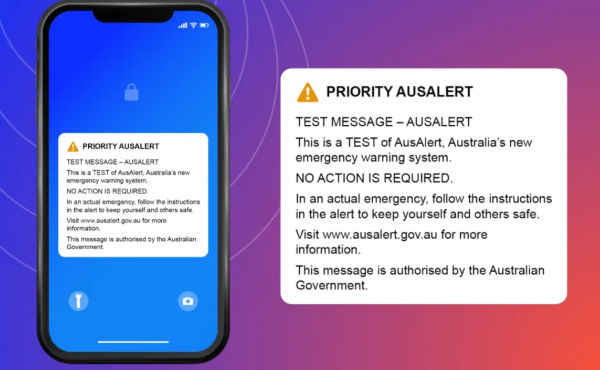
| The national AusAlert test will occur on Monday 27 July 2026 at 2:00pm AEST and will be sent to all mobile phones across Australia.
AusAlert is a new national warning system that uses the latest technology to send emergency messages to compatible mobile devices. This is a planned test and you don’t need to do anything. The message will vibrate and include a loud, siren-like sound that lasts about 10 seconds. If you use a concealed or hidden phone or device to help keep you safe, including because of domestic and family violence, think about whether receiving emergency warnings on that device is right for your situation. Important: you can still receive AusAlerts if your phone is on ‘silent’ or ‘do not disturb’. A device that is switched off or in aeroplane mode will not receive AusAlert messages. If it’s not safe to receive AusAlerts on your devices, please turn off your mobile devices or switch them to aeroplane mode before the scheduled test time in your location, and leave them off for at least one hour. Find more information on how to stay safe, including translated information, see Staying safe with AusAlert. Stakeholder communication resources are also available at: Stakeholders | AusAlert. Translated information is available in a range of community languages. For up to date AusAlert information, please visit AusAlert’s Facebook page at AusAlert | Facebook. |
Driving or riding during the AusAlert national test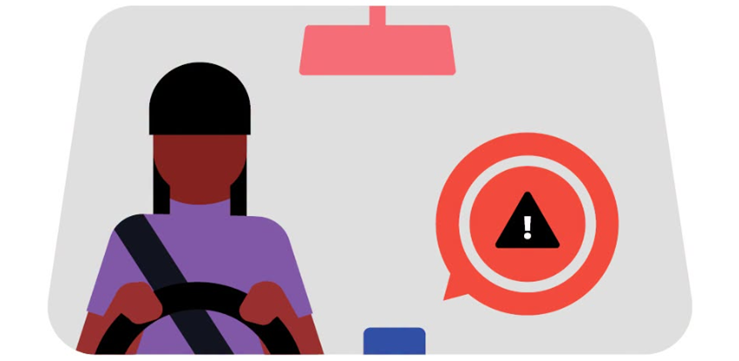
The National test of AusAlert is happening on Monday 27 July 2026 at about 2pm AEST.
AusAlert sends near-instant emergency messages to compatible mobile devices like mobile phones, tablets and smart watches. You may receive this test while driving, riding, or using public transport. This is just a test, and you do not need to do anything.
Important: If you are driving or riding, stay calm and don’t touch your device.
AusAlerts use vibration, sound and on-screen messages to get your attention. They may alert you even if your device is on ‘silent’ or ‘do not disturb’. The alert may play through your vehicle’s speakers using Apple CarPlay, Android Auto or Bluetooth and may interrupt navigation or media like music or podcasts.
Mobile phone laws still apply – don’t read or respond to the alert while operating a vehicle. Only check the message when your vehicle is turned off and it is safe and legal to do so.
If you receive an alert while on public transport, stay calm. Don’t approach the driver about the alert.
For more information on AusAlert – visit AusAlert | Facebook, AusAlert (website) and Stakeholders | AusAlert. Translated information is available in a range of community languages.
Scamwatch – Caller ID Spoofing
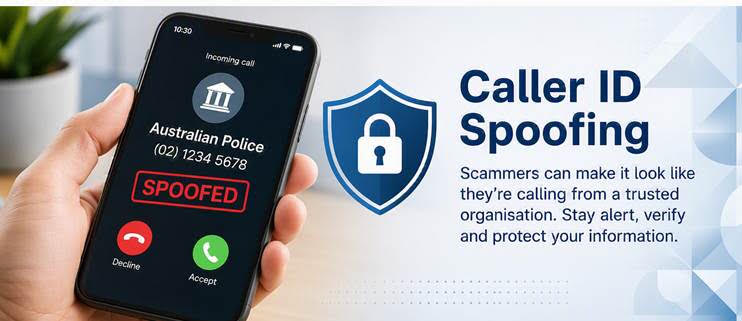
It is important to be aware of Caller ID Spoofing, a scam technique that can make it appear as though a call is coming from a legitimate organisation, including police stations and government agencies. While the number displayed on your phone may look genuine, the call could be from a scammer operating anywhere in Australia.
Scammers may pose as police officers or government officials and try to pressure people into sharing personal or banking information, transferring money to a “safe account”, purchasing gift cards, providing one-time passwords, or granting remote access to devices.
How to protect yourself:
- Stay calm and do not act under pressure.
- Never rely on the phone number displayed on your screen.
- Do not share personal, banking or security information.
- Do not transfer money, buy gift cards or send cryptocurrency.
- Verify any request by contacting the organisation directly using official contact details.
If you believe you have been targeted and have already transferred money or shared financial information, contact your bank immediately and report the incident via ReportCyber.
If no money has been lost, you are encouraged to report the scam to Scamwatch to help authorities monitor scam activity and warn the community.
Pacific Engagement Stream Visa (PEV) ballot 2026-27

Australia’s Pacific Engagement stream visa (PEV) ballot for 2026-27 opened on 1 July 2026 and closes on 29 July 2026. This is a new ballot and registrations from previous ballots are not included in this draw.
To be able to apply for a PEV, you must:
- Register in the PEV ballot.
- If you are then selected in the ballot, you’ll be invited to apply for a visa.
People of all skill levels, genders and occupations from the following countries can enter the ballot: Federated States of Micronesia, Fiji, Kiribati, Palau, Papua New Guinea, Republic of Marshall Islands, Samoa, Solomon Islands, Timor Leste, Tonga and Tuvalu.
To learn more about the PEV ballot for 2026-27, please visit Pacific Engagement visa (subclass 192) – Pacific Engagement stream.
Webinar: Temporary Graduate and Skilled Visa Information

Are you an international student nearing graduation? Curious about visa pathway options to remain in Australia and undertake paid work?
The Department of Home Affairs invites you to attend our free online Temporary Graduate and Skilled Visa Information webinar, which will cover the following topics:
- Temporary graduate visa – Subclass 485
- Employer sponsored visas
- General Skilled Migration
- Migrant worker reforms
The webinar will be held on Tuesday 4 August 2026, from 2PM – 3PM (AEST).
The event link will be emailed to you once you register at Visa Options for International Graduates | TryBooking Australia
Online event access details will be provided by the event organiser
Australian of the Year – Local Hero Category Nominations
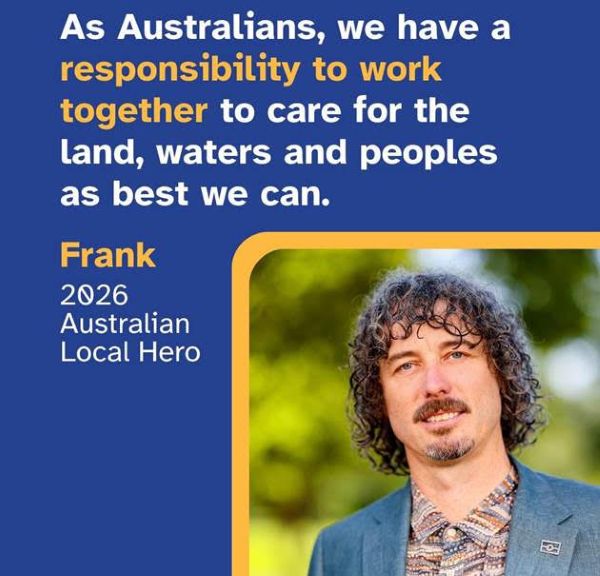
Community is built by the people who help others feel they belong. For Australia’s 2026 Local Hero Frank Mitchell, being part of the Australian community is about contributing to something bigger than yourself.
A proud Whadjuk-Yued Noongar man and construction leader, Frank has created opportunities for First Nations Australians in the trades and construction industry through employment, apprenticeships and culturally safe workplaces.
Frank says that to him, being Australian means to be so fortunate to live on an ancient land, where democracy is upheld and citizens’ human rights are protected. “As Australians, we have a responsibility to work together to care for the land, waters and peoples as best we can,” he said.
His leadership is a strong example of active citizenship in action, creating opportunity for others, helping people feel safe and supported, and strengthening communities through practical action.
Frank also says inclusion means more than being present. “It is not enough to be invited to the party. To move from diversity to inclusion, we need to be asked to dance — to be welcomed to have a voice, too.” When we listen, reflect on our shared history, and make sure everyone has the chance to contribute and be heard, we help build more supportive and inclusive communities.
The Department of Home Affairs has been a proud sponsor of the Local Hero category of the Australian of the Year Awards since 2003.
To learn more about Frank’s work, visit: Frank Mitchell | Australian of the Year
Nominate your Local Hero by 31 July – people making a difference in your local community: See Them. Hear them. Nominate them. | Australian of the Year
Useful information in your language
Australian Citizenship test resource booklet
Australian Values – Life in Australia booklet
Domestic/family violence and your visa*
Adult Migrant English Program (AMEP)
Australian Centre to Counter Child Exploitation*
eSafety Commissioner – be safe online
AusAlert – National Warning System
Australian Cyber Security Centre (ACSC)*
Australian Electoral Commission
Australian Taxation Office – Information about Tax
Fair Work Ombudsman – Your workplace rights
Department of Health and Aged Care
My Aged Care – Accessible aged care services
Carer Gateway – If you are a carer for someone
Scamwatch – Protect yourself from scams
Services Australia – Centrelink and Medicare
Translating and Interpreting Service (TIS National)*
Image credit: Fair Work Ombudsman
* Translated resources are via an On Demand Web Translation tool on the relevant website listed above, usually at the top or the side of the screen.