Colombo is preparing for a spectacular display of colour, creativity and international friendship as the Derana–Signal Colombo International Kite Festival 2026 takes place at Galle Face Green on Sunday, 9 August. With professional kite flyers from 30 countries, more than 1,500 local participants, children’s workshops, cultural activities, food, music and Sri Lanka’s first dedicated Night Kite Festival, the event is expected to transform the capital’s oceanfront into one of the country’s most distinctive public attractions.
Organised by Derana and Signal, the festival forms part of a broader effort to strengthen Colombo’s reputation as a vibrant events destination, while presenting Sri Lanka to international visitors through a celebration that is accessible, family-friendly and deeply connected to the island’s traditions of craftsmanship, recreation and community participation.
A global meeting above Colombo
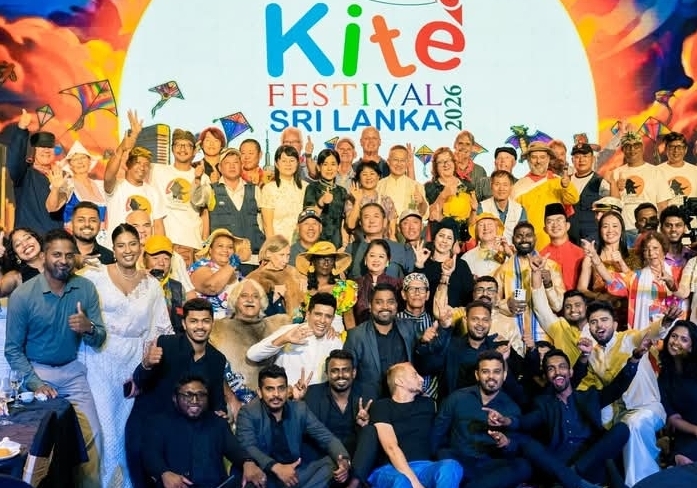
According to information published by Newswire on 8 August, the festival will welcome 80 professional kite flyers representing 30 countries, alongside approximately 1,500 Sri Lankan kite enthusiasts. Their participation will create an unusual international gathering in which cultural exchange is expressed not through formal conferences or institutional ceremonies, but through the shared skill of designing, controlling and displaying kites in the coastal winds.
Kite festivals have become increasingly valuable to tourism destinations because they combine visual appeal with broad public participation. Unlike events that are confined to theatres, exhibition halls or private venues, a kite festival extends across the open sky, allowing residents and visitors to experience the spectacle from the surrounding promenade, roads and public spaces. At Galle Face Green, the Indian Ocean, the city skyline and the wide expanse of the lawn provide a particularly suitable setting.
The festival’s international dimension also gives Colombo an opportunity to demonstrate its capacity to host major cultural events, with professional flyers bringing distinctive designs, techniques and traditions from their respective countries. The result is expected to be a lively aerial exhibition in which large decorative kites, traditional forms and inventive contemporary creations appear together above the city.

A full afternoon of public entertainment
The main festival programme is scheduled to run from 1.00 p.m. until 6.30 p.m., providing several hours of kite displays and public activities at Galle Face Green. Entry is expected to be free, allowing families, young people, tourists and local residents to experience the programme without the cost of a formal ticketed attraction.
The festival is not limited to professional demonstrations. Local enthusiasts are also central to the programme, and their participation ensures that the occasion remains a community event rather than an exhibition reserved exclusively for international competitors. For many children, the opportunity to watch experienced flyers, examine unusual kite structures and attempt to control a kite in an open coastal setting can provide an early introduction to design, balance, wind movement and practical problem-solving.
This educational element has already been developed through workshops conducted during the wider programme. More than 630 children between the ages of eight and 15 have taken part in kite-making and kite-flying sessions led by experts from Australia, France and China. Such workshops are instrumental because they position the festival not merely as a day of entertainment, but as a platform through which technical knowledge and creative confidence can be shared across generations and national boundaries.
Kite-making itself involves a combination of geometry, material selection, tension, weight distribution and visual design. Bamboo, paper, fabric, string and decorative elements must be assembled with precision, while the finished kite must be strong enough to withstand changing wind conditions without losing its balance. These practical qualities make kite construction an accessible form of informal learning, particularly for children who may encounter scientific principles through direct experimentation rather than classroom theory.

Sri Lanka’s first Night Kite Festival
One of the most anticipated additions to this year’s programme is the newly introduced Night Kite Festival, scheduled from approximately 6.30 p.m. to 7.30 p.m. Illuminated kites will be flown against the evening sky, creating a different visual language from the bright daytime displays and extending the festival’s appeal beyond the traditional afternoon programme.
The Night Kite segment is expected to provide a particularly memorable experience at Galle Face Green, where the darkening horizon, the lights of Colombo and the sound of the ocean will form a natural setting for illuminated designs. LED lighting and decorative illumination can give kites a floating, almost architectural quality, while the movement of the wind adds a constantly changing dimension to the display.
The introduction of a night segment also demonstrates how established cultural activities can be renewed through considered innovation. The traditional pleasure of kite flying remains intact, but the addition of lighting, music and evening programming allows the festival to attract a broader audience and create a more complete tourism experience.
Following the Night Kite Festival, a musical concert featuring several Sri Lankan artists and backed by Avatar Band is scheduled to continue until midnight. A separate Derana Colombo Food Festival will also be held opposite Galle Face Green, in front of Shangri-La Colombo, giving visitors the opportunity to combine the kite displays with Sri Lankan food and refreshments.
A week-long programme with cultural depth
Although the main public celebration is centred on 9 August, the 2026 festival has been expanded into a week-long programme. In addition to the kite-flying activities, the programme includes an international press conference, a vehicle parade featuring nearly 200 classic and vintage vehicles, and a special kite-flying event at Port City Colombo for diplomats and international media.
The inclusion of these activities broadens the festival’s profile and creates several points of engagement for international guests. The vehicle parade introduces an element of heritage motoring, while the Port City programme connects the festival to Colombo’s modern waterfront development. The press conference, meanwhile, provides an opportunity for the event and its wider tourism ambitions to receive international attention.
The Kandy Esala Perahera has been selected as the festival’s special cultural theme for 2026. This decision brings an important Sri Lankan visual and historical reference into an international event, linking the modern spectacle of kite flying with one of the island’s best-known cultural processions. International participants are also scheduled to visit the Sri Dalada Maligawa, allowing them to encounter an important site of Sri Lankan heritage beyond the festival grounds.
Strengthening Colombo’s events identity
The festival is being conducted in partnership with the Sri Lanka Tourism Promotion Bureau, Sri Lanka Police and the Colombo Municipal Council, in addition to its principal organisers, Derana and Signal. Such cooperation is essential for an event of this scale, particularly when a major public space is expected to attract thousands of spectators and participants.
From a tourism perspective, the festival offers several advantages. It is visually distinctive, comparatively accessible, suitable for different age groups and capable of generating content for television, digital platforms and international travel coverage. It also places Colombo’s coastal landscape at the centre of the experience, allowing the city itself to function as part of the event’s identity.
The festival’s return in 2025, when international flyers from 21 countries and more than 1,000 local participants were reported to have attended, demonstrated the continuing public interest in the concept. The 2026 edition represents a further expansion, with participation rising to 30 countries and the addition of the Night Kite Festival, workshops and related cultural activities.
For Sri Lanka’s tourism ambitions, such events can be especially valuable because they complement the country’s established attractions. Heritage sites, beaches, wildlife and cuisine remain fundamental to the visitor experience, but a lively calendar of international events can encourage visitors to plan their journeys around specific occasions, stay longer and explore the surrounding city and region.
As the kites rise above Galle Face Green on 9 August, Colombo will be presented not only as a capital beside the sea, but also as a city capable of hosting imaginative, inclusive and internationally connected celebrations. The Derana–Signal Colombo International Kite Festival therefore stands as a colourful public attraction and as a promising example of how culture, tourism, education and community participation can be brought together beneath one open sky.
Source: https://www.newswire.lk
This article was written based on the source https://www.newswire.lk/, kindly email us at info@eLanka.com.au if any information needs to be corrected.
At eLanka, we respect the rights of creators. If we have used an image you own and you’d like it removed, please email us at info@elanka.com.au and we’ll handle it promptly.