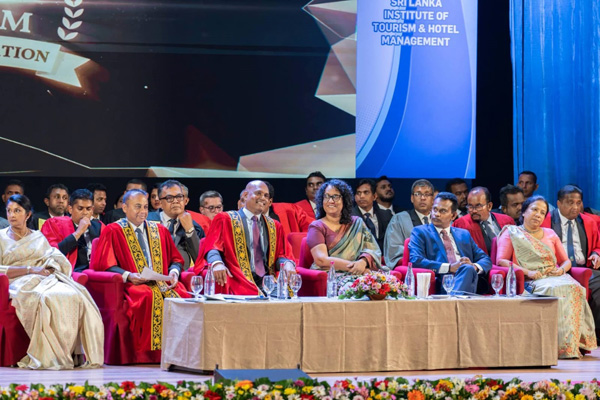
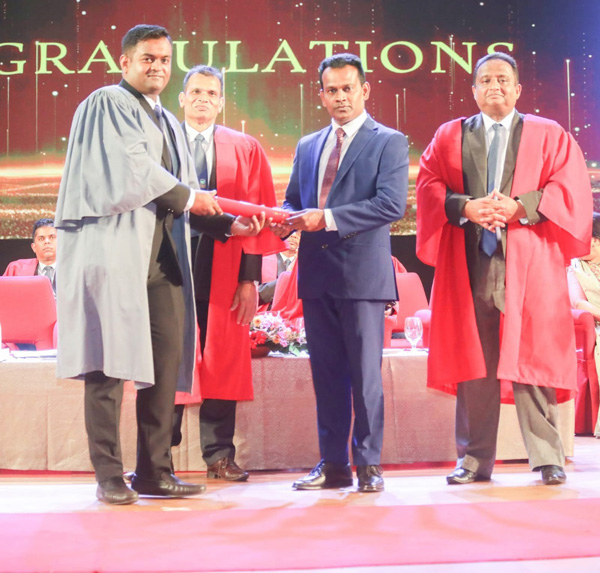
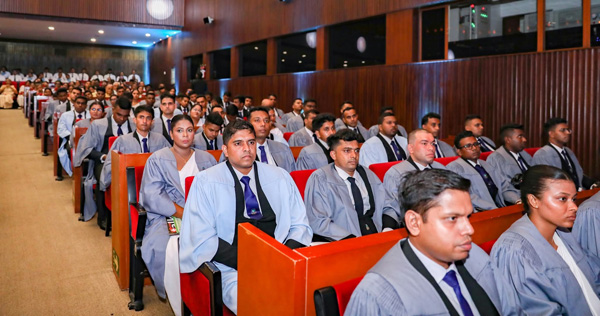
The Sri Lanka Institute of Tourism & Hotel Management (SLITHM) has celebrated its 45th Graduation Ceremony at the Bandaranaike Memorial International Conference Hall (BMICH) in Colombo, recognising the achievements of 71 graduates and reaffirming the institution’s enduring contribution to Sri Lanka’s tourism and hospitality sector.
The ceremony represented considerably more than the completion of an academic programme. It marked another chapter in the development of a skilled national workforce whose knowledge, discipline and professional standards will influence hotels, resorts, airlines, cruise operations and hospitality enterprises in Sri Lanka and international destinations.
A distinguished institution with a six-decade legacy
SLITHM was established in 1964 as the Ceylon Hotel School, at a time when Sri Lanka’s tourism industry was beginning to develop a more structured requirement for professionally trained personnel. From its original role as a specialist hotel school, the institution has evolved into Sri Lanka’s premier government organisation for tourism and hospitality education.
Today, SLITHM is a UGC-recognised Degree Awarding Institute, offering education and practical training designed to prepare students for a broad range of careers across the visitor economy. More than 6,000 trained professionals are produced annually, creating a substantial foundation of skilled personnel for one of the country’s most internationally visible industries.
The significance of this achievement lies in the balance between academic knowledge and practical capability. Hospitality requires a sophisticated combination of technical competence, cultural awareness, communication, personal presentation and consistent service delivery. These qualities cannot be developed through theory alone; they are strengthened through practical instruction, workplace discipline and exposure to the operational standards expected by the international tourism industry.
Through this approach, SLITHM has helped establish a professional pathway for young Sri Lankans seeking opportunities in culinary arts, hotel operations, food and beverage management, housekeeping, front-office services, travel operations and related fields.
Seventy-one graduates begin the next stage
The 45th Graduation Ceremony celebrated 71 students who successfully completed their studies and now join a distinguished SLITHM alumni network. Graduates of the institution have built careers throughout Sri Lanka, while others have taken their expertise to hotels, resorts, airlines, cruise companies and hospitality organisations around the world.
For the 2026 graduating cohort, the ceremony represented the culmination of sustained academic effort, practical training and personal perseverance. It also reflected the support provided by families, lecturers, administrators and industry professionals, all of whom contribute to the development of capable hospitality practitioners.
Graduation is therefore both an ending and a professional beginning. The qualifications received at BMICH provide the graduates with an important platform, but their long-term contribution will be measured through the standards they maintain in the workplace, the service cultures they help create and the manner in which they represent Sri Lankan hospitality.
The graduates are entering a sector in which employers increasingly value adaptability, digital awareness, sustainability, multilingual communication and an informed understanding of international guests. Sri Lanka’s hospitality professionals are expected to preserve the warmth and authenticity associated with the country while also meeting demanding global expectations relating to safety, efficiency and service excellence.
Regional access strengthens opportunity
One of SLITHM’s most important contributions is the network of regional colleges located across Sri Lanka. By extending tourism and hospitality education beyond the main urban centres, the institution has helped create greater access for young people in all provinces.
This regional presence is instrumental because talent is not confined to Colombo or to the traditional tourism corridors. Young people from rural and regional communities possess valuable local knowledge, cultural understanding and language skills, all of which can become significant professional strengths when combined with formal hospitality training.
Regional access also allows the benefits of tourism education to be distributed more widely. As graduates return to their communities or secure employment in different parts of the country, they contribute to local economic activity, encourage new career aspirations and strengthen the connection between tourism development and inclusive opportunity.
The model has considerable potential for further development. Expanded industry placements, digital learning resources, specialised short courses and stronger links with international employers could enable even more students to transition smoothly from education into professional employment.
Human capital and Tourism Vision 2030
The graduation ceremony also highlighted SLITHM’s relevance to Sri Lanka’s Tourism Vision 2030 targets, which include attracting 5 million tourist arrivals, generating USD 10 billion in tourism revenue and developing an 800,000-strong workforce.
These objectives depend not only on infrastructure, marketing and air connectivity, but also on the quality of the people who welcome visitors, prepare meals, manage accommodation, organise experiences and respond to the varied needs of international travellers. Human capital is the operational foundation upon which every tourism ambition must rest.
A larger tourism industry will require professionals who can deliver reliable, courteous and culturally informed service across a wide range of settings. It will also require leaders capable of managing teams, adopting sustainable methods, integrating technology and responding intelligently to changing visitor expectations.
In this context, SLITHM’s role extends beyond the conferral of qualifications. The institute functions as an important bridge between education and employment, between Sri Lanka’s cultural strengths and international service standards, and between the aspirations of young people and the future requirements of the tourism sector.
Leadership and industry engagement
The ceremony was attended by Dheera Hettiarachchi, Chairman of SLITHM; Wasantha Manthripala, Director General of SLITHM; and Dr Geethanjali Chakravarthy, President of the Sri Lanka Hotel School Graduates’ Association, together with industry experts, senior representatives of leading hotel groups and members of Sri Lanka’s tourism and hospitality community.
The participation of education leaders, professional associations and industry representatives demonstrated the collaborative nature of hospitality development. Effective tourism education must remain connected to the realities of the workplace, while employers benefit from graduates whose training reflects current operational needs.
The Sri Lanka Hotel School Graduates’ Association also represents an important professional link, providing a channel through which experience, mentorship and industry relationships can continue to support graduates after they leave the classroom.
A positive foundation for Sri Lanka’s hospitality future
The 45th Graduation Ceremony has provided a positive reminder that Sri Lanka’s tourism future will be shaped by education as much as by destinations. The island’s beaches, heritage sites, wildlife, cuisine and landscapes remain important attractions, but the quality of the visitor experience is ultimately delivered by people.
The 71 graduates recognised at BMICH now carry the responsibility and opportunity to contribute to that experience. Their professional journeys may lead to Colombo, the hill country, the southern coast, the Cultural Triangle or destinations beyond Sri Lanka, yet each career will form part of the broader story of Sri Lankan hospitality.
For the global Sri Lankan community, the success of institutions such as SLITHM offers an encouraging example of how education can create mobility, strengthen national industries and open international pathways for young people. eLanka continues to share positive stories about Sri Lankans and Sri Lankan institutions through its community news platform, while its newsletter service helps readers remain connected with developments, achievements and opportunities.
With its six-decade history, nationwide reach and expanding academic role, SLITHM remains well placed to contribute to the next phase of Sri Lanka’s tourism development. Its 45th graduation has celebrated the accomplishments of 71 students, but it has also illustrated the wider value of investing in professional education, practical skills and the people who will welcome the world to Sri Lanka.
Source: https://sundaytimes.lk/
This article was written based on the source https://sundaytimes.lk/, kindly email us at info@eLanka.com.au if any information needs to be corrected.
At eLanka, we respect the rights of creators. If we have used an image you own and you’d like it removed, please email us at info@elanka.com.au and we’ll handle it promptly.