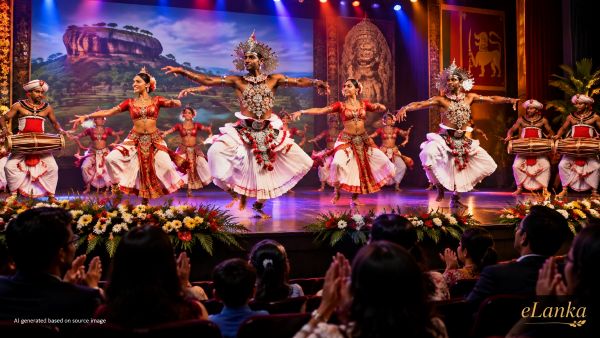
A proud achievement for Sri Lankans in the UK and the wider Sri Lankan diaspora has been celebrated following a historic victory at the 100th anniversary of the Blackpool Dance Festival.
Tarja De Silva and Gihan Umesh Madanpitiya became the first Sri Lankan couple to win the Professional-Amateur (Pro-Am) Latin championship at the prestigious festival. The landmark result was achieved on 19 May 2026 at the Winter Gardens in Blackpool, United Kingdom.
Their success places Sri Lankan talent firmly on one of the world’s most respected ballroom and Latin dance stages. It also represents a significant moment for British Sri Lankan communities, Sri Lankan culture and the continuing contribution of the diaspora to international arts and performance.
Historic victory at Blackpool
The Blackpool Dance Festival is widely recognised as one of the leading events in the international ballroom and Latin dance calendar. Its centenary edition brought together highly experienced dancers from around the world, creating an exceptionally competitive field.
Within the Pro-Am category, a professional dancer partners an amateur competitor. The division requires discipline, trust, technical preparation and a strong understanding between both dancers. For De Silva and Umesh, the competition provided an opportunity to represent Sri Lanka at a festival with a long and distinguished history.
The pair delivered a winning performance across all five Latin categories:
- Cha-Cha-Cha
- Samba
- Rumba
- Paso Doble
- Jive
Their clean sweep underlined the consistency of their performance and the strength of their preparation. Winning a single category at Blackpool is a major accomplishment. Securing championship honours across the full range of Latin dances made the result even more significant.

Illustrative image: a grand ballroom setting representing the atmosphere of an international dance festival.
A milestone for Sri Lankan culture
The achievement is more than a personal success for two talented dancers. It is also an important milestone for Sri Lankan culture on the global performing arts stage.
Ballroom and Latin dance have developed a growing following in Sri Lanka, with studios, teachers and young performers building new opportunities for training and international competition. The Blackpool result demonstrates how Sri Lankan dancers can compete successfully against established performers from countries with long traditions in ballroom and Latin dance.
For the Sri Lankan community overseas, the victory offers another example of the diverse ways in which people of Sri Lankan heritage are contributing to the cultural life of their adopted countries. Sri Lankans in the UK have made their mark across business, education, medicine, sport, music, the arts and public service. De Silva and Umesh now add a memorable international dance achievement to that record.
Their success will also be welcomed by families and young people who see dance as a way to express creativity, maintain discipline and connect with both local and international communities.
The dancers behind the achievement
Tarja De Silva is an internationally recognised professional Latin dancer and educator based in the United Kingdom. She is the founder of Colombo Dance Studio in London and teaches at Pineapple Dance Studios, helping students develop their technique and confidence in Latin dance.
Her work in the UK has contributed to the growth of dance opportunities for people from different backgrounds, including members of the Sri Lankan diaspora. Through teaching and performance, she has helped create a bridge between international dance practice and the interests of Sri Lankan communities in Britain.
Gihan Umesh Madanpitiya is one of Sri Lanka’s leading dance champions and choreographers. He serves as Principal Dancer and Co-Choreographer of Muddrika Dance Studio and is also a co-founder of KG Twins School of Dance.
His experience in Sri Lanka, combined with De Silva’s professional work in the UK, created the foundation for an effective international partnership. Their training brought together expertise from both countries and demonstrated the value of collaboration across borders.
Collaboration between Sri Lanka and the UK
The Blackpool victory was made possible through cooperation between Muddrika Dance Studio in Sri Lanka and Colombo Dance Studio in the UK.
This partnership reflects the close relationship between Sri Lankan communities at home and abroad. It shows how professionals based in different countries can work together to support creative development, share knowledge and open pathways to international recognition.
For British Sri Lankan readers, the story carries a particular importance. The UK is home to a large and active Sri Lankan community, with dance schools, cultural organisations, temples, social clubs and family networks helping to preserve and develop Sri Lankan identity. At the same time, those organisations are increasingly connected to global opportunities in sport, education, business and the arts.
De Silva and Umesh’s result illustrates how these connections can produce meaningful outcomes. Training and experience from Sri Lanka were combined with professional resources and opportunities in the UK, leading to a performance that made history in Blackpool.

Illustrative image: Latin dance requires precision, timing, balance and extensive preparation.
Why this matters to the diaspora
Achievements such as this provide visibility for Sri Lanka in areas that may not always receive international attention. Sri Lankan success is often associated with cricket, academic achievement, entrepreneurship, tourism and the performing arts. The Blackpool victory adds another valuable dimension.
It also reminds the diaspora that cultural identity can be expressed in many forms. Traditional music, dance and religious celebrations remain important, but Sri Lankan heritage can also be represented through contemporary international disciplines.
For younger British Sri Lankans, the achievement may offer encouragement to pursue their own interests at the highest level. Whether in dance, sport, technology, creative industries or public service, the example set by De Silva and Umesh is clear: international success is possible when talent is supported by preparation, commitment and collaboration.
The result may also encourage dance schools and cultural organisations to create more opportunities for children and adults to take part in ballroom and Latin dance. These activities can support physical fitness, confidence, teamwork and social connection while offering a positive way to engage with the wider community.
A celebration at a landmark festival
The timing of the victory made it especially memorable. The 2026 Blackpool Dance Festival marked its 100th anniversary, bringing additional historical significance to an already prestigious event.
The Winter Gardens has hosted generations of dancers and audiences, becoming closely associated with the development of ballroom and Latin dance in Britain and around the world. To win at such a venue during the centenary edition was an outstanding achievement.
For Sri Lanka, the occasion provided a powerful international showcase. The performances of De Silva and Umesh demonstrated technical ability, artistic discipline and competitive strength, while also carrying the hopes and pride of a community spread across Sri Lanka, the UK and other parts of the world.

Illustrative image: dance training in a community studio, reflecting the growing interest in Latin dance among Sri Lankan communities in the UK.
Inspiring the next generation
Every major achievement begins with regular practice and a willingness to learn. Latin dance requires more than polished performance. Competitors must develop musicality, posture, timing, footwork, stamina and the ability to work closely with a partner.
The success of De Silva and Umesh highlights the importance of strong teachers, supportive studios and international partnerships. It also shows how cultural networks can help talented individuals access opportunities beyond their immediate surroundings.
Dance schools and community organisations across the UK can play an important role in this development. By offering accessible classes, workshops and performance opportunities, they can help more Sri Lankan children, students and adults discover the confidence that comes from participation.
The achievement may also encourage wider recognition of Sri Lankan dancers and choreographers. Their work contributes to the UK’s multicultural arts landscape while strengthening the visibility of Sri Lankan talent internationally.
A proud moment for Sri Lankans in the UK
Tarja De Silva and Gihan Umesh Madanpitiya’s historic Blackpool victory is a source of pride for Sri Lankans in the UK, Sri Lanka and across the global diaspora.
Their clean sweep of the Cha-Cha-Cha, Samba, Rumba, Paso Doble and Jive categories at the Pro-Am Latin championship represents a rare and memorable accomplishment. More importantly, it demonstrates the positive impact of cooperation between Sri Lankan and British-based dance communities.
As readers continue to follow stories about Sri Lankan achievements around the world, this result deserves a special place. It is a celebration of talent, dedication, cultural connection and the ability of Sri Lankan performers to succeed on the most demanding international stages.
For more community news, cultural features and stories about Sri Lankans in the UK and around the world, visit elanka.
Original source
Newswire: Sri Lanka dancers make history at Blackpool Championship
kindly email us at info@eLanka.com.au if any information needs to be corrected.
At eLanka, we respect the rights of creators. If we have used an image you own and you’d like it removed, please email us at info@elanka.com.au and we’ll handle it promptly.
Thanks.
eLanka teamnbsp;