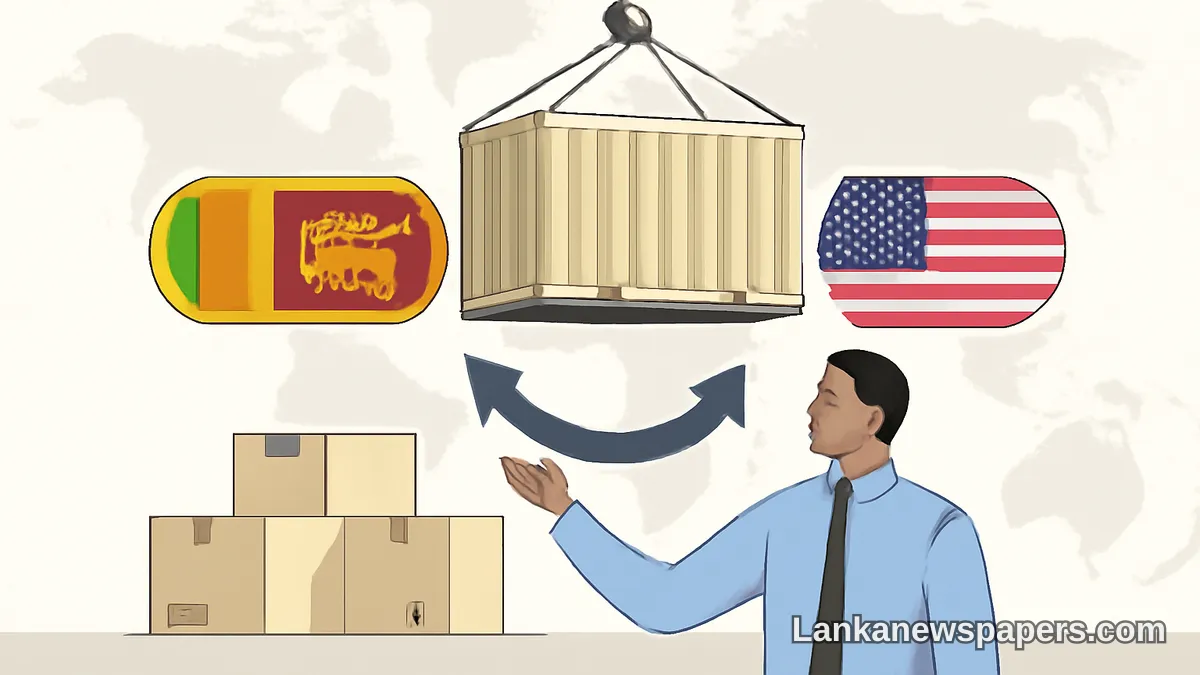
A significant trade development has been reported from Sri Lanka, with Lankanewspapers.com stating on 18 August 2026 that a Sri Lankan Cabinet Minister confirmed the removal of all United States tariffs on Sri Lankan exports. If implemented in the manner described, the decision could create a more favourable commercial environment for Sri Lankan manufacturers, apparel producers, textile companies and other exporters seeking to expand their presence in the American market.
The report represents the announcement as an important opportunity for Sri Lanka’s export economy, particularly because the United States has long been regarded as a major destination for Sri Lankan garments and other manufactured products. However, the information remains presented as a ministerial confirmation reported by the source, rather than as an independently verified economic outcome. No named minister, detailed tariff schedule, product classification list or separate United States customs notice is provided in the source article; therefore, the practical consequences will depend on formal implementation and clarification for individual exporters.
A potentially important development for Sri Lankan trade
Tariffs influence the final landed cost of exported goods, and any reduction or removal can improve the price position of suppliers competing in an international market. For Sri Lankan businesses, the reported change could therefore provide greater flexibility when negotiating with American buyers, particularly where competing suppliers are operating under different tariff arrangements.
The potential importance is especially evident in the apparel and garment sector, which has developed extensive manufacturing, quality-control and export capabilities over several decades. Sri Lankan clothing producers are widely associated with technical expertise, responsible manufacturing practices, product innovation and the ability to serve international brands with demanding standards. A more favourable tariff environment could help those businesses present more competitive offers while continuing to invest in quality, compliance and production efficiency.
The reported development may also be relevant to textile manufacturers, suppliers of specialised clothing, packaging companies, logistics providers and businesses that support export production. Although the source does not provide sector-by-sector details, the wider trade effect could extend beyond factories themselves if increased orders create additional activity throughout the supply chain.

Apparel exporters could gain greater commercial flexibility
The apparel industry operates within a highly competitive global marketplace, where purchasing decisions are influenced by price, reliability, lead times, ethical standards, technical capability and long-term supplier relationships. A tariff adjustment, if confirmed and consistently applied, would not automatically guarantee increased orders; nevertheless, it could strengthen the commercial position of Sri Lankan exporters when they are assessed alongside producers from other manufacturing destinations.
For garment companies, the possible advantages could include:
- More competitive pricing for United States buyers;
- Greater room to absorb fluctuations in freight, energy and production costs;
- Improved prospects when negotiating new supply agreements;
- Stronger incentives for international brands to review Sri Lankan sourcing options;
- Additional scope for investment in machinery, design, product development and sustainable production;
- Potential expansion of employment if new orders lead to increased manufacturing capacity.
Such benefits would be realised only if businesses are able to convert the reported tariff opportunity into commercially viable contracts. Exporters would still need to satisfy rules of origin, customs documentation, product standards, labour requirements, delivery schedules and the quality expectations of American customers.
The emphasis, therefore, is likely to shift towards preparedness. Companies with established compliance systems, reliable production records and strong relationships with overseas buyers may be best positioned to respond if demand increases.
A possible opening for investment and expansion
The reported decision could also improve the visibility of Sri Lanka as an export-manufacturing location. International investors generally examine several factors before committing capital, including market access, labour skills, infrastructure, political and economic stability, supply-chain efficiency and the predictability of trade arrangements. A reduction in market-entry costs can form one part of that assessment, particularly when it is supported by a capable domestic industry.
For Sri Lanka, the opportunity would extend beyond the immediate sale of garments. New investment could support textile development, product diversification, automated manufacturing, digital supply-chain systems, warehouse facilities, design studios and environmentally responsible production. These areas would help exporters move beyond dependence on basic volume manufacturing and develop higher-value products with stronger margins and more distinctive market positioning.
Sri Lankan businesses could also benefit from presenting a broader export proposition to American buyers. This might involve specialised sportswear, workwear, intimate apparel, children’s clothing, technical textiles, hotel supplies, reusable products and other categories in which quality and flexibility are important. The source does not claim that such expansion has already occurred, but the reported tariff development could make further exploration more commercially attractive.

The importance of formal confirmation
Because tariff policy is applied through legal instruments, customs procedures and product-specific classifications, exporters will require clear guidance before treating the reported announcement as a completed change in market access. Businesses will need to establish which products are covered, the effective date, the relevant customs codes, the documentation required and whether any existing duties or trade conditions remain applicable.
This distinction is important because the phrase “all tariffs” can carry different meanings in public reporting and in customs administration. A government announcement may refer to a particular additional tariff, a negotiated measure or a defined group of products, while exporters must work with the precise rules applied to each shipment. Verification through official United States trade and customs channels, together with guidance from Sri Lankan trade authorities and industry bodies, will therefore be essential.
The source article’s account is consequently best understood as an encouraging report of a ministerial confirmation and a potential opening for Sri Lankan exporters, rather than as a guarantee that every product will immediately enter the United States without duty. This careful distinction protects businesses from making pricing or investment decisions before the relevant details have been published.
An opportunity to strengthen Sri Lanka’s export reputation
If the reported change is formally confirmed and effectively implemented, Sri Lanka’s response will be important. Market access creates an opportunity, but long-term export growth depends on consistent delivery, competitive productivity, responsible employment practices, innovation and confidence among international buyers.
The apparel sector can use this moment to reinforce the qualities that have helped Sri Lankan manufacturers establish global relationships: craftsmanship, technical skill, ethical production, dependable service and attention to detail. Exporters that invest in training, sustainable materials, energy efficiency, digital traceability and product development may be able to turn improved access into a more durable competitive advantage.
The same principle applies to other Sri Lankan exporters. A favourable trade environment should encourage businesses to examine new markets, improve presentation, strengthen export documentation and build partnerships with distributors and buyers in the United States. Small and medium-sized enterprises, which may not have previously considered direct American sales, could also explore opportunities through established exporters, online business networks and specialist trade intermediaries.
eLanka continues to support the visibility of Sri Lankan businesses and positive commercial developments through its online community platform, business-related coverage and communication with Sri Lankans in Australia and around the world. Earlier eLanka coverage of textile innovation, including Syntetica’s textile-recycling initiative backed by MAS Holdings, also demonstrates the value of highlighting Sri Lanka’s evolving manufacturing capabilities.
A constructive outlook for exporters
The reported removal of United States tariffs, as confirmed by a Sri Lankan Cabinet Minister according to Lankanewspapers.com, has generated an optimistic outlook for apparel, garments, textiles and wider export trade. Its potential significance lies in the possibility of improved competitiveness, renewed buyer interest, expanded investment and additional employment across the production and logistics chain.
The next stage will require precision rather than assumption. Official implementation details, product-level guidance and confirmation from the relevant trade authorities will determine the extent of the benefit. If those details support the broad description provided in the report, Sri Lankan businesses will have an important opportunity to strengthen their presence in the United States and build upon the country’s established reputation for quality export manufacturing.
For the Sri Lankan business community at home and overseas, the announcement offers a constructive reason to monitor developments closely, prepare for new commercial conversations and recognise the untapped potential of a more connected, innovative and outward-looking export sector.
Source: https://www.lankanewspapers.com/This article was written based on the source https://www.lankanewspapers.com/, kindly email us at info@eLanka.com.au if any information needs to be corrected.
(adsbygoogle = window.adsbygoogle || []).push({});