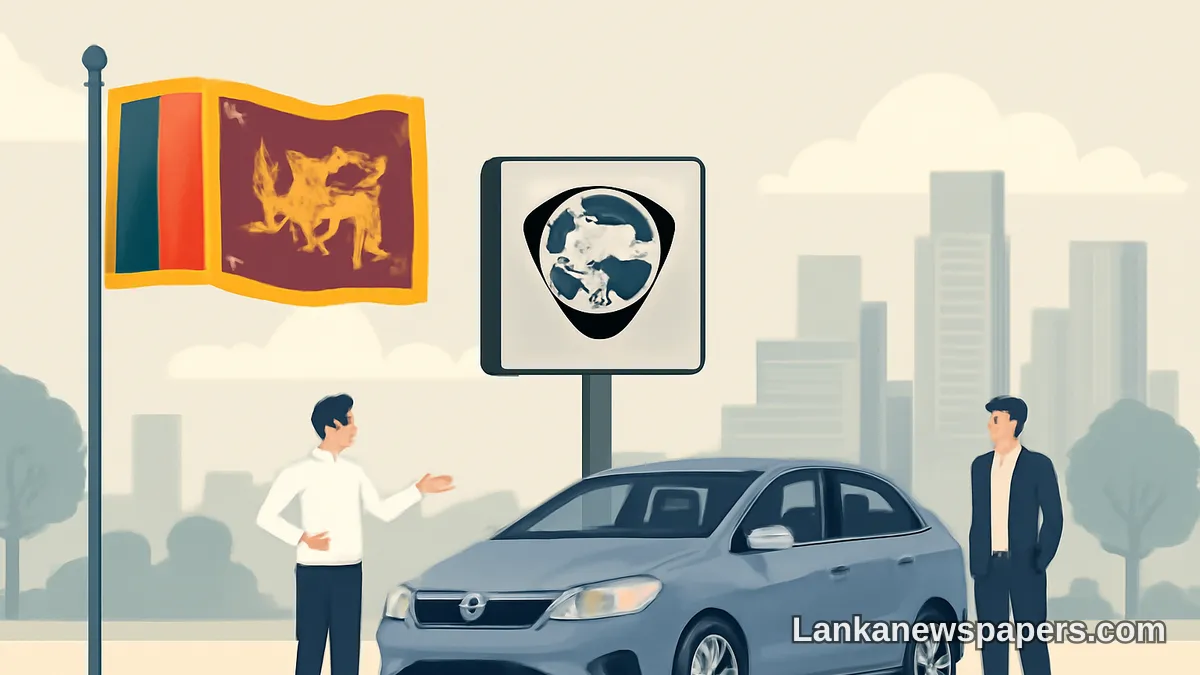
Malaysian automobile manufacturer Proton has officially entered Sri Lanka’s automotive market, introducing a new international participant at a time when local consumers and businesses are closely watching developments in vehicle availability, electrified transport and the broader return of structured automotive distribution.
The move has been formalised through a distributorship agreement with David Pieris Holdings (Private) Limited (DPHL), one of Sri Lanka’s largest diversified business groups. According to Proton’s announcement, the partnership will be anchored by David Pieris Automobiles (Private) Limited (DPAL), which is expected to support the distribution, retail and after-sales development of Proton’s e.MAS vehicles in Sri Lanka.
While the announcement represents a significant step for the local automotive sector, several practical details remain pending. The dealership network, specific models to be offered in Sri Lanka and official local pricing had not yet been announced in the source report, and therefore no assumptions should be made regarding the final range, retail structure or affordability of the vehicles.
Proton’s official entry through a local partnership
The agreement between Proton and DPHL was signed at Proton’s Centre of Excellence headquarters in Malaysia, creating the formal framework for the Malaysian brand’s entry into Sri Lanka. The partnership is intended to combine Proton’s manufacturing and product capabilities with DPHL’s established experience in Sri Lanka’s automotive and business sectors.
DPHL has operated across several areas, including automotive services, financial services, logistics and transportation. That breadth could prove valuable as the new automotive operation is developed, since a successful vehicle brand requires considerably more than showroom sales; it also depends upon parts availability, technical servicing, customer support, financing arrangements and dependable logistics.
Proton’s official announcement stated that the Sri Lankan operation would benefit from the wider group’s resources, with the intention of providing an integrated ownership experience. However, the practical extent of that support, including the locations of service facilities and the timing of network expansion, will become clearer only when further local announcements are made.
A national car manufacturer with a long Malaysian history
Proton’s origins are closely connected with Malaysia’s industrial development. The company was founded in 1983 as Perusahaan Otomobil Nasional, Malaysia’s first national car manufacturer, with the broader purpose of establishing a domestic automotive industry and developing supporting manufacturing capabilities.
The first Proton Saga entered production in 1985, becoming an important symbol of Malaysia’s ambition to build a national vehicle industry. Over subsequent decades, Proton developed from a state-backed national project into a fully fledged automotive manufacturer, supported by an expanding network of suppliers, engineers, manufacturing facilities and international relationships.
The company’s history provides useful context for its arrival in Sri Lanka. Proton is not an entirely new automotive name in Asia; it represents a Malaysian industrial undertaking that has progressively developed its vehicle range, engineering capacity and international export ambitions.
A significant phase in that development began in 2017, when Proton’s principals, DRB-HICOM and Zhejiang Geely Holding Group, entered a strategic partnership. The relationship provided Proton with access to broader technological resources, vehicle platforms, research capabilities and international automotive experience, while enabling Geely to work with an established Malaysian manufacturer and brand.
The partnership has been associated with the modernisation of Proton’s vehicle portfolio and the introduction of newer models, including sport utility vehicles and electrified products. It has also supported Proton’s objective of becoming a more internationally recognised automotive brand rather than remaining focused solely on its domestic market.

An initial focus on Proton e.MAS
The Sri Lankan arrangement is centred on Proton’s e.MAS range, the company’s electric and new-energy vehicle brand. Proton’s corporate announcement identified Sri Lanka as the fifth overseas market for e.MAS products, following Singapore, Trinidad and Tobago, Mauritius and Nepal.
The company has described e.MAS as a key part of its international expansion strategy, with the brand having been introduced in 2024 and subsequently supported by growing sales and service networks in Malaysia. Proton has also reported that its e.MAS vehicles have contributed significantly to the company’s export ambitions.
For Sri Lanka, the significance of this focus extends beyond the arrival of another badge in the vehicle market. Electric vehicles require a different ownership ecosystem from conventional petrol or diesel vehicles, with greater attention needed for charging access, battery support, specialised servicing, technical training and long-term parts supply.
The entry of a recognised manufacturer through an established local conglomerate could help create a more formal structure around those requirements. Nevertheless, the eventual success of the e.MAS range will depend on factors that remain to be disclosed, including the models selected for Sri Lanka, their technical specifications, charging compatibility, warranty arrangements, servicing capacity and pricing.
The presence of electric vehicles in an international manufacturer’s initial Sri Lankan offering may also encourage greater public discussion about sustainable mobility and the practical requirements of transitioning towards lower-emission transport. Such a transition is unlikely to depend on one brand alone, but the introduction of additional manufacturers can contribute to a more informed and competitive market.
What the entry could mean for consumers
Proton’s arrival has the potential to broaden consumer choice in several ways. Sri Lankan buyers may gain access to an alternative Malaysian brand with products shaped by both Proton’s national manufacturing background and Geely’s international technology partnership.
Competition can encourage manufacturers and distributors to strengthen product features, customer service, safety standards and after-sales support. It can also motivate established businesses to present clearer ownership packages and more responsive service arrangements, although the extent of those benefits will depend on the number of vehicles imported, the strength of the dealership network and the quality of long-term customer support.
The announcement should not, however, be interpreted as a guarantee of lower prices. Vehicle pricing in Sri Lanka is influenced by numerous factors, including import duties, taxes, exchange rates, shipping costs, government regulations, financing conditions and the equipment fitted to each model. Until Proton and its appointed distributor announce official specifications and prices, comparisons with existing brands would be premature.
The same caution applies to assumptions about the availability of particular Proton models. Although the e.MAS range includes several vehicles in other markets, the Sri Lankan model line-up has not yet been confirmed in the supplied source report. Buyers and businesses will need to rely on formal announcements from Proton and David Pieris Automobiles rather than informal market speculation.
A possible signal of renewed market confidence
The establishment of a formal distributorship involving a major Sri Lankan business group may be regarded as a constructive signal for the country’s automotive sector. International manufacturers generally require confidence in market potential, distribution capability and future customer demand before committing to a structured local operation.
Proton’s decision to enter through DPHL indicates that Sri Lanka is being considered as a viable market for modern vehicle products, particularly in the emerging new-energy segment. The agreement may also strengthen commercial links between Sri Lanka and Malaysia, while demonstrating how international automotive brands can use capable local partners to develop their presence.
For Sri Lankan consumers, the most important developments will be the announcements that follow: the locations of authorised outlets, the composition of the e.MAS range, the commencement of sales, charging and servicing arrangements, warranty coverage and official pricing. Those details will determine how effectively Proton can translate its international ambitions into a practical local ownership experience.
Proton’s entry is therefore best understood as the beginning of a new market chapter rather than a completed retail launch. Its Malaysian heritage, strategic relationship with Geely and initial emphasis on electric vehicles provide a strong foundation, while the contribution of David Pieris Holdings could offer the local operational support required for a credible and sustainable presence.
As Sri Lanka’s automotive market continues to evolve, the arrival of Proton adds another dimension to the discussion surrounding technology, competition and vehicle choice. Further official information will be essential, but the partnership already represents a notable development for Sri Lankan consumers and the businesses working to build the next phase of the country’s mobility sector.
For continuing coverage of Sri Lankan business and community developments worldwide, readers can visit eLanka, the long-standing digital hub connecting Sri Lankans in Australia and around the world.
Source: https://www.lankanewspapers.com/
This article was written based on the source https://www.lankanewspapers.com/, kindly email us at info@eLanka.com.au if any information needs to be corrected.
(adsbygoogle = window.adsbygoogle || []).push({});
At eLanka, we respect the rights of creators. If we have used an image you own and you’d like it removed, please email us at info@elanka.com.au and we’ll handle it promptly.