Sri Lanka is preparing to place financial technology at the centre of its digital-economy ambitions with the inaugural Sri Lanka Fintech Festival 2026, which is scheduled to be held in Colombo on 2–3 November 2026.
The two-day event is being organised by Fintech Forum Sri Lanka in collaboration with the Ministry of Digital Economy, with the stated objective of showcasing innovation, connecting important stakeholders and strengthening the country’s developing digital-finance ecosystem. As reported in the First at 9 broadcast of 26 August 2026, the festival is expected to create a national platform through which technology companies, financial institutions, entrepreneurs, policymakers and other participants can examine the opportunities and responsibilities associated with a rapidly changing financial sector.
The event is particularly significant because fintech is no longer limited to mobile payments or electronic banking. It now encompasses a broad range of services and systems, including digital identity, online lending, insurance technology, peer-to-peer transactions, data-driven services, payment infrastructure and tools intended to extend financial access to individuals and businesses that have traditionally remained outside formal financial networks.

Four themes shaping the festival
The Sri Lanka Fintech Festival will focus on four principal themes: the future of fintech; building unicorns and modernisation; sustainable and inclusive fintech; and security and fraud.
These themes provide a balanced framework for discussion, as the expansion of digital finance requires both innovation and institutional responsibility. New technology may improve convenience, reduce transaction costs and widen access, but its long-term value depends on sound governance, consumer protection, reliable infrastructure and public confidence.
The future of fintech
The first theme will consider how financial services may evolve as digital systems become more closely integrated with everyday economic activity. Digital finance is increasingly being shaped by artificial intelligence, automation, mobile platforms, electronic payments and data-based decision-making, although the broadcast placed particular emphasis on how fintech could build upon Sri Lanka’s digital public infrastructure.
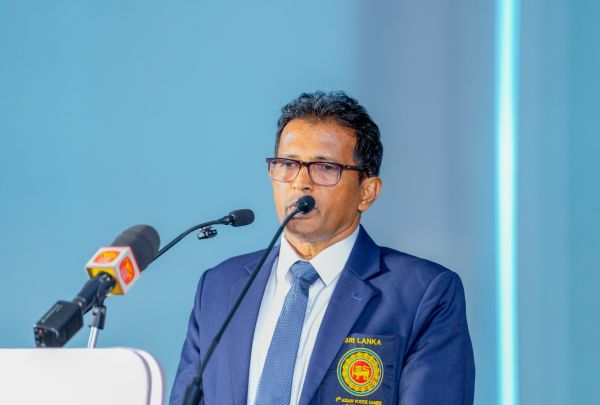
Deputy Minister of Digital Economy Eranga Weeraratne described fintech as an innovation layer that could operate above digital public infrastructure, creating new possibilities when systems such as digital identity are connected with financial services. Examples discussed in the broadcast included lending, insurance and peer-to-peer services, in addition to ordinary cash transfers.
A connected system of this kind could, in principle, allow financial providers to assess applications more efficiently, enable smaller enterprises to access suitable services and make certain transactions more convenient. However, the quality of these outcomes would depend on accuracy, privacy, cybersecurity and fair access, rather than on technology alone.

Building unicorns and supporting modernisation
The second theme addresses the ambition to develop high-growth technology companies capable of serving both Sri Lankan and international markets. In business terminology, a “unicorn” is a privately held start-up valued at more than one billion US dollars, although the broader importance of this theme extends beyond valuation.
A stronger start-up environment could encourage the development of locally designed products, attract technical talent and create opportunities for partnerships between emerging companies, established banks, telecommunications providers and public institutions. Modernisation could also involve the improvement of internal systems, more efficient customer services and the responsible use of data across financial organisations.
For Sri Lankan entrepreneurs, the festival may provide a valuable setting in which ideas can be presented to investors, technology partners and potential customers. It could also help demonstrate that innovation is not restricted to large institutions, since small companies and specialist developers may contribute practical solutions in areas such as payments, business accounting, risk assessment, remittances and financial management.
The Ministry of Digital Economy’s information on the festival places emphasis on Sri Lanka’s potential as an emerging digital-finance hub in South Asia. That potential will need to be supported by dependable connectivity, technical education, transparent regulation and commercial pathways through which promising ideas can move from demonstration to sustainable operation.
Sustainable and inclusive fintech
The third theme focuses on ensuring that digital finance serves a broad section of society. Inclusion is particularly important in a country where small businesses, independent workers, rural communities and lower-income households may face barriers when seeking traditional financial services.
Digital platforms can reduce the need for repeated physical visits to financial institutions and may make it easier for smaller enterprises to receive payments, access suitable financial products or maintain formal records. For businesses, better digital records can also assist with planning, accounting and future applications for finance.
Nevertheless, inclusion requires more than simply making an application available online. Services must be designed in clear language, supported by appropriate customer assistance and accessible to people with different levels of digital literacy. Concerns relating to data protection, affordability and the availability of reliable internet access must also be addressed.
A sustainable fintech sector should therefore be measured not only by the number of applications launched or transactions completed, but also by whether the services improve economic participation without creating new forms of exclusion. The festival’s emphasis on sustainable and inclusive fintech provides an opportunity for these practical questions to be considered alongside commercial growth.

Security, fraud and responsible innovation
The fourth theme, security and fraud, is central to the credibility of digital finance. As more financial activity moves online, stronger safeguards are required to protect personal information, accounts and transactions from misuse.
Deputy Minister Eranga Weeraratne stated, in accurate paraphrase, that the government is working towards a regulatory framework for virtual assets as well as a regulatory body. The intention, as conveyed in the broadcast, is to establish a clearer environment for responsible innovation and to provide better protection for citizens who may be exposed to scams.
The proposed framework should not be treated as legislation that has already been enacted, nor should it be interpreted as a promise of investment returns. Rather, it represents a policy direction under development, with further details and formal processes still required before any regulatory arrangement can be considered complete.
This distinction is important because digital assets and related services can involve considerable complexity and risk. Clear rules may help legitimate technology companies understand their obligations, while effective public education can assist citizens in identifying misleading offers and fraudulent schemes. Security will also depend on the conduct of financial institutions, platform operators and users, supported by appropriate monitoring and enforcement.

A platform for collaboration
The festival is intended to bring together a wide range of participants, including banks, non-bank financial institutions, start-ups, technology companies, regulators, investors, professional organisations and public-sector representatives. Such collaboration is instrumental because the digital-finance ecosystem is interconnected: payment providers depend on infrastructure, businesses depend on trustworthy platforms, and customers depend on security and clarity.
The programme is expected to include opportunities for innovation showcases, stakeholder engagement and discussion of the policy and technological conditions required for future development. The event may also help Sri Lankan companies identify regional partnerships, particularly in areas such as cross-border payments, remittances, digital commerce and financial services for small and medium-sized enterprises.
The success of the initiative will ultimately be determined by what follows the event. If discussions are translated into responsible products, practical partnerships, stronger consumer safeguards and improved access, the festival could become an important milestone in Sri Lanka’s digital-economy journey.
For the global Sri Lankan community, the development is also relevant beyond the island’s borders. Sri Lankan professionals, entrepreneurs and technology specialists living in Australia, the United Kingdom, Canada, New Zealand, the United States and elsewhere may find future opportunities to collaborate with companies and institutions connected to the country’s expanding digital-finance sector.
eLanka continues to support the exchange of positive business, technology and community stories among Sri Lankans worldwide. Businesses seeking visibility within the global Sri Lankan community can explore the eLanka website and the eLanka newsletter sign-up page for further information about available digital communication opportunities.
Source: https://www.youtube.com/watch?v=a0U5vR9Nfjg
This article was written based on the source https://www.youtube.com/watch?v=a0U5vR9Nfjg, kindly email us at info@eLanka.com.au if any information needs to be corrected.
(adsbygoogle = window.adsbygoogle || []).push({});
At eLanka, we respect the rights of creators. If we have used an image you own and you’d like it removed, please email us at info@elanka.com.au and we’ll handle it promptly.