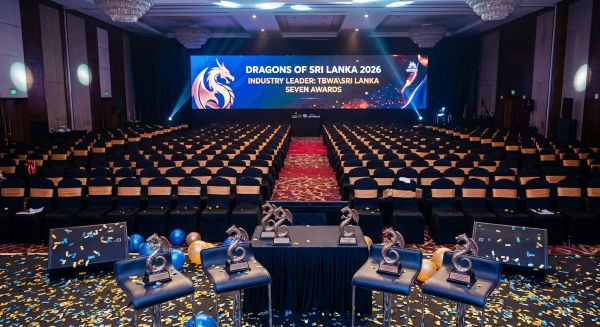
Illustration: A non-identifying AI-generated image created to represent the educational themes of MathFest 2026; it is not a photograph of the event.
Mathematics was placed firmly beyond the boundaries of routine classroom calculation when SLIIT UNI’s Faculty of Humanities and Sciences brought approximately 40 schools together for SLIIT MathFest 2026, an innovative inter-school competition designed to strengthen analytical thinking, creativity, problem-solving and collaboration among young learners.
The event was organised by the Department of Mathematics and Statistics within the Faculty of Humanities and Sciences and was held on 10 July 2026 at SLIIT UNI in Malabe. Students representing national, provincial, private and international schools from the Colombo, Gampaha and Kalutara educational zones participated in a competition that required mathematical knowledge to be applied with speed, accuracy and originality.
The initiative, reported by Colombo Gazette and adapted here as an eLanka education feature, reflects a wider effort to present mathematics as an active discipline of reasoning rather than a subject confined to memorised procedures and examination-based answers. In this format, students were expected to identify patterns, interpret information, assess alternatives and reach defensible conclusions while working within a competitive time limit.
A competition built around applied thinking
MathFest 2026 was structured in two stages, allowing students to demonstrate both individual and team-based mathematical ability.
The opening round consisted of a 45-minute computer-based examination containing multiple-choice and short-answer questions. The questions were drawn from common academic content covered in the Grade 11 Ordinary Level and first-year Advanced Level syllabuses, with consideration given to the Sri Lankan Local, Cambridge and Edexcel curricula.
The use of a shared academic foundation enabled students from different school systems to compete within a common framework, while the computer-based format introduced an additional element of precision and time management. Rather than rewarding only the rapid recall of formulas, the examination required participants to interpret problems and select appropriate methods under pressure.
Questions were made available in Sinhala, English and Tamil, ensuring that the competition remained accessible to students from different linguistic backgrounds. This multilingual approach was particularly significant in an event intended to bring together schools from several educational zones and curriculum environments.
The four highest-performing teams from the first round advanced to the final Buzzer Round, where the emphasis shifted towards rapid reasoning, accuracy and confidence in responding before an audience. The final stage added an element of public performance to the competition, requiring students to communicate their understanding as well as produce the correct answer.

Illustration: A non-identifying AI-generated representation of hands-on mathematical learning; it is not a photograph of MathFest 2026.
Ananda College secures the overall title
Ananda College, Colombo 10 emerged as the overall winner following the final round. Ave Maria Convent, Negombo was named first runner-up, while St Joseph’s College, Maradana secured second runner-up and Asian International School, Colombo was placed third runner-up.
The results demonstrated the breadth of performance among participating schools, with institutions from different educational backgrounds reaching the leading positions. The outcome also illustrated how a competition based on analytical ability can provide a valuable platform for students whose strengths may not always be fully reflected through conventional classroom assessments.
Recognition was also provided to leading schools within the three participating educational zones, based on the results of the first round. St Joseph’s College secured first place in the Colombo Zone. Ave Maria Convent led the Gampaha Zone, while K/Sri Sumangala College, Panadura achieved first place in the Kalutara Zone.
These zone-level results added a further dimension to MathFest, as they acknowledged achievement close to the students’ own educational communities while also placing that achievement within a larger inter-school framework.
Mathematics as a way of thinking
The organisers described the philosophy behind MathFest through a concise but meaningful observation: mathematics is not merely about obtaining an answer; it is about understanding why that answer is true.
That distinction is instrumental in developing a deeper appreciation of the subject. A correct answer reached through guesswork or mechanical substitution may satisfy a short-term assessment, but an explanation of why the answer is valid provides a foundation for further learning. Such reasoning can be transferred to science, technology, finance, engineering and everyday decision-making, where the ability to evaluate evidence and test assumptions is often more important than the memorisation of isolated facts.
By placing students in a timed, collaborative and competitive environment, MathFest encouraged them to treat mathematical problems as questions requiring investigation. The format also highlighted the value of communication, as teams had to exchange ideas efficiently and remain composed while assessing possible solutions.

Illustration: A non-identifying AI-generated representation of a buzzer-style mathematics final; it is not a photograph of the event.
Students and academics working together
Students enrolled in SLIIT’s BSc Financial Mathematics and Applied Statistics programme played an active role in many aspects of the event under the direction of academic staff from the Department of Mathematics and Statistics.
Their involvement provided an important link between university study and school-level outreach. As students of a programme centred on the practical interpretation of numbers, probability and quantitative models, they were able to contribute to an event that introduced younger learners to the intellectual possibilities of mathematics.
Such participation can also be beneficial for the university students themselves, as organising an academic competition requires planning, communication, attention to detail and the ability to support participants in a structured environment. The resulting relationship between school students, university students and academic staff helped establish MathFest as more than a one-day contest.
Althia Health UNI, also known as the SLIIT Hemas Allied Health Institute, supported MathFest 2026 as the main sponsor, alongside individual sponsors. This support assisted the organisers in presenting a competition that connected education, institutional outreach and community participation.
The event was attended by Chief Guest Mr Kithsiri Gunasekara, Director of VS Information Systems (Pvt) Ltd; Prof. Lakshman Rathnayake, Chancellor and Chairman of SLIIT UNI; Prof. Rahula Attalage, Pro Vice Chancellor (Academic), SLIIT UNI; Prof. Nimal Rajapakse, Senior Deputy Vice Chancellor and Provost; and Prof. Charitha Jayaruk, Associate Dean, Faculty of Humanities and Sciences.
A platform with room to grow
The participation of schools from the Colombo, Gampaha and Kalutara educational zones provided a strong foundation for the first stages of MathFest’s development. However, the organisers have indicated that future editions are intended to expand beyond the Western Province, creating opportunities for schools from a wider range of provinces and districts across Sri Lanka.
Such an expansion would strengthen the competition’s educational value, particularly if it enables students from different regional communities to exchange approaches to problem-solving and encounter a broader range of mathematical challenges. It could also help identify and encourage young talent in areas where access to specialised academic competitions may be more limited.
The future direction of MathFest is expected to retain its emphasis on innovative problems rather than routine calculations. This approach is important because students benefit most when mathematical learning is associated with curiosity, experimentation and the confidence to consider more than one possible method.

Illustration: A non-identifying AI-generated representation of the planned expansion of mathematical learning opportunities across Sri Lanka; it is not a photograph of MathFest 2026.
Through initiatives such as SLIIT MathFest, SLIIT UNI is contributing to a more expansive understanding of mathematics among school students. The subject is being presented not simply as an academic requirement, but as a disciplined way of thinking, questioning, testing and solving problems.
The success of Ananda College, together with the strong performances of Ave Maria Convent, St Joseph’s College and Asian International School, provided a positive conclusion to the 2026 competition. More importantly, the event demonstrated that mathematics can become collaborative, multilingual and engaging when students are given the opportunity to apply their knowledge in an environment that values both accuracy and imagination.
For Sri Lankan families in Australia and around the world, MathFest offers an encouraging example of educational institutions investing in the intellectual confidence of the next generation. Its proposed expansion beyond the Western Province may further establish the competition as a valuable national platform for young mathematicians and a practical model for taking learning beyond the classroom.
This article was written based on the source https://www.facebook.com/eLanka.com.au/posts/pfbid0JhXgy9ShRi6PDwmau6V9s3kKM6Wemot6FHd69NadQ1vZwMXZh8NVoYfEhUEK3mNql?rdid=rzeRRYKx1WWrQ55a#, kindly email us at info@eLanka.com.au if any information needs to be corrected.
(adsbygoogle = window.adsbygoogle || []).push({});
At eLanka, we respect the rights of creators. If we have used an image you own and you’d like it removed, please email us at info@elanka.com.au and we’ll handle it promptly.