British Vet Dr Janey Lowes to Run 620 km Across Sri Lanka for a New Veterinary Hospital for Street Dogs

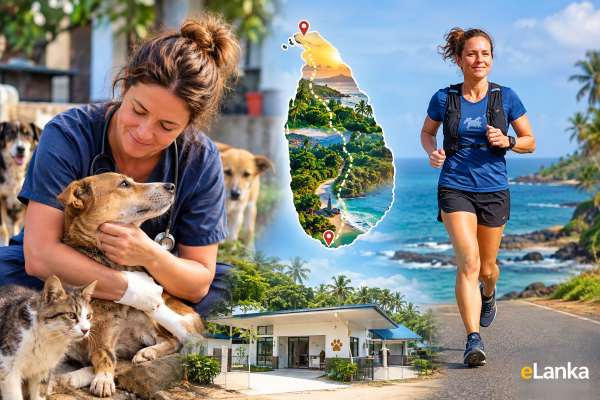
AI-generated illustration based on the source story. The image is not an authentic photograph of Dr Janey Lowes.
A British veterinarian is preparing to undertake an extraordinary 620-kilometre endurance challenge across Sri Lanka, with the journey intended to raise awareness and financial support for a new purpose-built veterinary hospital, rehabilitation centre and training facility for the country’s street dogs.
Dr Janey Lowes, a veterinarian from Barnard Castle in County Durham and founder of the charity WECare Worldwide, is scheduled to begin the “Dog Jog” on 9 October 2026. The route will extend from Point Pedro in the northernmost part of Sri Lanka to Dondra in the south, with the full distance of approximately 385 miles planned for completion over 22 days.
The run represents far more than a personal endurance test. It has been designed to expand the capacity of an animal-welfare organisation that has already provided veterinary care to thousands of animals, while creating a permanent base from which more street dogs can be treated, rehabilitated and protected.
A demanding journey from north to south
The route will carry Dr Lowes across a varied Sri Lankan landscape, passing through northern plains, rural communities, inland roads, hill-country terrain and southern coastal areas. Covering approximately 620 kilometres in 22 days would require an average of more than 28 kilometres each day, although the practical demands of heat, humidity, road conditions, elevation and recovery will make the challenge considerably more complex than a simple calculation suggests.
The distance is comparable to approximately 30 Great North Runs, according to the BBC report, despite Dr Lowes having never previously completed that major UK event. The scale of the undertaking reflects the urgency she associates with the future of WECare Worldwide and the need for facilities capable of responding to Sri Lanka’s large street-dog population.
The journey is expected to draw attention not only to the charity’s fundraising campaign, but also to the practical realities faced by veterinary teams working with animals that are injured, abandoned, infected or living without consistent access to medical treatment.

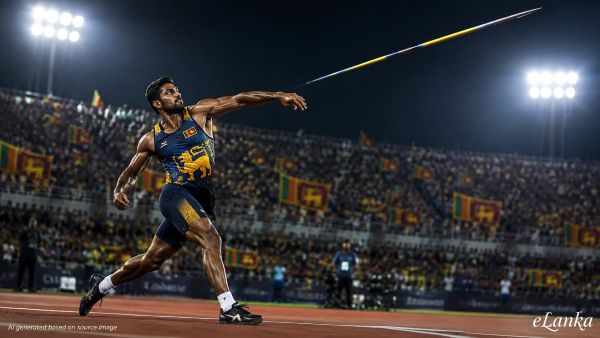
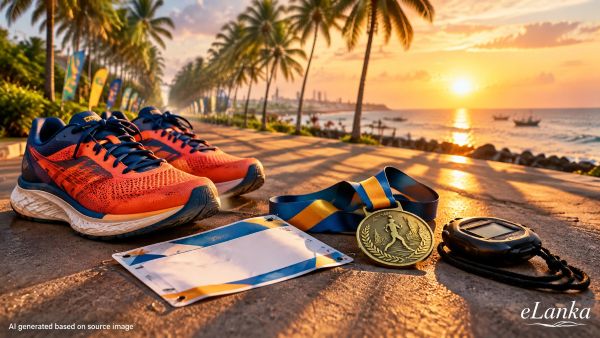
AI-generated illustration based on the source story. eLanka branding and the “AI generated based on source image” label are included in the image.
WECare Worldwide’s work in Sri Lanka
WECare Worldwide was established by Dr Lowes in 2014 after she encountered injured and neglected street animals while travelling in Sri Lanka. Her professional training had equipped her to provide treatment, yet the lack of appropriate equipment and accessible facilities made it difficult to respond to the scale of the need.
The organisation was initially operated from Dr Lowes’ home before a former nursery building was converted into a clinic. Over time, the service developed into a substantial veterinary operation, and more than 35,000 cats and dogs have reportedly received care through its work, including vaccinations against rabies and emergency treatment for animals injured in road accidents.
The existing clinic has, however, outgrown its premises. Its limitations include restricted space, outdated infrastructure, leaks and black mould, conditions that create additional difficulties for staff attempting to provide safe and effective treatment. The need for a purpose-built facility has therefore become increasingly apparent as demand has continued to grow.
Sri Lanka is estimated to have approximately three million street dogs. While many are supported by individuals, community groups and local welfare initiatives, the scale of the population presents an ongoing challenge that cannot be addressed through isolated treatment alone. Veterinary hospitals with appropriate surgical, rehabilitation and training capacity could provide a more systematic response.
A new facility with a wider purpose
The proposed development is intended to function as more than a conventional animal hospital. It is expected to incorporate veterinary treatment, rehabilitation services and training facilities, allowing WECare Worldwide to care for more animals while also contributing to the development of local professional skills.
A dedicated hospital could improve the organisation’s ability to provide emergency treatment, routine procedures, vaccination programmes and recovery support in a controlled environment. A rehabilitation centre could offer vulnerable animals a safer pathway from injury or illness towards recovery, adoption or responsible community care.
The training component is equally important. By supporting local veterinary professionals and animal-care staff, the proposed facility could help strengthen the long-term capacity of Sri Lanka’s animal-welfare sector. Knowledge transfer, clinical experience and access to suitable equipment would allow the impact of the project to extend beyond the animals treated directly by the charity.

AI-generated illustration based on the source story. The proposed facility is represented conceptually and is not an architectural image supplied by WECare Worldwide.
Cross-cultural compassion in action
Dr Lowes’ work represents a sustained example of cross-cultural compassion, in which professional skills developed in the United Kingdom have been directed towards a long-term animal-welfare need in Sri Lanka. The project has also relied on local knowledge, local participation and an understanding of the communities in which street dogs live.
Street dogs are not separate from human communities. They are found near homes, markets, schools, places of worship, roads and public spaces, and their welfare is closely linked to public health, responsible ownership, sterilisation, vaccination and community education. A properly equipped facility could therefore provide benefits extending beyond individual animals by supporting more informed and coordinated approaches to street-dog management.
The challenge also illustrates the role that individuals can play when institutional resources are limited. A 620-kilometre run cannot, by itself, resolve every difficulty associated with animal welfare, but it can bring visibility to an issue, encourage public participation and help establish the infrastructure required for sustained progress.
For Sri Lankans living overseas, the initiative offers a practical opportunity to support an animal-welfare cause connected to the island’s communities and landscapes. Readers wishing to learn more about the campaign can visit the donation page: https://www.justgiving.com/page/janeysdogjog.
A challenge still ahead
The Dog Jog has not yet begun. Dr Lowes is due to start from Point Pedro on 9 October 2026, and the planned 22-day route will test her physical resilience across one of Sri Lanka’s longest north-to-south journeys.
Its ultimate significance, however, will be measured not only in kilometres completed. The challenge is intended to help establish a veterinary hospital, rehabilitation centre and training facility capable of serving Sri Lanka’s street dogs for years to come. If successful, the project could provide WECare Worldwide with the space and resources required to treat more animals, support local professionals and develop a stronger foundation for animal welfare.
The story is therefore one of endurance with a practical purpose. Dr Lowes’ run will place a single athlete on the road, but the intended outcome is a permanent institution capable of improving the lives of many animals and strengthening compassionate care across Sri Lanka.
The initiative reflects the kind of positive, service-led story that the eLanka community portal seeks to share with Sri Lankans in Australia and around the world.
Source: https://www.bbc.co.uk/news/articles/c64g7gk7p7vgo
This article was written based on the sources https://www.bbc.co.uk/news/articles/c64g7gk7p7vgo and https://www.lankanewspapers.com/2026/10/04/british-vet-to-run-385-miles-across-sri-lanka-in-fundraising-challenge-for-local-hospital, kindly email us at info@eLanka.com.au if any information needs to be corrected.
At eLanka, we respect the rights of creators. If we have used an image you own and you’d like it removed, please email us at info@elanka.com.au and we’ll handle it promptly.
Thanks.
eLanka team
eLanka Disclaimer
Content published on eLanka may be created by the eLanka team, submitted by contributors or third parties, reproduced or adapted from other sources with appropriate source acknowledgement, or provided as promotional/advertising material by our clients. While eLanka takes reasonable care in preparing and publishing content, we do not warrant its completeness or accuracy. Views expressed are those of the respective authors or contributors and do not necessarily represent the views of eLanka. Third-party contributors, content providers and advertisers are responsible for the accuracy of material they supply and for ensuring they hold the necessary rights and permissions for its publication. Advertising and promotional content should not be regarded as an endorsement by eLanka of any product, service or claim.