First Two Years in Power: Reform or Repeat – Paradox of the NPP-by KKS Perera
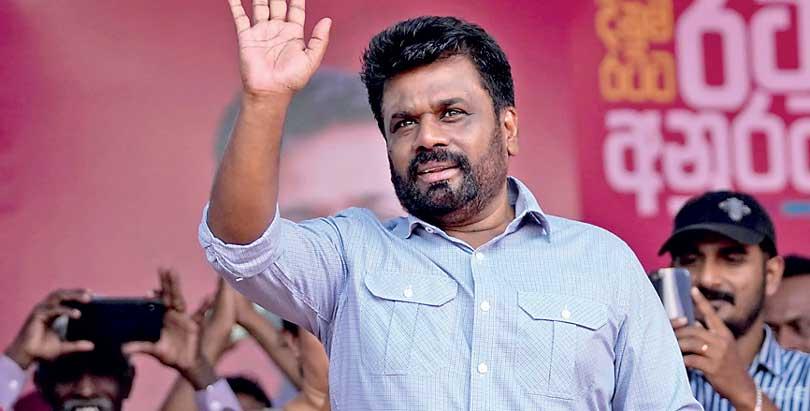
President Anura Kumara Dissanayake has time to change course. It would be premature to write off his presidency after two years
Image Source:Dailymirror

President Anura Kumara Dissanayake did not come to power promising to be just another President. He came promising to be different. That was the bargain he struck with a country exhausted by corruption, political privilege, economic disaster and broken promises. The voters gave the JVP-led National People’s Power a mandate for change.
Two years into that experiment, AKD deserves credit for one important development: his government has shown a willingness to pursue former rulers and officials accused of corruption and abuse of power. For decades, Sri Lankans watched powerful politicians leave office while allegations against them languished. Investigations gathered dust. Breaking that culture of impunity is necessary. If former ministers, officials, or political leaders have committed crimes, they should face the law, no matter how powerful they once were. No democracy can survive when political office becomes a shield against accountability.
NPP’s promise was not merely to investigate yesterday’s corruption, but to establish a new political culture based on fairness, transparency and good governance. Increasingly, however, questions are being asked about whether the people who promised to end favouritism are themselves beginning to practise it.
On the economic front, while macro indicators, such as foreign reserves stabilising at $7 billion and Fitch upgrading the credit rating to B-, have improved significantly since 2022, household-level assessments suggest poverty remains high compared with pre-crisis levels, sustaining public pressure on the NPP.
The appointment and promotion of retired police officers linked to the NPP’s Retired Police Officers Collective have raised concerns about political patronage and institutional independence. For a government that pledged to end such practices, even the appearance of political favouritism can damage public trust. The police and CID must be seen as institutions serving the law, not the government of the day.
The Speaker controversy was another blow to the government’s good-governance credentials. The appointment became controversial following claims concerning an academic qualification, and the Speaker eventually stepped down. For an administration that campaigned on higher ethical standards, this was an embarrassment. The NPP cannot ask the public to judge it by a higher standard and then seek ordinary political excuses when its own decisions become controversial. Its appeal was that standards would change, not merely officeholders.
The government’s economic claims also deserve a reality check. Sri Lanka’s stabilisation did not begin with the NPP. The previous administration, under Ranil Wickremesinghe, negotiated the IMF programme and introduced painful measures that established the framework within which the present government is operating. Senior-most cabinet minister Lalkantha admitted this. The NPP/JVP government has largely continued on that path; a wise move. Changing policy when circumstances demand it is responsible. But political honesty requires acknowledging continuity. The government can claim credit for managing the inherited programme, but not for creating it.
Concern over secrecy
More troubling than the economic debate is the growing concern over secrecy. Good governance means transparency, accountability, institutional independence and respect for the law. Yet the government has faced criticism over constitutional proposals. The controversy surrounding the 22nd Amendment is particularly serious because constitutional reform affects the relationship between the executive, Parliament and judiciary and therefore requires broad consultation.
The government cannot dismiss every critic of 22A as an ally of former rulers. Opposition has reportedly come from legal organisations, both local and International; other voices that cannot reasonably be described as defenders of Sri Lanka’s old political establishment. If the government’s purpose is to accelerate cases against former rulers accused of corruption, it should welcome scrutiny. Transparency is the best defence against accusations of an ulterior motive. A constitutional amendment perceived as serving a particular political or judicial agenda could damage confidence in the government and the institutions it claims to strengthen.
Virtues of closed doors
The same principle applies to foreign agreements. When the JVP was in opposition, it repeatedly demanded transparency from previous administrations. Those standards should not change simply because the JVP is now in government. Some agreements may require confidentiality, but secrecy cannot become a habit. A government cannot demand openness from its predecessors and then discover the virtues of closed doors when it occupies the same offices.
There is a cruel irony here. The NPP was one of the forces that helped propel Yahapalanaya into office. That government also promised good governance and eventually disappointed the electorate amid corruption scandals, political infighting and institutional failure. The Treasury bond controversy became a symbol of that failure. The Pohottuwa government that followed suffered an even more devastating collapse of public confidence, culminating in the economic crisis. Sri Lankans therefore turned to the NPP because they believed it represented a genuine alternative. Governments lose public trust when compromises accumulate.
Another warning sign is the concentration of power. The NPP’s enormous parliamentary majority gives it the ability to pass major legislation and constitutional changes. That makes dissent more important. Democracy is not strengthened when government MPs simply follow the leadership. A healthy governing movement must contain people willing to say no. The reported objections of senior lawyer and NPP figure Lal Wijenayake to 22A are therefore significant. Internal criticism should be welcomed as a safeguard, not treated as disloyalty. A government that cannot tolerate dissent within its own ranks may eventually become incapable of hearing criticism from outside.
AKD has time to change course. It would be premature to write off his presidency after two years. He has an opportunity to demonstrate that the NPP can exercise enormous political power without becoming intoxicated by it. But that requires something harder than defeating the old political establishment: resisting its habits.
Investigating former rulers is good. Investigating yesterday’s corruption while tolerating today’s favouritism would be hypocrisy. Continuing an inherited economic programme may be sensible, but claiming every achievement as one’s own is politically convenient rather than intellectually honest. A large parliamentary majority is legitimate, but using it to suppress scrutiny would be dangerous. Constitutional reform may be necessary, but constitutional change without adequate consultation, particularly when judicial independence is involved, is playing with fire.
Sri Lanka has had enough governments that arrived promising a new beginning and eventually discovered the comforts of power. The NPP was elected precisely because people believed it would be different. Its first two years have therefore produced a mixed picture: a welcome willingness to confront alleged corruption of the past, but also troubling questions about appointments, transparency, institutional independence and the concentration of power.
The verdict is not yet written, but the warning bells are ringing. AKD’s greatest challenge is no longer defeating the old rulers. It is proving that he will not simply become their successor in a different uniform. The measure of his government will not ultimately be how many former politicians it investigates or prosecutes. It will be whether it creates institutions strong enough to restrain those who come after it.
That is the real test of good governance. And it is a test the NPP cannot afford to fail.
kksperera1@gmail.com
At eLanka, we respect the rights of creators. If we have used an image you own and you’d like it removed, please email us at info@elanka.com.au and we’ll handle it promptly.
Thanks.
eLanka team
eLanka Disclaimer
Content published on eLanka may be created by the eLanka team, submitted by contributors or third parties, reproduced or adapted from other sources with appropriate source acknowledgement, or provided as promotional/advertising material by our clients. While eLanka takes reasonable care in preparing and publishing content, we do not warrant its completeness or accuracy. Views expressed are those of the respective authors or contributors and do not necessarily represent the views of eLanka. Third-party contributors, content providers and advertisers are responsible for the accuracy of material they supply and for ensuring they hold the necessary rights and permissions for its publication. Advertising and promotional content should not be regarded as an endorsement by eLanka of any product, service or claim.