


Avurudu Aroma around the corner-by Lionel Wijesiri
Source:Dailynews
The Sinhala and Tamil New Year is upon us. This is the time of family togetherness, the tempting aroma of the fragrant sweets, whole variety of traditional games – and the unique celebrations made up of a complex motley that includes facets of indigenous, Sinhala, Hindu and astrology-based customs and rituals.
Astrologically, when the sun moves from the Meena Rashiya (House of Pisces) to the Mesha Rashiya (House of Aries) in the celestial sphere, Sinhala Buddhists and Hindu Tamils will begin celebrating their Aluth Avurudda and Puththandu respectively. According to Hindu mythology, once in every year, ‘Indradeva’, the Prince of Peace descends upon the earth to ensure peace and happiness among individuals. The colour of dress he wears varies each year and the astrologers advise us to wear that particular colour during the festival season.
The timing of the Sinhala and Tamil New year coincides with the New Year celebrations of many traditional calendars of South and Southeast Asia. The festival has close semblance to the Thai New year, Bengali New Year, Cambodian New Year, Lao New Year, and Thingyan in Myanmar. In India, we find Vaisakhi in North and central India, Rongali Bihu in Assam, Puthandu in Tamil Nadu, Vishu in Kerala, Bishuva Sankranti in Odisha and Poila Boishakh in Bengal.
 The Aluth Avurudda has been one of the most significant annual festivals for Sinhala Buddhists, but its exact beginning is lost in the history. Robert Knox recalls that Aluth Avurudda was a major annual festival of the Sinhalese which was grandly celebrated in late March with royal patronage. This was during the period 1659 to 1678 when Knox was a prisoner in Kandy.
The historians believe that the Nayakkar Kings of Southern India who ruled during the latter part of the Kandyan Kingdom would have shifted the festival to April to fall in line with the Tamil New Year, thus preventing Sinhalese and Tamils having two separate festivals in successive months. Historical records indicate that the British rulers declared Sinhala and Tamil New Year as a holiday in 1885.
Customs and rituals
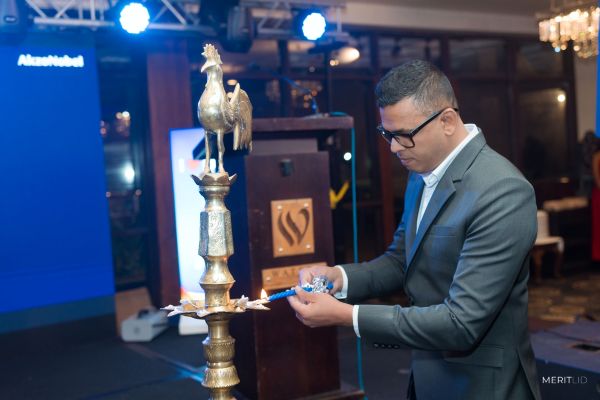
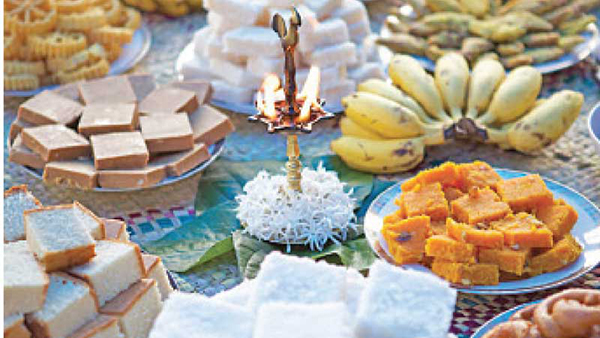
The Sinhala Buddhists and the Tamil Hindus get ready for this traditional and cultural festival from March itself. Homes are cleaned and all unwanted items are disposed, making the setting clean and tidy to mark a new beginning. Sweetmeats are prepared and new clothes purchased. The traditional oil lamp is lit at the auspicious time.
The sound of firecrackers and the rhythm of ‘Rabana’ signal the dawn of the ‘Aluth Avurudda’. As the Aluth Avurudda sets in, the hearth is lit by the lady of the house and the traditional pot of milk is boiled. The traditional Aluth Avurudda dish “kiribath” follows. At the table, kiribath, bananas and many other delicacies become the centerpiece. Families sit around the table and share the kiribath, as the head of the family offers it to all members. After this the oil lamp is lit and the feast commences.
Every ritual is performed at an auspicious time. After meals, children show respect to their elders by offering sheaves of betel and elders bless them. Plates of sweets and other delicacies are exchanged between neighbours. After main rituals including oil-anointing are over, the celebrations move out into available open spaces where various traditional games and other activities begin.
The Tamil Hindus also celebrate the same Aluth Avurudda, commonly known as ‘Puththandu’, by observing the customs and rituals practised by ancestors over the years. However, they are slightly different to those of the Sinhalese. The auspicious occasion of Puththandu is also popularly known as Varusha Pirappu or the birth of Aluth Avurudda.
People celebrate Puththandu by following specific customs and rituals. On the day of the Avurudda, during the auspicious time, Maruthu Neer – clean water boiled with various herbs, selected flowers and leaves, milk, saffron and other ingredients are made by the priests in temples. They take bath with this “maruthu neer” by placing some water on the head.
After this event, new clothes are worn and once the Aluth Avurudda is born families assemble for prayer at their home. The worshipping begins with lighting the traditional lamp (Kuthu Vilakku). Then the whole family heads to the temple for pooja and prayers. The elders in the family bless the children, who worship them and seek their blessings and good wishes.
Critical part of culture
During the New Year festival, the respect for ancestral ways, backed by rites and rituals, customs and traditions has opened our vision to understand that it is important to adhere to basic principles of morality. It is a festival which conveys to us the simple way of life possessed with good sentiments including the maintenance of social order. It is also a festival which communicates to us the value in all matters needed to maintain peace and prosperity among the community.
Customs and rituals followed in the Aluth Avurudda represent a critical piece of our culture. They help form the structure and foundation of our families and our society. They remind us that we are part of a history that defines our past, shapes who we are today and who we are likely to become. Once we ignore the meaning of our traditions, we’re in danger of damaging the underpinning of our identity.
Customs and rituals contribute a sense of comfort and belonging. It brings families together and enables people to reconnect with friends.
They reinforce values such as freedom, faith, integrity, personal responsibility, a strong work ethic, and the value of being selfless. They provide a forum to showcase role models and celebrate the things that really matter in life. They offer a chance to say “thank you” for the contribution that someone has made. They enable us to showcase the principles of our past generations, celebrate diversity, and unite as a country. They serve as an avenue for creating lasting memories for our families and friends. They offer an excellent context for meaningful pause and reflection.
During this festive period, as leaders, role models, and parents, we must strive to utilize every opportunity available to us to reinforce the values and beliefs that we hold dear. The alternative to action is taking these values for granted. The result is that our beliefs will get so diluted, over time, that our way of life will become foreign to us.
It’s like good health. You may take it for granted until you lose it. If we disregard our values, we’ll open our eyes one day and won’t be able to recognize “our world” anymore. The values that support the backbone of our country, our family, and our faith will have drifted for so long that the fabric of our society will be torn.
These customs and rituals have come down to us through the ages because they are ingrained in our history and culture. For thousands of years our ancestors, the inhabitants of this island built up a highly organised agrarian civilization based on the principles of harmonious co-existence with nature, non-violence, tolerance and peace.
The Aluth Avurudda demonstrates our national ethos with its characteristic emphasis of the renewal and reaffirmation of goodwill within families and among neighbours and in the series of ritualistic customs, practices and observances that are meant to revitalize an essential link between man and nature.
Sinhala and Tamil New Year, is a festival that has stood the test of time. It has enriched our culture, emotionally aroused our society and blessed our nation so much so that today the “Aluth Avuruddha” has emerged as the country’s premier National Festival.
(This article, first published in the Daily News on April 12, 2020, is republished in tribute to journalist and author Lionel Wijesiri who passed away recently).