


Back to reading: Inside the Colombo Literary Festival- By Joanne Andrea Joseph
Source:Sundaytimes
In 2004, German philosopher Peter Sloterdijk published the last volume of a trilogy of human space. Bubbles, Globes, and finally Foam, arguing that modern life exists as neither one giant, unified sphere nor a scatter of isolated individuals, but as something closer to foam. A mass of small, interconnected chambers that coalesce and reshape the space around them.

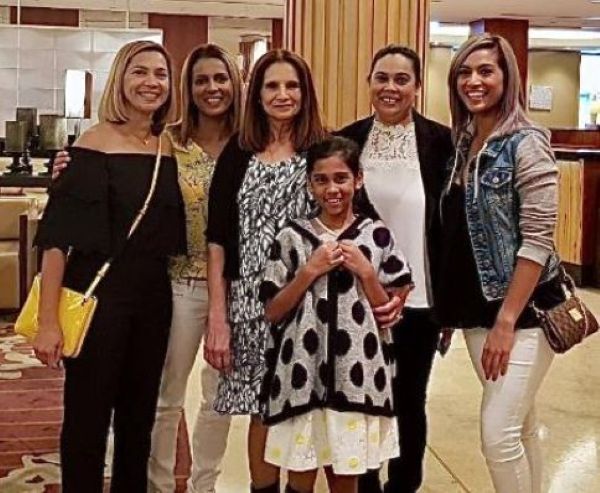
Janaka Inimankada
The Colombo Literary Festival was built on that same idea that its curator, Anomaa Rajakaruna, a filmmaker, photographer, and founder of film festivals chose. With over three decades of experience, Anomaa found in Sloterdijk’s ‘Foam Theory’ a language for what she’d long observed in her creations. A collection of interconnected, micro-spheres that touch, press against, and merge into larger collective systems, without ever losing their own identity.
Founded by Janaka Inimankada, the festival was steered by a board of directors drawn from the heart of Colombo’s publishing trade, including Chandu Haputhanthri, Dinushi Weeraman Abeywickrama, Pradeep Samaranayake and Dharshana Relapanawe, with Amendra Gunawardane Haputhanthri serving as festival manager. The festival that unfolded from July 24 – 29 at the Arcade Independence Square was an exercise in building community and shared landscape on purpose.
“Reading isn’t only what happens with your eyes on a page,” Anomaa said, in one of the many conversations that ran alongside the official programme. “It’s what happens when you read between the lines, of a poem, of a person, of our own community. It’s discovering yourself. It’s being aware of where you stand, locally and globally, and who claims space in that picture and who doesn’t.”

Anomaa Rajakaruna
That premise gave the festival a refreshingly wide brief. A chalk mural taking shape in real time; a film screening that ended in discussion; a musical evening that closed a day of panels the way a good final chapter closes a book. If a community is really a mass of small, self-contained worlds pressed together, linguistic, generational, and artistic, then a festival’s task is not to dissolve those worlds into one large, homogenous programme. It is to formulate a space where they sit close enough that something can still pass between them.
The choice of the Arcade Independence Square as home for all six days was not incidental. The building carries its own colonial inheritance, standing within sight of both the Independence Memorial Hall and the Sri Lanka Broadcasting Corporation, one a monument to a landscape stepping out from under empire, the other to the airwaves that carried its stories long before any festival did.
Twice during the festival a literary walk titled ‘Boyhood Memories of Gothic Novels and Spooky Parks’ led small groups from the old P&S outlet on Havelock Road, opposite Police Park, down to the Arcade itself, with Professor Asoka Mendis De Zoysa as guide. The walk moved through Radio Ceylon’s 1960s broadcasts of world literature at ten each night, the 1965 Industrial Exhibition, and Dudley Senanayake’s Green Revolution at the old Race Course, pausing for readings from Shyam Selvadurai’s 1994 novel ‘Funny Boy’ along the way. A masterclass in the landscape’s own hidden storytelling.
The six-day schedule revealed a diversity of individuals and expertise. With more than 110 panelists and moderators across 91 programmes, the reach extended well beyond the island. International panelists arrived from India, the United States, Nepal, the United Kingdom, the Netherlands, Pakistan, Türkiye, and Australia, formulating conversations that repeatedly set local experience against a wider frame.
The subject matter ranged just as widely. Literature and criticism covered Sinhala, English, and Tamil work, a category that opened its arms to Malayalam and Muslim literary voices as communities whose writing has long shared linguistic ground with Tamil without always sharing its stage. Politics and diplomacy brought South Asian affairs into the same rooms as a retrospective on Sirimavo Bandaranaike. History, archaeology, and architecture were treated as close relatives rather than separate disciplines. The legends of Ravana and contested colonial histories sitting alongside Buddhist heritage and a session on Sri Lanka’s architectural inheritance through Minnette de Silva and Geoffrey Bawa. Children’s literature found its centre in a tribute to Sybil Wettasinghe, alongside conversations about raising readers in the age of screens.
Cinema had its own dedicated home at the Goethe-Institut, where the festival paired its literary programme with page-to-screen adaptation. The eight film screenings were from Germany, France, Türkiye, India, Bangladesh, and Sri Lanka, a reminder that a story doesn’t stop belonging to a landscape just because it changes medium.
Painters, illustrators, and spoken-word poets barely out of school shared programme space with established names. And as the sun went down, the day’s ideas gave way to musical evenings that turned the grounds into a gathering.
Ten thousand people walked through the grounds that week. What they seem to have left with, if the corridor conversations are any measure, is what Anomaa, Janaka, and the committee behind them envisaged all along. Not a tidy takeaway, but the sense of having touched a few bubbles they’d never have entered on their own. And having read, in the process, a little more of the landscape, and a little more of themselves. Sloterdijk would probably call that foam. Everyone else in Colombo this July might just call it a good literary festival.