Book Review: Half of a Yellow Sun by Chimamanda Ngozi Adichie-Wimal Kannangara
Source:Qld Sri Lankan Newsletter – Dæhæna – May 2026
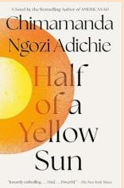
Half of a Yellow Sun by Chimamanda Ngozi Adichie is a powerful and deeply moving novel that explores the human cost of war through intimate, character-driven storytelling. Set during the Nige-rian Civil War (1967–1970), also known as the Biafran War, the novel captures both the political upheaval of the era and the emo-tional lives of individuals caught in its wake. To my knowledge, it is one war in which starvation was used as a weapon.
In the university town of Nsukka, Ugwu, a thirteen-year-old village boy, begins work as a houseboy for Odenigbo, a radical mathematics professor. Odenigbo’s home is a hub where intellectuals gather to de-bate Africa’s post-colonial future. They are soon joined by Olanna, Odenigbo’s beautiful and educated girlfriend, who abandons her life of privilege in Lagos to be with him, and her twin sister Kainene, who runs their father’s company. Kainene also has a boyfriend, Richard, an Eng-lish writer who visits Nigeria to explore Igbo-Ukwu art.
Four years later, ethnic tensions between the Hausa and Igbo peo-ple escalate into violence. Following a series of massacres, including the murder of Olanna’s aunt and uncle, the southeast of Nigeria secedes to form the independent Republic of Biafra. Odenigbo, Olanna, their young daughter Baby, and Ugwu are forced to flee Nsukka, eventually settling in the refugee town of Umuahia. They experience severe food shortages, constant air raids by the Nigerian Air Force, and an environment of paranoia.
One of the novel’s greatest strengths is its rich characterisation. Ugwu’s transformation from an innocent boy into a young man shaped by violence is particularly compelling and, at times, unset-tling. Olanna stands out as a figure of resilience and emotional depth, grappling with personal betrayals alongside the horrors of war. Richard, meanwhile, offers an outsider’s perspective, though his character also raises subtle questions about belonging, identity, and cultural appropriation. Adichie ensures that none of her charac-ters feel one-dimensional; each is flawed, human, and profoundly affected by the circumstances around them.
Half of a Yellow Sun explores issues of colonial legacy, ethnic ten-sions, class divisions, and the role of intellectuals in times of crisis. It also examines love, loyalty, friendship, and sacrifice under ex-treme conditions. The title itself, referring to the emblem on the Biafran flag, becomes a symbol of hope and a reminder of a dream that ultimately collapses.
Adichie not only tells an important story about a lesser-known con-flict but also invites readers to reflect on the universal consequences of war.
Wimal Kannangara
Wimal lived in the Eastern region of Nigeria which was known as Biafra at one stage.