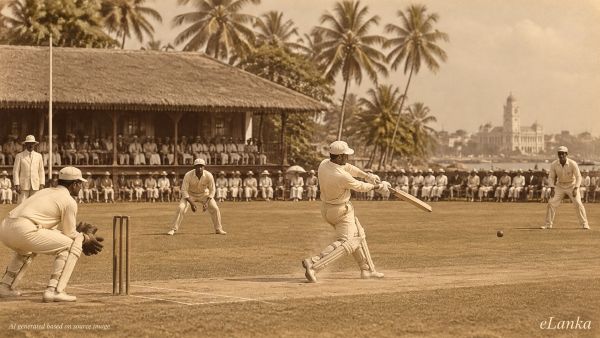
Illustrative image published by Lankanewspapers.com. It is AI-generated and should not be regarded as an authenticated photograph of a completed project.
Colombo Fort, one of Sri Lanka’s most recognisable historic districts, is set to become the focus of a proposed heritage tourism initiative supported by the World Bank, according to a report published by Lankanewspapers.com on 30 August 2026. The Colombo Fort heritage tourism plan is intended to reimagine the precinct as a more accessible, culturally engaging and economically productive destination while retaining the architectural character that has shaped the capital’s identity across several centuries.
The proposal represents an opportunity to connect conservation with contemporary urban life, allowing historic buildings, public spaces, hospitality businesses, retail outlets, cultural venues, artisan enterprises and waterfront development to function as parts of a coherent heritage district. However, the reported measures remain proposed or expected components of the initiative; they should not be interpreted as evidence that the planned restoration and redevelopment work has already been completed.
A district shaped by successive eras
Colombo Fort occupies a central position within the capital and has long served as an administrative, commercial and maritime gateway. Its built environment reflects the influence of Portuguese, Dutch and British periods, with surviving streetscapes and structures displaying a combination of colonial planning, civic architecture, commercial premises and waterfront connections.
The district’s importance is not confined to individual buildings. Its value also rests in the relationship between streets, public spaces, architectural façades, transport routes and the coastal setting. The accumulated character of the area provides a physical record of Colombo’s development from a fortified colonial settlement into a modern commercial capital.
For Sri Lankans living overseas, Colombo Fort remains a familiar reference point associated with the city’s history, business life and cultural memory. A carefully managed heritage tourism programme could therefore provide visitors with a more meaningful way to understand the capital, while enabling local residents and businesses to participate in the area’s future.

World Bank-backed planning and technical support
The reported involvement of the World Bank places the Colombo Fort proposal within a broader effort to strengthen Sri Lanka’s tourism sector through the sustainable use of cultural and natural assets. International support of this nature is expected to contribute not only financial resources, but also technical knowledge concerning heritage conservation, urban planning, public access and inclusive economic development.
The World Bank-backed approach is significant because heritage-led regeneration requires more than the repair of façades. Historic districts must be made functional, safe and welcoming without losing the features that make them distinctive. This involves careful decisions concerning traffic movement, pedestrian routes, public amenities, drainage, lighting, signage, accessibility and the adaptive reuse of older buildings.
The reported plans are being associated with the development of Colombo Fort as a dedicated heritage tourism zone. Their success will depend on the coordination of relevant institutions and on the ability to establish a clear framework through which conservation, business activity and public use can be balanced.
Proposed improvements to the Fort precinct
The Lankanewspapers.com report identifies several intended elements of the Colombo Fort heritage tourism plan. These include the restoration of colonial-era buildings and public spaces, improvements to pedestrian infrastructure, upgraded public amenities, and the possible introduction of facilities that would make the area more comfortable for both residents and visitors.
Improved walkability could be particularly important. A district that can be explored safely and comfortably on foot allows architectural details, historic streets and local businesses to become part of the visitor experience rather than remaining hidden behind heavy traffic and fragmented public spaces. Pedestrian-friendly streets could also encourage longer visits and create opportunities for small cafés, galleries, craft outlets, bookshops and other locally operated enterprises.
The proposal is also expected to support boutique hotels, cultural venues and artisan businesses. If implemented sensitively, these uses could give older buildings a continuing purpose while avoiding the abandonment or neglect that often affects historic urban properties. Adaptive reuse, when guided by appropriate conservation standards, can allow a structure to remain economically active without erasing its original character.
A further reported objective is the integration of Colombo Fort with wider waterfront development. This could create a connected urban experience extending towards the Colombo waterfront and other nearby public spaces. The intention is not simply to add isolated attractions, but to develop a district in which heritage, commerce, culture and the coastal environment reinforce one another.
Heritage conservation as an economic opportunity
The proposed initiative highlights the economic potential of Sri Lanka’s built heritage. Historic districts can support employment and enterprise across several sectors, including hospitality, food services, architecture, conservation, retail, transport, cultural production and creative industries.
For local entrepreneurs, a revitalised Fort precinct could provide opportunities to present Sri Lankan products, design, cuisine, music, visual arts and traditional crafts to a wider audience. Artisan enterprises, in particular, could benefit if the area is planned in a manner that gives small businesses reasonable access to premises, markets and visitors.
The economic value of the project, however, should be measured not only by visitor numbers or commercial investment. A successful heritage district should also be assessed by the quality of restoration, the accessibility of public spaces, the continuity of local business activity and the extent to which the surrounding community shares in the benefits.
The proposed public amenities and pedestrian infrastructure could make the district more useful to Colombo residents, while cultural venues could support exhibitions, performances, educational programmes and heritage interpretation. Such facilities would help ensure that Colombo Fort remains a living part of the city rather than becoming merely a preserved backdrop.

Preserving the character of a historic urban landscape
The central challenge will be the balance between renewal and preservation. Colombo Fort’s value lies in its distinctive historical layers, and any intervention that treats the area as a blank development site could weaken the very qualities that make it significant.
Restoration should therefore be based on documented architectural features, appropriate materials and professional conservation practice. New facilities may be necessary, but they should be designed to complement the existing streetscape rather than overwhelm it. Signage, lighting, shopfronts and public furniture should likewise be coordinated so that the district develops a recognisable visual identity.
The reported plan also creates an opportunity for stronger heritage interpretation. Clear information about the Portuguese, Dutch and British periods, as well as the wider development of Colombo, could enable visitors to understand how the district evolved. A balanced interpretation would allow the area’s complex history to be presented with accuracy and context, while giving attention to the people, businesses and communities that have sustained Fort across generations.
A potential model for heritage-led regeneration
If the proposal is implemented with care, Colombo Fort could become an example of how historic urban districts may be renewed without sacrificing their identity. Its combination of architectural heritage, commercial importance and proximity to the waterfront provides a strong foundation for a distinctive cultural destination.
The initiative’s proposed links between conservation, hospitality, retail, creative industries and local enterprise are particularly important because they recognise that heritage protection is most effective when historic places remain active and useful. Buildings that are maintained, occupied and connected to the community are more likely to endure than structures preserved without a practical role.
For the global Sri Lankan community, the Colombo Fort heritage tourism plan offers a potentially valuable way to reconnect with one of the island’s most recognisable urban landscapes. Its long-term contribution will depend on the quality of planning, the care applied to restoration and the extent to which the completed district remains accessible to residents, businesses and visitors alike.
At present, the reported project should be understood as a proposed World Bank-backed initiative rather than a completed transformation. Nevertheless, the plan places Colombo Fort at the centre of an important conversation about Sri Lanka’s historic identity and the constructive possibilities that emerge when conservation is linked with culture, enterprise and thoughtful urban development.
Source: https://www.lankanewspapers.com/2026/08/30/colombo-fort-set-for-major-transformation-under-world-bank-backed-heritage-tourism-initiative
This article was written based on the source https://www.lankanewspapers.com/2026/08/30/colombo-fort-set-for-major-transformation-under-world-bank-backed-heritage-tourism-initiative, kindly email us at info@eLanka.com.au if any information needs to be corrected.
(adsbygoogle = window.adsbygoogle || []).push({});
At eLanka, we respect the rights of creators. If we have used an image you own and you’d like it removed, please email us at info@elanka.com.au and we’ll handle it promptly.