


News & Community eLanka

eLanka

Wednesday, 29 Apr 2026
  • Home
  • Read History
  • Articles
    • eLanka Journalists
  • Events
  • Useful links
    • Obituaries
    • Seeking to Contact
    • eLanka Newsletters
    • Weekly Events and Advertisements
    • eLanka Testimonials
    • Sri Lanka Newspapers
    • Sri Lanka TV LIVE
    • Sri Lanka Radio
    • eLanka Recepies
  • Gallery
  • Contact
Newsletter
Sri lankan news
  • eLanka Weddings
  • Property
  • eLanka Shop
  • Business Directory
eLankaeLanka
Font ResizerAa
Search
  • Home
  • Read History
  • Articles
    • eLanka Journalists
  • Events
  • Useful links
    • Obituaries
    • Seeking to Contact
    • eLanka Newsletters
    • Weekly Events and Advertisements
    • eLanka Testimonials
    • Sri Lanka Newspapers
    • Sri Lanka TV LIVE
    • Sri Lanka Radio
    • eLanka Recepies
  • Gallery
  • Contact
Follow US
© 2005 – 2026 eLanka Pty Ltd. All Rights Reserved.
Home » Goodnews Stories Srilankan Expats » Articles » Do Mangoes Raise Blood Sugar Levels in People with Diabetes?-by Dr. Harold Gunatillake
ArticlesDr Harold Gunatillake

Do Mangoes Raise Blood Sugar Levels in People with Diabetes?-by Dr. Harold Gunatillake
eLanka admin
Last updated: April 5, 2026 5:36 pm
By
eLanka admin
ByeLanka admin
Follow:
Share
6 Min Read
SHARE
Views: 380

Do Mangoes Raise Blood Sugar Levels in People with Diabetes?-by Dr. Harold Gunatillake

Dr Harold Gunatillake

Contents
  • Do Mangoes Raise Blood Sugar Levels in People with Diabetes?-by Dr. Harold Gunatillake
  • Regulating Blood Sugar
  • Effects on Pre-Diabetes

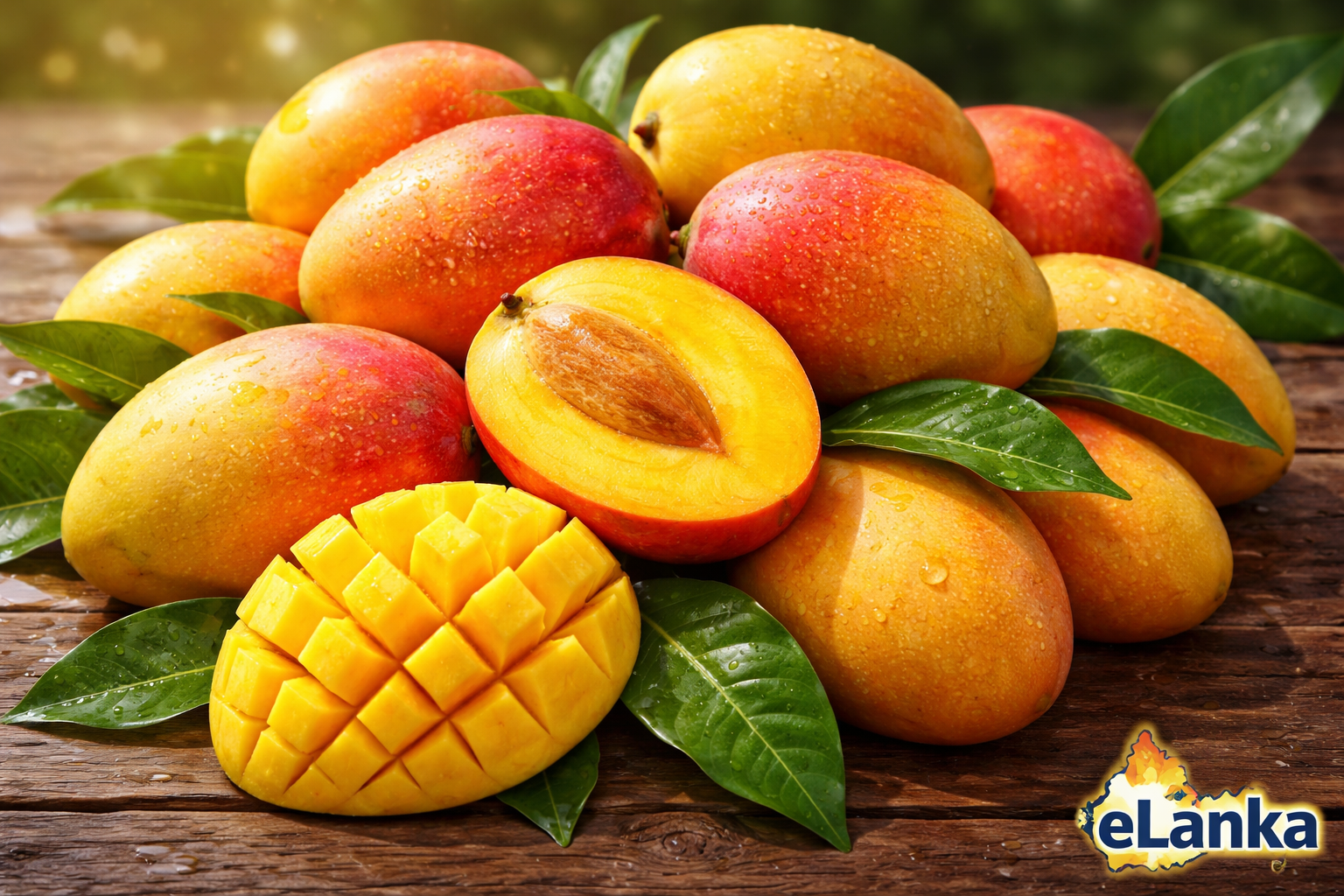
Do Mangoes Raise Blood Sugar Levels in People with Diabetes-eLanka

It could be puzzling for most people with diabetes- should I eat this or that fruit? becomes an issue.

Let me unravel this issue.

Some fruits that are high in sugar include:

Bananas, Cherries, Mangoes, Oranges, Pears, Pineapple, Pomegranates, Raisins, and Watermelon.

People with diabetes can still eat these fruits, but should do so in moderation and be mindful of portion sizes, provided their blood sugar is well controlled. Serving sizes are essential, especially for high-glycemic-index fruits. For example, you can think of a whole apple as the size of a tennis ball and cut-up fruit as a ½ cup. (The glycemic index (GI) measures how much a specific food increases blood sugar levels. The GI ranges from 0 to 100, with 0

indicating no sugar spike and 100 indicating a sugar spike from pure glucose.

People with diabetes should consume more low and medium-GI fruits.

Fruits with a low glycemic index (GI) can help manage blood sugar levels and prevent spikes. The fibre in fresh fruit helps keep most fruits low on the GI scale, at 55 or below. Here are some fruits with a low GI:

  • Cherries: Have a GI of 20 to 25, depending on the type of Cherries are rich in antioxidants and have anti-inflammatory properties.
  • Strawberries: Have a GI of
  • Raspberries: Have a GI of
  • Grapefruit: Has a GI of 26 and is low in
  • Pears: They have a GI of 30 and are high in
  • Apricots: Have a GI of 34 or 31 when
  • Oranges: Have a GI of
  • Pomegranates: Have a GI of
  • Plums: They have a GI of 40 and are rich in antioxidants and
  • Apples: Have a GI of
  • Guava: Has a GI of 12 and is rich in dietary fibre, vitamins A and C, and antioxidants.

Fruits and vegetables are essential parts of a healthy diet. They contain fibre, vitamins, and minerals and may help protect against cancer, cardiovascular disease, and respiratory conditions.

All fruits contain fructose, which is converted into glucose in the gut and absorbed into the bloodstream as glucose. Doctors often recommend limiting fruit intake for individuals with diabetes, as it can complicate blood sugar regulation, especially when on anti-diabetic medication. However, mangoes are an exception to this rule.

About half of the sugar content in mangoes comes from sucrose—the same sugar found in white table sugar. Unlike many other fruits, mangoes contain less fructose; only about one-third of their

sugar content is fructose. The remaining sugar is primarily dextrose, which provides energy and is often administered intravenously to hospital patients. All these sugars affect the body similarly.

Mangoes also contain a small amount of starch, a complex carbohydrate that is eventually converted into glucose and absorbed by the body.

Mangoes are part of the Anacardiaceae family, with India producing over 18 million tons annually. In Queensland, Australia, mango trees line the roads, often with fruit that birds eat.

Nonetheless, most mangoes found in supermarkets come from Queensland.

Mangoes are nutritionally rich in various vitamins and minerals, including C, A, E, K, and several B vitamins. They also contain active antioxidants like polyphenols, triterpenes, and lupeol, which have anti-inflammatory properties.

Regulating Blood Sugar

A study published in Nutrition and Metabolic Insights highlights the positive effects of mango consumption on blood sugar levels in mice. Subsequent trials involving humans produced similar results. In one study, twenty obese individuals consumed 10 grams of ground freeze-dried mango pulp daily for 12 weeks. Researchers found that glucose levels decreased in both male and female participants in the trial, while their body weight remained stable.

The authors concluded that regular consumption of freeze-dried mangoes by obese individuals does not adversely affect body weight but improves fasting blood glucose levels. They theorise that mangoes may stimulate pancreatic beta cells to secrete insulin, thereby helping lower blood sugar levels.

Effects on Pre-Diabetes

In another study involving pre-diabetics, participants consumed 10 grams of freeze-dried mango daily for 12 weeks. Results indicated lower blood glucose and higher insulin levels compared with a control group that did not consume mango.

**Conclusion**

Mangoes can help maintain healthy blood sugar levels and may be a valuable addition to a balanced diet. However, further

studies are needed to establish these findings firmly. For those with diabetes, a practical approach is to monitor blood glucose levels before and after eating a fresh mango. Checking levels two hours later can help determine if mango consumption positively affects blood sugar management.





Click here to receive your free copy of the eLanka Newsletter twice a week delivered directly to your inbox!
TAGGED:blood sugar levelsMangoes
Share This Article
Facebook Whatsapp Whatsapp LinkedIn Email Copy Link Print
Previous Article eLanka Newsletter eLanka Newsletter – 5th April 2026 – 1st Edition – Sri Lankans In Australia
Next Article Threads of Culture-eLanka Hameedia unveils “Threads of Culture” this season championing Sustainable Fashion and New Milestones
FacebookLike
YoutubeSubscribe
LinkedInFollow
Most Read
10 Pictures With Fascinating Stories Behind Them!

“A PICTURE SPEAKS A 1000 WORDS” – By Des Kelly

Look past your thoughts so you may drink the pure nectar of this moment

A Life Hack for when we’re Burnt Out & Broken Down – By Uma Panch

Narration of the History of our Proud Ancestral (Orang Jawa) Heritage. by Noor R. Rahim

eLanka Weddings

eLanka Marriage Proposals

Noel News

Noel News

Noel News

Noel News- By Noel Whittaker

Appreciation: Eileen Mary Sibelle De Silva

K.K.S. Cement Factory

Dr.Harold Gunatillake’s 90th Birthday party

Sri Lanka's women's cricket squad in Melbourne

Cricket: Sri Lanka’s women’s squad in Melbourne

- Advertisement -
Ad image
Related News
Small Blacks scamper home in a hotly contested first Test against spirited Tuskers 02
Articles Trevine Rodrigo

Small Blacks scamper home in a hotly contested first Test against spirited Tuskers-BY TREVINE RODRIGO IN MELBOURNE. (eLanka Sports Editor).

S.J.V. Chelvanayakam’s Career reviewed by GL Peiris
Articles

S.J.V. Chelvanayakam’s Career reviewed by GL Peiris

Articles Dr Gamini Goonetilleke

Charith: Beyond the Battlefield Dr Gamini Goonetilleke

Articles Dr. Gnana Sankaralingam

TOAST FOR ROYAL COLLEGE AT THE BLUE AND GOLD BALL 2026 by Dr. Gnana Sankaralingam

Sri Lankan Community Australia
Articles Photo Gallery

The Passion of Christ: A Deeply Moving Community Performance in Mulgoa

  • Quick Links:
  • Articles
  • DESMOND KELLY
  • Dr Harold Gunatillake
  • English Videos
  • Sri Lanka
  • Sinhala Videos
  • eLanka Newsletters
  • Obituaries
  • Sunil Thenabadu
  • Dr. Harold Gunatillake
  • Tamil Videos
  • Sinhala Movies
  • Trevine Rodrigo
  • Photos
  • eLanka Newsletter

eLanka

Your Trusted Source for News & Community Stories: Stay connected with reliable updates, inspiring features, and breaking news. From politics and technology to culture, lifestyle, and events, eLanka brings you stories that matter — keeping you informed, engaged, and connected 24/7.
Kerrie road, Oatlands , NSW 2117 , Australia.
Email : info@eLanka.com.au / rasangivjes@gmail.com.
WhatsApp : +61402905275 / +94775882546
  • About eLanka
  • Terms & Conditions

Disclaimer:
eLanka is committed to sharing positive and community-focused stories. We do not publish or endorse political, religious, or ethnic viewpoints. The content published on eLanka, including articles and newsletters, reflects the opinions and views of the respective authors and not those of eLanka. eLanka accepts no responsibility or liability for the accuracy, completeness, or consequences of any content provided by contributors.

(c) 2005 – 2025 eLanka Pty Ltd. All Rights Reserved.