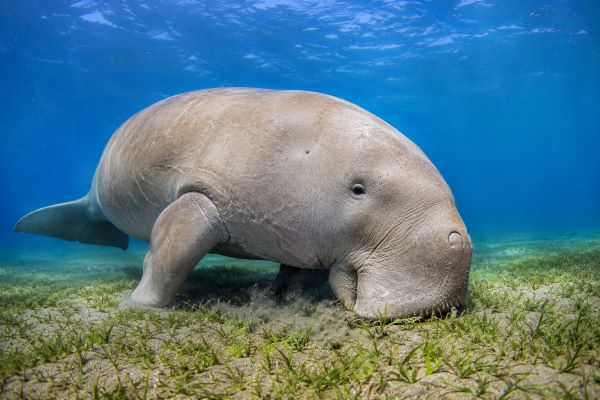
Dugongs are among the most peaceful and fascinating marine mammals in the world. Often called “sea cows,” these gentle creatures spend most of their lives slowly grazing on underwater seagrass meadows in warm coastal waters. Unlike sharks or other large sea animals, dugongs are completely harmless and are known for their calm and shy nature.
Scientifically known as Dugong dugon, dugongs belong to a rare group of marine mammals called Sirenia, which also includes manatees. They are the only strictly marine herbivorous mammals in the world, meaning they survive entirely on sea plants rather than fish or other animals.
What Do Dugongs Look Like?
Dugongs have large, rounded bodies with smooth grey skin, paddle-like flippers, and a tail similar to a dolphin’s. They can grow up to three meters in length and weigh several hundred kilograms.
Despite their size, dugongs move gracefully and peacefully through the water. Their downward-facing snouts are specially designed for feeding on seagrass found on the ocean floor.
Why Are Dugongs Called “Sea Cows”?
Dugongs are called “sea cows” because they spend much of their time grazing slowly on seagrass, similar to how cows graze on grass in fields. They calmly move through shallow waters while feeding, making them one of the gentlest animals in the ocean.
An adult dugong can eat large amounts of seagrass every day, helping maintain healthy marine ecosystems.
Why Are Dugongs Rare?
Today, dugongs are considered vulnerable and rare in many parts of the world. Their populations have declined significantly over the years due to several environmental and human-related threats.
Loss of Seagrass Habitats
Dugongs depend entirely on healthy seagrass meadows for food. Pollution, coastal development, and climate change are destroying many of these underwater habitats.
Fishing Activities
Dugongs can accidentally become trapped in fishing nets, which is one of the major causes of injury and death.
Boat Collisions
Because dugongs often swim slowly near the surface in shallow waters, they are vulnerable to boat strikes.
Marine Pollution
Plastic waste, oil pollution, and contaminated waters negatively affect marine ecosystems and the food sources dugongs rely on.
Slow Reproduction
Dugongs reproduce very slowly. Females usually give birth to only one calf after a long pregnancy, making population recovery difficult when numbers decline.
Why Should We Protect Dugongs?
Dugongs are important for maintaining balanced and healthy ocean ecosystems.
They Help Protect Seagrass Ecosystems
As dugongs feed on seagrass, they help keep underwater meadows healthy and productive. Healthy seagrass supports fish, turtles, and many other marine species.
They Support Ocean Biodiversity
Marine ecosystems depend on balance. Protecting dugongs helps protect many other forms of marine life as well.
They Are Part of Natural Heritage
Dugongs are among the world’s most unique marine mammals. Losing them would mean losing an important part of Earth’s natural biodiversity.
Healthy Oceans Benefit Humans Too
Healthy marine ecosystems support fishing industries, tourism, coastal protection, and cleaner oceans that benefit people worldwide.
Conservation Efforts Around the World
Many countries and marine conservation organisations are working to protect dugongs through:
- Marine protected areas
- Seagrass restoration projects
- Safer fishing practices
- Public awareness campaigns
- Scientific research and monitoring
Environmental groups continue encouraging stronger ocean conservation efforts to ensure dugongs survive for future generations.
Interesting Facts About Dugongs
- Dugongs can hold their breath underwater for several minutes.
- They are closely related to elephants.
- Dugongs are quiet and shy animals.
- Ancient sailors may have mistaken dugongs for mermaids.
- Dugongs can live for over 70 years in the wild.
Final Thoughts
Dugongs are gentle giants that remind us of the beauty and fragility of marine life. Although they face many threats today, increased awareness and conservation efforts can help protect these rare sea mammals and the delicate ocean ecosystems they depend on.
Protecting dugongs is not only about saving one species — it is about preserving the health, balance, and beauty of our oceans for future generations.