El Niño: Understanding the Climate Phenomenon That Shapes Weather Around the World-by Kalani-eLanka
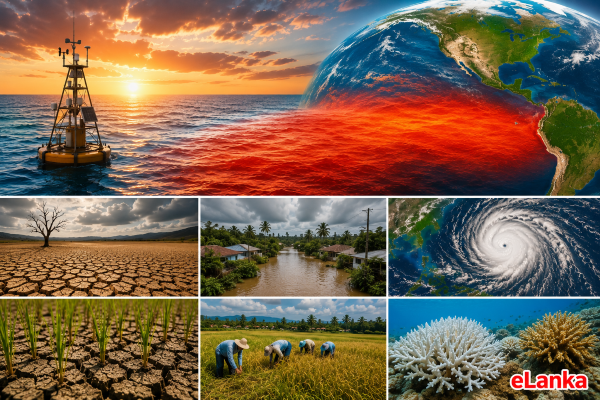
El Niño is one of the world’s most influential climate patterns, capable of altering weather conditions across continents. From prolonged droughts and devastating floods to rising temperatures and changing agricultural yields, the effects of El Niño can be felt by millions of people. Although it begins in the Pacific Ocean, its impact extends far beyond, affecting countries across Asia, Africa, Australia, and the Americas—including Sri Lanka.
What is El Niño?
El Niño is a naturally occurring climate phenomenon that is part of the El Niño-Southern Oscillation (ENSO) cycle. It occurs when sea surface temperatures in the central and eastern tropical Pacific Ocean become significantly warmer than average. These warmer waters disrupt normal atmospheric circulation patterns, influencing weather systems around the globe.
Typically, El Niño events develop every two to seven years and can last anywhere from nine months to over a year. Their strength varies, with some events producing only minor weather changes while others trigger severe climatic extremes.
How Does El Niño Develop?
Under normal conditions, trade winds blow from east to west across the Pacific Ocean, pushing warm surface water toward Indonesia and Australia. This allows cooler, nutrient-rich water to rise near the coast of South America.
During an El Niño event, these trade winds weaken or even reverse. Warm water spreads eastward across the Pacific, reducing the upwelling of cold water. This shift changes atmospheric pressure patterns and disrupts rainfall distribution across many parts of the world.
Global Impacts of El Niño
The effects of El Niño differ from region to region, but some common impacts include:
- Increased rainfall and flooding in parts of South America.
- Drought conditions in Australia, Indonesia, and some Southeast Asian countries.
- Warmer-than-average global temperatures.
- Increased risk of wildfires in dry regions.
- Reduced fish populations along the Pacific coast due to decreased nutrient-rich waters.
- Greater likelihood of crop failures in areas experiencing prolonged drought.
Scientists have also observed that strong El Niño events often contribute to record-breaking global temperatures, as the release of heat from the Pacific Ocean adds to the long-term warming caused by climate change.
El Niño and Sri Lanka
Sri Lanka experiences varying impacts from El Niño depending on the season. The phenomenon can influence the country’s two monsoon systems, sometimes leading to:
- Reduced rainfall during certain cultivation seasons.
- Extended dry periods affecting agriculture.
- Water shortages in reservoirs.
- Higher daytime temperatures.
- Increased stress on hydroelectric power generation.
- Greater challenges for farmers cultivating paddy, tea, rubber, and other crops.
Conversely, in some seasons, El Niño may also contribute to heavier-than-normal rainfall in specific parts of the island, increasing the risk of localized flooding.
Agriculture Under Pressure
Agriculture is among the sectors most vulnerable to El Niño. Irregular rainfall patterns affect planting schedules, irrigation availability, and crop productivity. Farmers often face lower harvests, increasing production costs and reducing rural incomes.
Livestock production may also suffer due to reduced pasture growth and water availability. These challenges can ultimately contribute to higher food prices for consumers.
Environmental Consequences
Beyond agriculture, El Niño can have significant environmental impacts:
- Coral reefs may experience bleaching due to warmer ocean temperatures.
- Forest ecosystems become more vulnerable to wildfires during drought periods.
- Wildlife habitats may be disrupted as water sources diminish.
- Freshwater supplies can become strained in drought-prone regions.
El Niño and Climate Change
Scientists emphasize that El Niño itself is a natural climate cycle and is not caused by climate change. However, global warming can amplify some of its effects. Higher background temperatures may make heatwaves more intense, while changing rainfall patterns can increase the severity of droughts and floods associated with El Niño.
Understanding the interaction between natural climate variability and human-induced climate change remains an active area of scientific research.
Preparing for El Niño
Governments, businesses, and communities can reduce the impacts of El Niño through early preparation. Key measures include:
- Improving weather forecasting and early warning systems.
- Conserving water resources.
- Supporting climate-resilient agriculture.
- Strengthening disaster preparedness plans.
- Monitoring food security and public health risks.
- Promoting sustainable environmental management.
Timely information enables farmers, policymakers, and emergency services to make informed decisions before severe weather conditions develop.
Looking Ahead
El Niño serves as a reminder of the interconnected nature of Earth’s climate system. A change in ocean temperatures thousands of kilometres away can influence rainfall, agriculture, ecosystems, and economies across the globe. As climate monitoring technology continues to improve, scientists are becoming better equipped to predict El Niño events, helping societies prepare for their far-reaching consequences.
While El Niño cannot be prevented, understanding its causes and impacts allows countries like Sri Lanka to strengthen resilience and reduce the risks posed by an increasingly variable climate.