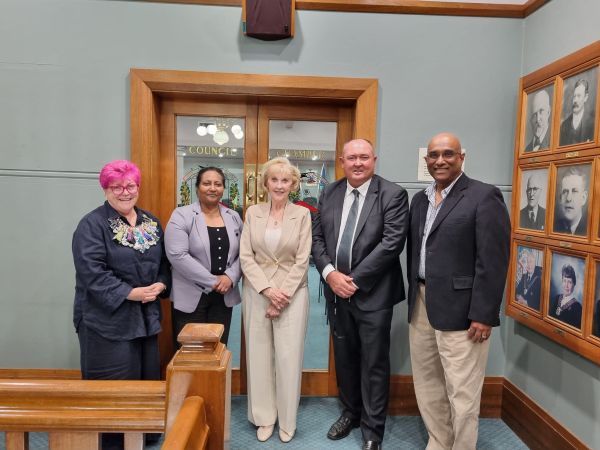
Sri Lanka has taken centre stage in the Asia-Pacific sustainability conversation, with more than 200 business leaders, sustainability practitioners, policymakers and United Nations representatives gathering in Colombo on 11–12 August for Forward Faster Now APAC 2026: Driving Business Leadership for Sustainable and Inclusive Growth.
The flagship regional event of the United Nations Global Compact in Asia-Pacific was hosted by Global Compact Network Sri Lanka and organised by the UN Global Compact APAC Hub, in collaboration with 14 Global Compact Country Networks representing 16 countries across the region. Its arrival in Colombo represented a significant acknowledgement of Sri Lanka’s growing capacity to convene international business, policy and sustainability leaders around practical solutions for a more resilient and inclusive future.
Rather than serving solely as a forum for high-level discussion, the two-day gathering was structured around the exchange of practical experience, regional partnerships and measurable business action. Participants examined how organisations can integrate sustainability into their core strategies while strengthening long-term competitiveness, operational resilience and social value.
Colombo Becomes a Regional Meeting Point
Held in an increasingly interconnected Asia-Pacific region, Forward Faster Now APAC 2026 brought together decision-makers from businesses, governments, financial institutions, civil society and the United Nations system. The event provided an important platform for participants to compare approaches, learn from one another and identify opportunities for cooperation across national and sectoral boundaries.
The breadth of participation was particularly notable. Representatives from 16 countries were able to share perspectives shaped by different economic conditions, industries and environmental priorities, while remaining united by the need to accelerate progress towards the Sustainable Development Goals and the Ten Principles of the UN Global Compact.
Sri Lanka’s role as host carried a strong symbolic and practical significance. Positioned at the heart of the Indian Ocean, the country has long served as a meeting point between South Asia, Southeast Asia, the Middle East and wider international markets. By welcoming this major regional sustainability gathering, Colombo demonstrated that Sri Lankan institutions and business networks can contribute constructively to conversations extending far beyond the country’s shores.

Practical Solutions for Sustainable and Inclusive Growth
Across two days of high-level dialogues, interactive sessions and peer-learning discussions, participants explored a broad range of issues that are shaping the future of responsible business.
These included:
- Climate action and the transition towards more sustainable operations
- Sustainable finance and the mobilisation of investment for long-term development
- Water resilience and responsible resource management
- Governance, transparency and accountability
- Gender equality and inclusive participation in economic life
- Business and human rights
- Digital innovation and technology-enabled solutions
- Circular economy models that reduce waste and improve resource efficiency
- Cross-sector partnerships between companies, investors, governments, civil society and the United Nations
The programme reflected an important evolution in the way sustainability is understood within the corporate sector. Sustainability is no longer being treated as an isolated programme managed by a specialist department; instead, it is increasingly being incorporated into procurement, finance, workforce planning, supply-chain management, product development and board-level decision-making.
This approach is particularly relevant to the Asia-Pacific region, where rapidly expanding economies, diverse communities and extensive natural resources create both considerable opportunities and responsibilities. Businesses that integrate sustainability into daily operations are better positioned to respond to changing expectations, build trust with customers and employees, and create value that extends beyond short-term financial performance.
Leadership from the United Nations Global Compact
Sanda Ojiambo, CEO and Executive Director of the UN Global Compact, highlighted the importance of collective leadership at a time when businesses are being called upon to respond to complex global priorities.
“Across Asia-Pacific, businesses are operating in an increasingly complex environment shaped by climate change, technological disruption, evolving stakeholder expectations and geopolitical uncertainty. Yet these challenges also present an opportunity for companies to lead.”
She further explained that Forward Faster Now demonstrates the value of bringing together business, the United Nations and partner organisations to share practical solutions, strengthen collaboration and accelerate action.
According to Ojiambo, embedding sustainability into business strategy and operations can help companies build resilience, unlock long-term value and contribute to the inclusive growth required across the region. Her comments reinforced the central message of the Colombo gathering: responsible business is not separate from commercial success, but instrumental to its durability.
The event also reaffirmed the role of the UN Global Compact as a platform through which companies can align their operations and strategies with principles covering human rights, labour, the environment and anti-corruption. Through its regional networks, the initiative provides businesses with guidance, peer learning and opportunities to transform broad commitments into practical programmes.
Sri Lankan Hosting Capacity Under the Spotlight
Rathika de Silva, Executive Director of Global Compact Network Sri Lanka, expressed pride in hosting the regional event and welcoming sustainability leaders from across Asia-Pacific.
“Asia-Pacific is home to some of the world’s fastest-growing economies, and the decisions businesses make today will have a profound impact on the future of sustainable development.”
De Silva noted that the gathering was designed not only to exchange ideas, but also to build partnerships, share practical experience and equip businesses with the tools and networks required to translate ambition into measurable action.
This emphasis on implementation is especially valuable for Sri Lanka, where enterprises of different sizes are seeking new ways to strengthen supply chains, improve resource efficiency, expand responsible finance and compete in increasingly sustainability-conscious markets. The conference therefore offered a constructive bridge between international frameworks and the operational realities faced by businesses in Sri Lanka and neighbouring countries.
Sri Lanka’s wider history also provides a meaningful context for conversations about sustainability. The country’s ancient systems of irrigation, water storage and agricultural management demonstrate that resource stewardship has long been an important part of its civilisational experience. eLanka has previously explored this heritage in its article on Sri Lanka’s ancient hydraulic civilisation, while contemporary events such as Forward Faster Now APAC 2026 show how traditional awareness of resource management can be connected with modern technology, finance and governance.

Chief Sustainability Officers Strengthen Peer Learning
An in-person meeting of the APAC Chief Sustainability Officers Peer Learning Group was also held alongside the main programme. The group brings together 20 Chief Sustainability Officers from leading and highly engaged companies across the region.
The session focused on breaking down the organisational separation that can sometimes exist between sustainability teams and other business functions. Its central objective was to embed sustainability more deeply into core operations, ensuring that climate responsibility, social inclusion, ethical governance and resource efficiency are reflected in the decisions made throughout an organisation.
The peer-learning group will continue for one year, allowing its members to meet regularly, examine emerging priorities and share practical experiences. Such a structure is valuable because it recognises that businesses often learn most effectively from comparable organisations that have already tested solutions in real operating environments.
The group’s work may also help accelerate the adoption of approaches that are suitable for the diverse markets of Asia-Pacific, where companies must often balance ambitious sustainability objectives with differing infrastructure, regulatory and economic conditions.

A Positive Moment for Sri Lanka and the Region
Forward Faster Now APAC 2026 offered Sri Lanka a valuable opportunity to present itself as a capable host for international business and sustainability engagement. More importantly, it created a setting in which regional leaders could move beyond broad declarations and consider how responsible business principles can be applied through finance, technology, governance, supply chains and partnerships.
The event’s focus on sustainable and inclusive growth also aligns closely with the wider needs of Sri Lankan businesses and communities. Companies that pursue responsible innovation can support employment, strengthen local enterprise, improve environmental performance and build stronger relationships with customers and communities.
For the global Sri Lankan community, the gathering represented a further positive example of the country’s contribution to international conversations. It demonstrated that Colombo can provide more than a venue; it can serve as a constructive meeting point where expertise, experience and regional ambition are brought together.
eLanka continues to share positive stories about Sri Lankan achievements and international engagement through its online community platform, including news, events, business information and educational features. The portal has also highlighted practical environmental initiatives, including a webinar on plastics recycling, reflecting the growing importance of sustainability to communities and businesses worldwide.
Forward Faster Now APAC 2026 concluded with a clear and encouraging message: progress is strengthened when businesses, institutions and communities work together. By hosting this important regional gathering, Sri Lanka has helped create the partnerships and practical conversations required to move sustainable development forward.
Source: https://www.prnewswire.com/
This article was written based on the source https://www.prnewswire.com/, kindly email us at info@eLanka.com.au if any information needs to be corrected.
At eLanka, we respect the rights of creators. If we have used an image you own and you’d like it removed, please email us at info@elanka.com.au and we’ll handle it promptly.