News & Community eLanka

eLanka

Monday, 15 Jun 2026
  • Home
  • Read History
  • Articles
    • eLanka Journalists
  • Events
  • Useful links
    • Obituaries
    • Seeking to Contact
    • eLanka Newsletters
    • Weekly Events and Advertisements
    • eLanka Testimonials
    • Sri Lanka Newspapers
    • Sri Lanka TV LIVE
    • Sri Lanka Radio
    • eLanka Recepies
  • Gallery
  • Contact
Newsletter
Sri lankan news
  • eLanka Weddings
  • Property
  • eLanka Shop
  • Business Directory
eLankaeLanka
Font ResizerAa
Search
  • Home
  • Read History
  • Articles
    • eLanka Journalists
  • Events
  • Useful links
    • Obituaries
    • Seeking to Contact
    • eLanka Newsletters
    • Weekly Events and Advertisements
    • eLanka Testimonials
    • Sri Lanka Newspapers
    • Sri Lanka TV LIVE
    • Sri Lanka Radio
    • eLanka Recepies
  • Gallery
  • Contact
Follow US
© 2005 – 2026 eLanka Pty Ltd. All Rights Reserved.
Home » Goodnews Stories Srilankan Expats » Articles » International Balance of Power Theory – Part 2 – By Kithsiri Senadeera
Articles

International Balance of Power Theory – Part 2 – By Kithsiri Senadeera

eLanka admin
Last updated: August 16, 2025 8:57 am
By
eLanka admin
ByeLanka admin
Follow:
Share
8 Min Read
SHARE
Views: 38

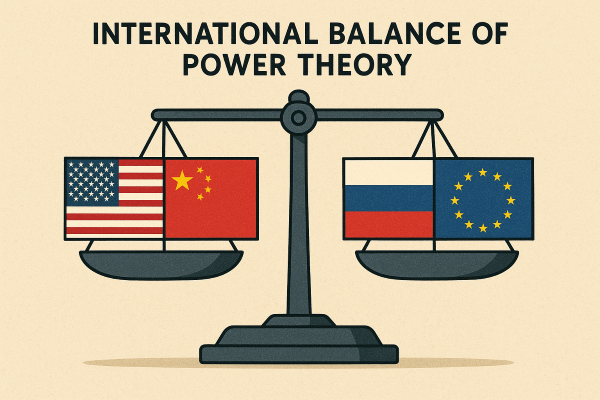
International Balance of Power Theory – Part 2 – By Kithsiri Senadeera

International Balance of Power Theory - Part 2 - By Kithsiri Senadeera

Definition of Balance of Power Theory

The previous paper provided an overview of the concept of balance of power theory and emphasised its importance of deeper understanding of the complexities of global politics. In this paper (Part 2) definitions given by leading scholars in International Relations and an overview of the major features of balance of power are elucidated.

Balance of power mostly is defined as a state of dynamic equilibrium characterizing relations among nations. It is the process of matching a nation or group of nations protecting itself against another nation or group of nations by matching its power against the power of the other, so that conflicts are prevented in the relations among nations. States balance or matching its power in two ways; “Internal balancing” refers to the measures that a state takes to increase its own capabilities, principally the mobilization of its wealth, technology, resources, and population to build up its military forces. “External balancing” refers to. States come together and form an alliance to balance and gain more leverage over a dominant or rising power.

Different leading scholars in International Relations have endeavoured to define this concept as mentioned below:

(1) “Balance of Power is such a ‘just equilibrium’ in power among the members of the family of nations as will prevent any one of them from becoming sufficiently strong to enforce its will upon others.” —Sidney B. Fay

(2) “Balance of Power is an equilibrium or a certain amount of stability in power relations that under favourable conditions is produced by an alliance of states or by other devices.” —George Schwarzenberger

(3) “Balance of Power is such a system in which some nations regulate their power relations without any interference by any big power. As such it is a decentralized system in which power and policies remain in the hands of constituting units.” —Inis Claude

(4) Balance of Power means “the maintenance of such a just equilibrium between the members of the family of nations as should prevent any one of them from becoming sufficiently strong to impose its will upon the rest.” —Lord Castlereagh

(5) “Whenever the term Balance of Power is used without qualification, it refers to an actual state of affairs in which power is distributed among nations with approximately equality.” —Hans. J. Morgenthau

All these definitions clearly reflect that Balance of Power is defined differently by different scholars. It is very difficult to give or select a uniformly acceptable definition. Despite the multiple, imprecise, and ambiguous nature, the balance of power is the very core of international politics. This difficultly makes it necessary for us to study the features Balance of Power.

Features of Balance of Power

Palmer and Perkins, (1954) gives us an overview that describes the major features of balance of power. They are:

  1. Some Sort of Equilibrium in Power Relations: The term balance of power suggests equilibrium — balance — which is subject to constant, ceaseless change. In short, though it stands for equilibrium, it also involves some disequilibrium. That is why scholars define it as a just equilibriums or some sort of equilibrium in power relations.
  2. 2. Temporary and unstable: In practice, a balance of power always proves to be dynamic and fluid. A particular balance of power survives only for a short time. The balance of power is not static; it evolves as states gain or lose power due to economic growth, military advancements, or political changes.
  3. To be actively achieved: The balance of power has to be achieved by the active intervention. They have to secure it through their efforts. According to Nicholas J. Spykman, Professor of International Relations at Yale University, The Balance of Power is not “a gift of the gods” but is achieved by the active intervention of man.” States cannot afford to wait until it “happens” if they wish to survive. They must be willing to go to war to preserve a balance against the growing hegemonic (predominance of one state over other states) power of the period”.
  4. 4. Favours Status quo: Balance of power favours status quo in power positions of major powers. It seeks to maintain a balance in their power relations. However, in order to be effective, a foreign policy of balance of power must be changing and dynamic.
  5. The test of balance of power is War: A real balance of power seldom exists. The only test of the existence of a balance of power is that of war and when war breaks out the balance comes to an end.
  6. Balance of power is not a device of peace: Balance of power is not a primary device of peace because it admits war as a means for maintaining balance. It should, therefore, be understood that the primary object of the balance of Power is to maintain the independence of states and not to preserve the peace.
  7. Big powers as actors of balance of power: In a balance of power system, the big states or powerful states are the players. The small states or less powerful states are either spectators or the victims of the game. Unless the small states can combine, they may be able to exert some pressure upon the most powerful states.
  8. The multiplicity of states as an essential condition: Balance of power system operates when there are present a number of major powers, each of which is determined to maintain a particular balance or equilibrium in their power relations.
  9. National interest is its basis: Balance of power is a policy that can be adopted by any state. The real basis that leads to this policy is national interest in a given environment.

From the above discussion, it becomes clear that the main goal of Balance of Power is a device of power management to prevent any one state or coalition from achieving a hegemonic (authority over others: domination) position that could threaten international stability and peace. In case any state tries to disturb or violate the balance of power, the other states individually or collectively or as a group can take action, including war, for weakening the power of the violator as well as for restoring balance of power. It is a device of power management which is used by several major powers for maintaining a sort of equilibrium in their power relations. In fact, there are several methods by which states try to secure and maintain balance of power.

To be continued

Kithsiri Senadeera


Click here to receive your free copy of the eLanka Newsletter twice a week delivered directly to your inbox!


TAGGED:Balance of Power in International RelationsDefinitions of Balance of Power scholarsEquilibrium in global politicsInternal and External Balancing in IRInternational Balance of Power TheoryKithsiri Senadeera International Relations
Share This Article
Facebook Whatsapp Whatsapp LinkedIn Email Copy Link Print
Previous Article Trump and Putin 2 Donald Trump Reacts to Putin’s Support for His Claims on the Ukraine War – By Dr Harold Gunatillake
Next Article Santin Gunawardena Santin Gunawardena: Obsessive, persistence-driven, ardent sans ego – By Sunil Thenabadu
FacebookLike
YoutubeSubscribe
LinkedInFollow
eLanka Wedding
- Advertisement -
Ad image
Most Read
Hilton Yala Resort Agoda Luxe ,Hilton Yala Sri Lanka awards,Agoda Luxe hotels Sri Lanka , luxury resorts in Yala National Park , Yala safari luxury hotel , Hilton Hotels & Resorts Sri Lanka , best luxury safari resorts Asia , FGASA certified safari guides Sri Lanka

Hilton Yala Becomes Sri Lanka’s First Hilton Property to Achieve Agoda Luxe Recognition

Hilton Yala Resort

Hilton Yala Resort Honoured with Dual Global Titles at the 2026 REVE Luxury Awards

Hilton Yala Resort Named Tripadvisor Travelers’ Choice Awards Winner for 2026

Hilton Yala Resort Named Tripadvisor Travelers’ Choice Awards Winner for 2026

Hilton Yala Rangers Earn Prestigious CyberTracker Track & Sign Certifications Following International Evaluation Programme

Cricket Australia and State Chairs meeting.

Cricket Australia and State Chairs meeting.

Related News
Sri Lanka climate change, El Niño Sri Lanka 2026, Sri Lanka weather forecast, Sri Lanka climate resilience, El Niño impact on Sri Lanka, Climate Change Secretariat Sri Lanka, Leel Randeniya, Sri Lanka environment news, Sri Lanka monsoon season, Southwest monsoon Sri Lanka, Northeast monsoon Sri Lanka, Sri Lanka rainfall forecast, Sri Lanka water conservation, climate adaptation Sri Lanka, Sri Lanka geography, Indian Ocean climate, Sri Lanka central highlands, Sri Lanka agriculture and climate, ENSO Sri Lanka, Sri Lanka weather patterns, climate resilience island nations, Sri Lanka environmental sustainability, Sri Lanka food security, Sri Lanka water management, climate science Sri Lanka, Department of Meteorology Sri Lanka, Sri Lanka natural resilience, global climate change, Sri Lanka ecosystem, sustainable Sri Lanka, eLanka environmental news, Sri Lankan diaspora, Sri Lanka climate outlook 2026, Indian Ocean weather systems, Sri Lanka hydropower, climate preparedness Sri Lanka, Sri Lankan agriculture, climate adaptation strategies, environmental conservation Sri Lanka
Articles

Sri Lanka Set to Stay Resilient Against El Niño Minimal Impact Forecasted

Sumri Fatima Suda, Sri Lankan student achievement, International Abacus Mathematics Competition, ABACUS L1B winner, Malaysia abacus competition, Sri Lanka education news, Medawachchiya student success, Al-Madina Muslim Maha Vidyalaya, abacus mathematics Sri Lanka, STEM education Sri Lanka, young mathematicians Sri Lanka, global academic success Sri Lanka, mental arithmetic champion, Sri Lankan youth achievements, rural education Sri Lanka, international competition winner, mathematics prodigy Sri Lanka, abacus training benefits, North Central Province Sri Lanka, Sri Lankan school achievements, educational excellence Sri Lanka, cognitive development through abacus, student success stories Sri Lanka, eLanka news, inspiring Sri Lankan stories
Articles

Medawachchiya Student Sumri Fatima Wins International Abacus Math Competition in Malaysia

HayWind Mannar , President Anura Kumara Dissanayake , HayWind project in Mannar,Mannar, Sri Lankan News Australia
Articles

Powering the Future: President Launches 50MW HayWind Project in Mannar

Articles

A Historic Feat: 4,988 Dancers Set Guinness World Record at Galle Face Green

jaffnadarya
Articles

Vote for Jaffnadaraya – Make It the Most Popular TV Series at Sumathi Awards 2026!

  • Quick Links:
  • Articles
  • DESMOND KELLY
  • Dr Harold Gunatillake
  • English Videos
  • Sri Lanka
  • Sinhala Videos
  • eLanka Newsletters
  • Obituaries
  • Sunil Thenabadu
  • Dr. Harold Gunatillake
  • Tamil Videos
  • Trevine Rodrigo
  • Sinhala Movies
  • eLanka Newsletter
  • Photos

eLanka

Your Trusted Source for News & Community Stories: Stay connected with reliable updates, inspiring features, and breaking news. From politics and technology to culture, lifestyle, and events, eLanka brings you stories that matter — keeping you informed, engaged, and connected 24/7.
Kerrie road, Oatlands , NSW 2117 , Australia.
Email : info@eLanka.com.au / rasangivjes@gmail.com.
WhatsApp : +61402905275 / +94775882546
  • About eLanka
  • Terms & Conditions

Disclaimer:
eLanka is committed to sharing positive and community-focused stories. We do not publish or endorse political, religious, or ethnic viewpoints. The content published on eLanka, including articles and newsletters, reflects the opinions and views of the respective authors and not those of eLanka. eLanka accepts no responsibility or liability for the accuracy, completeness, or consequences of any content provided by contributors.

(c) 2005 – 2025 eLanka Pty Ltd. All Rights Reserved.