News & Community eLanka

eLanka

Thursday, 15 Oct 2026
  • Home
  • Read History
  • Articles
    • eLanka Journalists
  • Events
  • Useful links
    • Obituaries
    • Seeking to Contact
    • eLanka Newsletters
    • Weekly Events and Advertisements
    • eLanka Testimonials
    • Sri Lanka Newspapers
    • Sri Lanka TV LIVE
    • Sri Lanka Radio
    • eLanka Recepies
  • Gallery
  • Contact
Newsletter
Sri lankan news
  • eLanka Weddings
  • Property
  • eLanka Shop
  • Business Directory
eLankaeLanka
Font ResizerAa
Search
  • Home
  • Read History
  • Articles
    • eLanka Journalists
  • Events
  • Useful links
    • Obituaries
    • Seeking to Contact
    • eLanka Newsletters
    • Weekly Events and Advertisements
    • eLanka Testimonials
    • Sri Lanka Newspapers
    • Sri Lanka TV LIVE
    • Sri Lanka Radio
    • eLanka Recepies
  • Gallery
  • Contact
Follow US
© 2005 – 2026 eLanka Pty Ltd. All Rights Reserved.
Home » Goodnews Stories Srilankan Expats » Articles » Leopard attack on farmers in Kutumbigala-by Kamanthi Wickramasinghe
Articles

Leopard attack on farmers in Kutumbigala-by Kamanthi Wickramasinghe

eLanka admin
Last updated: January 9, 2021 12:59 pm
By
eLanka admin
ByeLanka admin
Follow:
Share
14 Min Read
SHARE
Views: 50

Leopard attack on farmers in Kutumbigala-by Kamanthi Wickramasinghe

On the receiving end of a leopard!
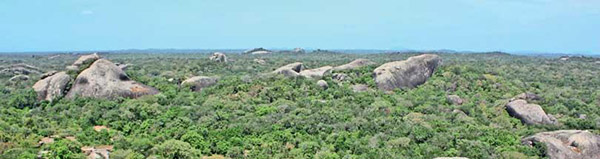
Scenic Kutumbigala sanctuary

Scenic Kutumbigala sanctuary

Source:Dailymirror

  • Authorities should provide compensation to the family of the deceased
  • Leopard captured and released towards the interiors of the Kumana National Park
  • Second farmer receiving treatment at Pottuvil hospital
  • Territories of male leopards have overlapped 
  • DWC observes challenges in giving 100% protection to leopards and/or humans
  • Conservationists opine that leopards usually don’t come into conflict with humans

 

An abundance of greeneries that come to life with birdsong and calls of the wild, punctuated with rocky outcrops highlight the Kutumbigala Sanctuary as one of the most pristine locations in the Ampara District. Home to one of the ancient Buddhist monastic complexes built during the times of King Devanampiya Tissa, Kutumbigala comprise of ancient caves, inscriptions and ancient dagabas. But over time, the less populated jungles of the East have now become shared territory for humans as well as wildlife. Therefore, gradual changes in the ecosystems are posing fresh challenges to the traditions of coexistence. As a result, conservationists observe significant changes in the behavioral patterns of animals. The recent incidents of two consecutive leopard attacks on farmers bear testament to this fact. 

Man-eater creates unrest 

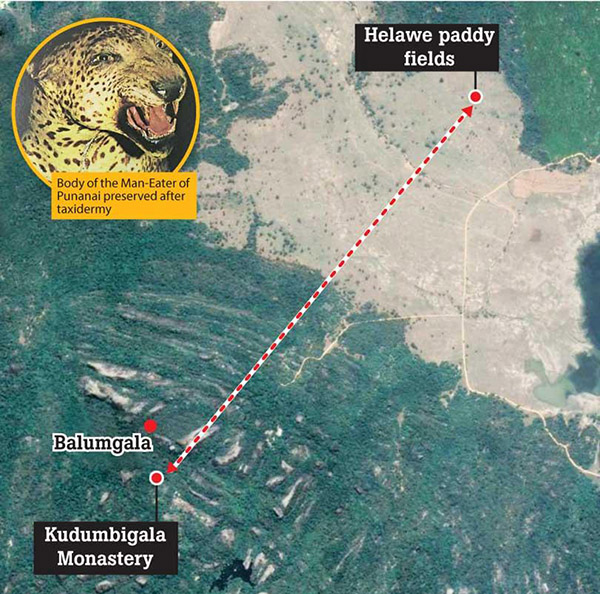
The first incident was reported on December 30 where a farmer was killed by a leopard near the Helawa Paddy Field one km away from the Kutumbigala monastery. On January 1 another farmer was attacked by the leopard and was immediately rushed to the Pottuvil Hospital. He is currently being treated there. At the onset of the incident, the tensed villagers attacked the DWC office in Panama. Following the incident, Army and Special Task Force personnel were deployed to control the situation. Five people were arrested and produced at the Panama Magistrate’s Court and were released on bail yesterday.
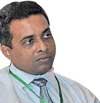
It could be that their home ranges have changed or they are moving in search of ‘suitable habitats’ since there are forest lands and private lands in the area as well. Therefore, we may have to change the dimensions on ongoing leopard studies in Yala, Wilpattu and Kumana National Parks.” 

–  Ranjan Marasinghe

Element of coexistence 

“Paddy farmers are engaged in traditional cultivation practices and have to protect their crop from elephants and other wild beasts,” opined Ven. Pelwatte Buddhawansa Thera of the Kutumbigala Monastery. “But unfortunately one person was recently killed while at his pala (treehouse) and the other person was injured and is in hospital. At the onset of the incident the District Secretary, Army, Department of Wildlife Conservation (DWC) and other authorities got together to find a solution to the problem and subsequently the animal was moved to another location,” said Buddhawansa Thera. 

When asked if similar incidents have occurred during recent times,  Buddhawansa Thera said that resident monks at the Thapowana have seen leopards roaming in the area. “There’s an element of coexistence, but this incident is different,” he said. 
He further said that the authorities should look at providing compensation to the family of the deceased. 

Possible changes in home ranges and territories 
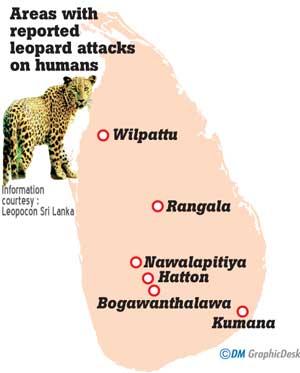
 

The DWC released the animal to a location between Kumana and Yala National Parks. “DWC officials are keeping a close watch on the animal and will be conducting daily patrols as well,” opined Ranjan Marasinghe, DWC’s Director (Operations). “The reasons for this incident could be manifold. It could be that their home ranges have changed or they are moving in search of ‘suitable habitats’ since there are forest lands and private lands in the area as well. Therefore, we may have to change the dimensions on ongoing leopard studies in Yala, Wilpattu and Kumana National Parks.” said Marasinghe. 

Taking an example from Yala, he observes that territories of male leopards have overlapped. “Usually this doesn’t happen and if it does they would fight for their territory. But this is a new situation. Perhaps there’s an increase in their population,” he added. 

When asked how people and leopards could be protected given that certain human activities are allowed within sanctuaries, Marasinghe said it is a challenge to provide 100% protection on leopards and/or the people. “The people have been farming in these areas since the 1980s, but there are changes in these traditional practices as well. If they are going to protect their crop from wild animals they need to stay awake. If they drink and pass out it won’t help them because they may get attacked by these animals. Besides it is a tough call to deploy an officer for every animal since our cadre is less than thousand. We have already deployed many of them to mitigate the human-elephant conflict. Therefore awareness programmes need to continue and it is best that people also take care of themselves,” said Marasinghe. 

“It is important that the DWC captures the correct leopard because otherwise another innocent leopard will be caught and the leopard that showed signs of predation will remain in the field”

– Rukshan JayewardenE

Rare phenomenon for Sri Lanka 

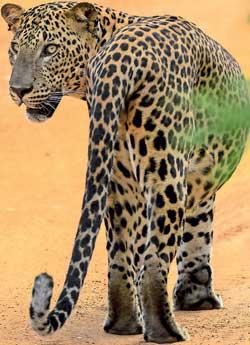
Some initial observations by Rukshan Jayewardene, a conservationist with over 20 years of experience studying leopard behaviour and founding trustee at the Leopard Trust, were that this animal seemed to be one that wasn’t afraid of humans. “It could be that it had tasted the flesh of humans or has identified the ease of killing humans. But this is a rare phenomenon for Sri Lanka. We cannot say that it is not in the nature of leopards to attack humans, but usually they don’t get into conflict with humans and live away from human settlements. Then again this is not because they fear humans, but because they are mistrustful of humans,” he added. 

He explained that wherever there’s wilderness or suitable habitats, there’s prey. “If one claims that there were instances of dogs going missing it could be that the leopard has changed its behaviour. Leopards who are roaming around national parks and protected areas don’t prey on dogs and they would opt for dogs only if prey is less,” he added.
The DWC captured the leopard, who is supposedly the leopard in question and was released around 40km towards the interior of the Kumana National Park, away from any human settlements. But Dr. Jayawardene opined that there’s no possibility of translocating the animal unless it is held in captivity. “It is important that the DWC captures the correct leopard because otherwise another innocent leopard will be caught and the leopard that showed signs of predation will remain in the field. On the other hand people also have to be careful,”he warned. 
He identified the lack of a proper post mortem on the incidents that have taken place as another issue at hand. 
One of the problems encountered when declaring National Reserves and Sanctuaries is that it has covered land on which a community has traditionally engaged in some activity. Section 3 (3) of the Flora and Fauna Protection Ordinance states that a person who has acquired a right by law, custom or usage to carry out an activity in any land in a National Reserve or Sanctuary can carry out this as before even after the declaration. The most famous of these activities is hunting which was done by the Vedda communities followed by traditional farming. Fishing too is allowed. 

At the onset of the incident the District Secretary, Army, Department of Wildlife Conservation (DWC) and other authorities got together to find a solution to the problem and subsequently the animal was moved to another location,” 

– Ven. Buddhawansa Thera

But Jayewardene questions whether it is practical to allow human activities when declaring sanctuaries. “If not, what is the solution? It is therefore a balancing act. Both humans and leopards have a right to be there, but they have to sought out the ensuing conflict. In this country humans and leopards have coexisted with very little conflict. If you take a country like Zimbabwe there has been a great deal of human-leopard conflict and now since the number of leopards has decreased, the conflict too has reduced,” explained Jayewardena.  

He also said that leopards are secretive animals and they learn throughout their lives. “The first thing they will learn in a human-dominated landscape is how to live with humans. So it looks like this leopard knows a lot more than humans that what humans know about him,” he opined. 
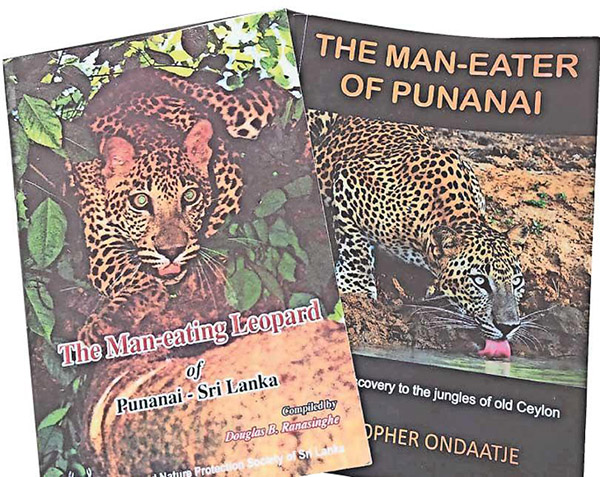
Books written on the Punanai leopard

One of the prominent legends of man-eaters is that of the Lenama Leopards that were said to have been roaming in the wilds in Lenama, an area that fell within the boundaries of Panama. A two-book series titled ’25 years of Life in the Jungle’ documents memorable moments of late Ven. Thambugala Anandasiri thera’s travails in the jungles. He came to reside in the Kutumbigala jungles in 1954 and was known for his efforts to clean and make conducive for living several ancient caves. In one of the accounts the priest states that the biggest leopards were seen in the wilds of Lenama. He says that the Lenama leopard never flees when it sees a human and that it isn’t ferocious when compared to other species in the cat family. However, legend has it that it was these leopards that were responsible for wiping out an entire generation of Veddas that lived in Lenama. But their appearance and identification have been shrouded in mystery. 

A documented account of a man-eating leopard was that of the Man-eater of Punanai back in the 1920s who was notoriously known for devouring more than 20 people in a reign of blood thirsty terror. The incident even inspired Christopher Ondaatje to pen his book ‘The Man-Eater of Punanai – A Journey of Discovery to the Jungles of Old Ceylon’. 

‘The Man-Eating Leopard of Punanai’ a book penned by Douglas Ranasinghe also mentions about another lesser-known man-eating leopard -the Man-Eater of Komari who’s short reign of terror transpired during 1936. Situated in the North of Potuvil, Komari has been a jungle settlement of around 10 houses. It is said that one of the leaders of the village shot the leopard during an encounter. 

Quite interestingly, a reference to a man-eating leopard is also found in Sir James Emerson Tennent’s book titled ‘Sketches of the Natural History of Ceylon’ published in 1861. He states 

“like other carnivora, leopards are timid and cowardly in the presence of man, never intruding on him voluntarily and making a hasty retreat when approached. Instances have, however, occurred of individuals having been slain by them; and it is believed, that, having once tasted human blood, they, like the tiger, acquire a habitual relish for it. A peon, on duty by night at the court-house of Anurajapoora, was some years ago, carried off by a leopard from a table in the verandah in which he had laid down his head to sleep..”


TAGGED:the Kumana National ParkVen. Thambugala Anandasiri thera
Share This Article
Facebook Whatsapp Whatsapp LinkedIn Email Copy Link Print
Previous Article NEWSProf. Ravi Silva of Surrey Univ. gets highest British honour title CBE-By Ifham Nizam
Next Article Rajan Supun Thalagoda was a fine ruggerite-by Hafiz Marikar
FacebookLike
YoutubeSubscribe
LinkedInFollow
- Advertisement -
eLankaproperty - sell property in Sri Lanka, Sri Lanka property for sale, Sri Lanka real estate, Sri Lanka property listings, property marketplace Sri Lanka, land for sale Sri Lanka, houses for sale Sri Lanka, apartments for sale Sri Lanka, commercial property Sri Lanka, luxury villas Sri Lanka, Sri Lankan property investment, buy property in Sri Lanka, Colombo property for sale, beachfront property Sri Lanka, development land Sri Lanka, investment property Sri Lanka, property advertising Sri Lanka, real estate agents Sri Lanka, property brokers Sri Lanka, overseas Sri Lankan property buyers, Sri Lanka property website, list property online Sri Lanka, affordable property listings Sri Lanka, Sri Lanka homes for sale, Sri Lanka land investment, property developers Sri Lanka, real estate marketplace Sri Lanka, Sri Lanka commercial real estate, sell land in Sri Lanka, sell house in Sri Lanka, Sri Lanka property portal, global property marketplace Sri Lanka, Sri Lankan real estate investment, property management Sri Lanka, buy land Sri Lanka, residential property Sri Lanka, holiday homes Sri Lanka, Sri Lanka investment opportunities, real estate advertising Sri Lanka, eLankaProperty
- Advertisement -
ALTAIR
- Advertisement -
Ad image
eLanka Wedding
Most Read
Liverpool city Council

Liverpool faces $1.8 million funding cut as city grows

What Everyone with Diabetes Should Know-eLanka

What Everyone with Diabetes Should Know: The Truth-by Harold Gunatillake

Ashoka Colombage

Ashoka Colombage-by Gamini Kariyawasam

Digampathana-The Day the Navy Was Shattered – Sri Lanka Guardian

Digampathana: The Day the Navy Was Shattered – Sri Lanka Guardian-by Ravindra C Wijegunaratne

Shemara Wikramanayake: Sri Lankan Roots to Macquarie CEO

Shemara Wikramanayake: From Sri Lankan Beginnings to Leading Macquarie Group on the Global Stage

Related News
Navi Pillay Honoured
Articles

Navi Pillay Honoured: A Legacy of Peace, Justice and Human Rights

Sandika Hemakumari
Articles

Sandika Hemakumari to Captain Sri Lanka’s Women’s Sevens Squad at the Colombo Leg of the Asia Rugby Sevens Series

Sri Lankan junior tennis players
Articles

Three Sri Lankan Girls Reach the ATF Under-16 Quarter-Finals in Colombo

Otherland Galle Opens on Sri Lanka’s Southern Coast With a Locally Built Approach to Hospitality AI-generated illustration based on source material. No authentic photograph of the Otherland Galle property is embedded in this article. Otherland Hotels opened its first property, Otherland Galle, on 12 October 2026, introducing a 66-key lifestyle hotel that brings together accommodation, dining, music and locally curated experiences on Sri Lanka’s southern coast. The opening adds a new hospitality concept to a region known for its beaches, historic Galle Fort and established surf culture, with the hotel’s programme designed to encourage visitors to engage with the wider destination as well as the property. Located on Matara Road, Otherland Galle is approximately 400 metres from Dewata Beach and 2.8 kilometres from Galle Fort, the UNESCO World Heritage Site. The hotel draws on the area’s culinary traditions, creative communities and coastal way of life, positioning local experiences as a central part of its offer rather than an optional addition to a conventional hotel stay. Founded by Rishi Sreedharan, Samarth Gowda and Emanuel Siddhartha in partnership with Beryll Group, Otherland Hotels is built around the philosophy “Never the Same Twice”. Its approach combines private rooms and suites with shared accommodation and communal spaces intended for different kinds of travellers, from couples and groups of friends to solo visitors and culturally curious guests. The co-founders, pictured from left: Emanuel Siddhartha, Rishi Sreedharan and Samarth Gowda. Source photograph: Lanka Business News. A design-led mix of rooms and shared spaces Designed by Studio Camarada, led by Andre Camara, the hotel has been arranged as a series of interconnected spaces rather than a conventional sequence of corridors and separate facilities. Its interiors draw on the colours and materials of the southern coast, including sandy neutrals, ocean blues and earthy tones, alongside rattan, ash, hand-tufted textiles and marble finishes. The 66-key accommodation comprises 24 Ocean Rooms, 25 Terra Rooms, 12 suites and five dormitories. Room sizes range from 27 square metres to the 70-square-metre Patio Suite, while the property also includes rooms designed for guests with disabilities. The mix offers a range of accommodation formats within one property, including shared dormitory options alongside private rooms and suites. At ground level, Bar-kery combines several functions: reception, coffee shop, bakery, aperitivo counter and informal co-working space. Its Vinyl Corner invites guests to browse records and choose music, giving the communal area a more participatory character. Colombo Coffee Company has developed an exclusive signature blend for the hotel. AI-generated illustrative image based on the reported design approach; it is not a photograph of Otherland Galle. The rooftop venue Creatures brings together a restaurant, cocktail bar, infinity pool and music space, with 270-degree views of the Indian Ocean. It is intended to serve as a daytime dining and swimming venue as well as an evening social space, linking the hotel’s food and music programmes with its coastal setting. Sri Lankan flavours, music and a sense of place The food programme is led by Chef Rajeev Kumar and draws on Sri Lankan culinary traditions, alongside international influences and contemporary techniques. Dishes listed for the menu include King Coconut Ceviche, Yellowfin Tuna Tataki, Lankan Fish Cutlets and Devilled Pork Ribs glazed with kithul treacle. A Watalappam Brûlée brings a familiar Sri Lankan dessert into a contemporary format. Arijit Bose leads the cocktail programme, while Aneesha Thapa manages day-to-day operations. Music is another part of the hotel’s identity, with programming across Afro, R&B, folk, funk, jazz fusion, house, techno and electronica. The combination of food, music and shared spaces is intended to make the property relevant to both visitors and people from the surrounding area. Co-founder Samarth Gowda described the approach as one intended to make the hotel feel accessible and personal: > “Otherland Galle should feel like yours from the moment you walk in. Luxury has often come with a sense of distance, with places appearing impressive because they do not feel accessible to everyone. That is not what we are building. Everything here is designed around who you are and how you want to spend your time.” AI-generated illustration of ingredients associated with Sri Lankan culinary traditions; not a photograph of the hotel’s kitchen or menu. The Other Side: experiences created with local communities A key element of the concept is The Other Side, an experiences programme developed in collaboration with local surfers, fishermen, artisans, guides, chefs and musicians. The activities are designed to connect guests with people and places beyond the hotel, while drawing on knowledge and skills already present in the Galle region. The programme includes curry masterclasses, guided walks through Galle Fort and surf lessons at Dewata Beach. Further afield, guests can take whale-watching excursions off Mirissa or kayak through the mangroves of Koggala Lake. Rooftop sunset sessions, arrack tastings, beach cricket and tuk-tuk bar crawls are among the social activities described as part of the offer. This community-led model gives local participants a role in shaping and delivering visitor experiences, rather than presenting the area only as a backdrop for sightseeing. Its longer-term value will depend on how consistently these partnerships are sustained and how directly local contributors benefit from the activity they help create. Co-founder Rishi Sreedharan said: > “At Otherland, curiosity is the operating principle. We measure success by whether guests leave with a real sense of Galle. The surfers, fishermen, chefs and craftspeople who live here have helped build these experiences, and they are the ones bringing them to life.” AI-generated coastal illustration based on the article’s setting; it does not depict a verified view from the property. A new option for visitors to Galle The opening marks the first phase of Otherland Galle’s development. A gym, wellness centre and banquet facilities are planned for a subsequent phase. The property’s initial offer, however, is already structured around more than its room inventory: its communal areas, food and beverage venues, music programme and locally developed activities form a connected hospitality concept. For Sri Lankans abroad planning a visit home, the opening provides another option near Galle, with a programme that brings together coastal recreation, local food, heritage and community knowledge. For the Galle area, the approach places local contributors at the centre of the visitor experience. Whether the model makes a lasting contribution will be measured not only by the facilities it offers, but also by the strength and continuity of those relationships. The launch also reflects a wider interest among culturally curious travellers in experiences that extend beyond accommodation and conventional sightseeing. In Galle, where historic landmarks sit alongside a living coastal culture, the opportunity is to create hospitality that is carefully designed while remaining connected to the people and traditions that give the destination its character. Sources: Lanka Business News; Colombo Times; Hiru News Gold FM; SoulofHospitality. This article was written based on the source https://www.lankabusinessnews.com/otherland-hotels-makes-its-debut-in-galle/ and corroborated by https://colombotimes.net/otherland-hotels-makes-its-debut-in-galle/, https://hirunews.lk/goldfmnews/493932/otherland-galle-opens-with-66-rooms-introduces-dormitories-to-luxury-hotel-mix and https://www.soulofhospitality.com/business/hotel-openings/otherland-hotels-enters-sri-lanka-with-a-new-approach-to-lifestyle-hospitality, kindly email us at info@eLanka.com.au if any information needs to be corrected. Click here to receive your free copy of the eLanka Newsletter twice a week delivered directly to your inbox! At eLanka, we respect the rights of creators. If we have used an image you own and you'd like it removed, please email us at info@elanka.com.au and we’ll handle it promptly. Thanks. eLanka team eLanka Disclaimer Content published on eLanka may be created by the eLanka team, submitted by contributors or third parties, reproduced or adapted from other sources with appropriate source acknowledgement, or provided as promotional/advertising material by our clients. While eLanka takes reasonable care in preparing and publishing content, we do not warrant its completeness or accuracy. Views expressed are those of the respective authors or contributors and do not necessarily represent the views of eLanka. Third-party contributors, content providers and advertisers are responsible for the accuracy of material they supply and for ensuring they hold the necessary rights and permissions for its publication. Advertising and promotional content should not be regarded as an endorsement by eLanka of any product, service or claim.
Articles

Otherland Galle Opens on Sri Lanka’s Southern Coast With a Locally Built Approach to Hospitality

Dilmah SIAL Paris 2026
Articles

Dilmah’s Three Innovations Selected for SIAL Paris 2026 as Company Named a Top Five SIAL For Change Finalist

  • Quick Links:
  • Articles
  • DESMOND KELLY
  • Dr Harold Gunatillake
  • English Videos
  • Sri Lanka
  • Sinhala Videos
  • Obituaries
  • eLanka Newsletters
  • Sunil Thenabadu
  • Trevine Rodrigo
  • Dr. Harold Gunatillake
  • Tamil Videos
  • Sinhala Movies
  • eLanka Newsletter
  • Photos

eLanka

Your Trusted Source for News & Community Stories: Stay connected with reliable updates, inspiring features, and breaking news. From politics and technology to culture, lifestyle, and events, eLanka brings you stories that matter — keeping you informed, engaged, and connected 24/7.
Kerrie road, Oatlands , NSW 2117 , Australia.
Email : info@eLanka.com.au / rasangivjes@gmail.com.
WhatsApp : +61402905275 / +94775882546
  • About eLanka
  • Terms & Conditions

Disclaimer:
eLanka is committed to sharing positive and community-focused stories. We do not publish or endorse political, religious, or ethnic viewpoints. The content published on eLanka, including articles and newsletters, reflects the opinions and views of the respective authors and not those of eLanka. eLanka accepts no responsibility or liability for the accuracy, completeness, or consequences of any content provided by contributors.

(c) 2005 – 2025 eLanka Pty Ltd. All Rights Reserved.