Rainbows in Braille ” a short story from “Rainbows in Braille” – A collection of short stories – By Elmo Jayawardena
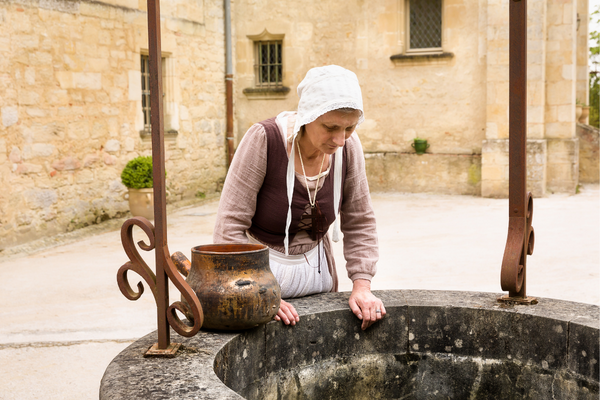
 Rosalin was a domestic servant. In the years gone by, domestic servants were part of every urban home. I am talking of half a century ago, early fifties in Ceylon, this was a long time before my homeland was ‘born again’ as the Democratic Republic of Sri Lanka.
These domestic servants worked in houses sometimes in single form and at times in multiples. Obviously the number depended on the status and wealth the family enjoyed in the social strata in the townships; the food, the pay and the space to live, such were the governing factors that decided how many servants a family could afford. Richer the household, many were the minions, each having his or her allocated duties to perform and of course doubling up on other chores as well whenever the demands arose; one to cook, one to clean the house, one to look after the children and so on and so forth. They came in all ages too, senior ones could often be well over sixty and the younger lot descended sadly to very tender ages that could be as low as seven or eight years. The over sixty brigade were the types who had spent a life time in servitude and most often ended up at the mercy of the house they served as they had no other place to go. The younger ones were mainly poor village children who came to work in houses in the city simply because their parents were too poor to feed and cloth them adequately. The ‘so-called’ child labour laws that the world now raves about had not been invented at that time.
In most houses, like in the lane we lived, there was only one domestic servant running the show, an all-rounder who did everything; cooking, cleaning, sweeping the garden, watering the flowerbeds, looking after the children and on very rare occasions looking after the master too. Such things also happened, of course not often and very much in a minor league and hush hushed behind tightly closed curtains.
Rosalin’s kind was nothing but modern-day’s refined slaves. One could say they were a few notches above their so-called Afro American counterparts who made the trip from the Dark Continent to the new world. The main difference, the Ceylonese versions were not for sale and they were paid for their labour. Of course what they received as remuneration at that time was nothing to boast and proclaim or holler to the world. It was food to eat, a mat to sleep and a little money at the end of the month to hoard and take home whenever that was permitted. Most domestic servants had no homes to go to and even if they had there was hardly anything to go back to. That’s why in the first place they chose this “domestic servant route’ and ended up in city homes. They could leave if they wished, but where to go? That’s why most stayed on and swallowed what little dignities they possessed and continued to work under their new found roofs in their semi-slave roles. Each house had many needs and a myriad of whims and fancies of its master occupants that a servant like Rosalin had to cater to and cope with and endure on a day-to-day basis. It was taken for granted that servant was almost a machine. That was the sum total, a little less, maybe a little more, but the gist hardly ever changed.
The small stipend they received mattered little as most of them were seeking a place to stay, simply a roof above their heads and a square meal, just so that they could add their prosaic and monotonous days together to make the years. Few changes ever came about in their lives and even fewer silver lines too, that’s what it was all about. They just got on with whatever concepts they had of living and whatever definition they gave to a sad hymn of human existence they reluctantly learned to call life.
The working hours of these domestics were of course from dawn to whatever time the house slept. Seven days of the week. That was the accepted norm and no one grumbled. They came with a trunka pettiya, a small battered suitcase that carried all their worldly belongings. A few clothes, a faded photograph of some family or loved one, a book of prayers from the temple, such were the contents. As the years of service increased they collected bric-a-brac that the family discarded to take home whenever that was going to happen.
Rosalin belonged to that team.
Our Rosalin was born in a place called Madagala, that’s where she called home. It was a small rural village in the South of Ceylon, far too remote to be dotted on anyone’s meaningful map. Her father had been a henna goviya doing back-breaking cultivation in a small acrid plot of land and had died when Rosalin was very young. She hardly remembered him. Her mother weaved mats when her eyes didn’t hurt and shared a cadjan roofed small mud and wattle home with Rosalin’s brother and his family. He was elder to Rosalin by a good many years and was employed as a driver of a cooperative society lorry. Her two sisters, both elder to her, had got married and lived in different villages, each one with a string of children and each one on a never ending hand-to-mouth existence with husbands who worked as daily paid labourers in whatever work they managed to find. That was Rosalin’s story which she had told my mother in scant detail.
The people from the south like Rosalin and her family were in many ways different to town folk like us. We, one could say, were more westernised, if you can call it that. The qualification mainly stemmed from the fact that we wore trousers instead of sarongs. We also spoke mixed words in English and Sinhala and were classified in society as the ‘mahaththaya and nona’ clan. Those were our claims to being a grade above the people who came from the villages. Ours was a world of ‘little have’ and theirs was a world of ‘hardly have’ which bordered almost on nothing. We town folk were also a little modern in our way of thinking and were not so influenced by the ‘hocus pocus’ of village beliefs of omens and devils which usually dominated the lives of people like Rosalin who belonged to the domestic servant class.
Rosalin was short, less than average looks, may have been in her late twenties, I cannot remember. She had the trace of a thin moustache following the droop of her upper lip and her eyebrows conjoined to make a thick black line across her wide forehead. In down South Ceylon, especially among the village folk, it was believed that women with hair on their face and single brow were ‘moosala’ ill luck types who were bad for the family and clan and such people were best left alone.
Even my mother, I remember whispering to our neighbor that Rosalin was not the best one to have around in the house.
“She has that look Beatrice, what to do, I’ll keep her till I can find someone else.”
Aunt Beatrice was not in a conciliating mood. In a way she must have been happy that we had got a moosala servant. That was a good neighbour for you.
“I don’t like her eyebrows and that mustache,” Aunt Beatrice added her morsel in condemnation. “Such people bring ill luck to the house.”
Off and on there were others who whispered too, same topic and same conclusion. They all agreed that Rosalin was a bit of a moosala one.
I never knew why, I never saw why.
The days rolled and Rosalin got settled in our home. She hardly spoke to anyone. She had no one to speak to. We were young and too busy with school and the million things we had to do in our children’s world. Only my mother dealt with Rosalin; she had neither time nor desire to converse with servants. Rosalin just stayed in her kitchen and kept cooking and doing every other possible thing in the house that my mother could pour into a day for Rosalin to do.
That was her life, Rosalin the all-rounder. Work as long as the house was awake, lie on her mat in the kitchen and sleep and wake to do the same thing again; silent and soot covered and with a permanent frown on her face which everyone called the moosala look.
That was our Rosalin.
Then came the change.
Everybody noticed. The moosala frown gradually vanished. Rosalin started smiling. Her hair got adorned with a ribbon to keep it in place and her clothes became cleaner and ironed regularly giving a freshness to everything she wore. She went about her daily chores with a lighter step. There was a sparkle in her entire self.
“I don’t know Beatrice but I am happy to see a smile on that face,” My mother shared the good news with Aunt Beatrice.
It didn’t take long for us to find out what the change was all about.
The paan-karaya was the reason. Themis, that was his name. He was the one who went on his rounds in the morning distributing the neighborhood bread. Themis the bread man, who rode his bicycle with two bins; one in front and one behind, both filled with buns and bread, supplying the breakfast needs of our lane residents.
Rosalin’s romance was unique. It all revolved around a two-minute chat whilst buying bread. Sometimes painstakingly extended to five, on the pretext of looking for change or some other reason which would make the prolonged stop of the bread man at our gate reasonably unnoticeable.
I used to see this bread Romeo and Rosalin from my window, exchanges of little gestures and smiles which even my young eyes could see as something that went a little bit further than buying and paying for buns and bread.
It was again Aunt Beatrice who hawk eyed from the other side of the fence and wised up my mother.
“I think they are up to something,” she came out in whispers.
“You must see the way she komalafys when she talks to him. Like in the Sinhala movies. Only the song and the dance in the park are missing.”
This was one hell of a short two-minute movie. But that was enough for Aunt Beatrice. She had done her early morning peeping over the fence and caught the lovers in bread exchange and love talk. That is what she called komalafying. I think all the bread man did was to say a few sweet nothings to Rosalin. Maybe she too had sweet some things to say in return.
My mother reported Aunt Beatrice’s findings to my father.
“I think they are getting a bit too fresh, this paan Themis and Rosalin,’ she simmered her friend’s version and put it mildly.
My father just shook his head and made a chirp ‘gecko’ noise with his tongue. That was his response to most things my mother said. He had more worries on his head than to fret about in the romances of domestic servants and bread men.
Things were under control. The head of the house had been notified. The policing of the romance would be done faithfully every morning by Aunt Beatrice from across the fence. The bread we got were the most fresh and the buns we ate were the ones that had most sugar on top.
It was waiting time for the next stage.
The early morning miniature romance completely changed Rosalin. She was all smiles and ribboned hair and clean clothes. No more permanent frown. She did not merely exist anymore. She was living and that too, in a high cloud, maybe nine or eight, but a sure seven.
When the cycle bell chimed every morning, Rosalin was there beaming.
One day, she even had a white Araliya flower in her hair.
In our society in Ceylon, back in the fifties, domestic servants were not supposed to fall in love. They never courted openly. Love and romance was something that was way out of their allocated syllabus. Their marriages were always arranged. No choosing partners and having your own way.
Rosalin defied them all.
One day she told my mother. She didn’t have much to say. Just made it plain and simple and said everything in one line.
“He wants to marry me,” that’s what she said.
“He wants to take me home and start a life with me.”
That was it.
My mother waited anxiously for my father to come home to update him.
He gave her the usual chirp tongue gecko noise reply and shook his head.
Aunt Beatrice of course was delighted. Not that she had any happiness about Rosalin’s romance and marriage plans with the bread man. She was happy that her predictions had come right. The fence top peeping had been accurate.
From the early morning bread-buying tender love story Rosalin went straight to a marriage that was for her the dawn of rainbows.
She had no intention of going to her village and getting marital blessings from ones who never cared. Rosalin decided to have a simple ceremony in our town, to go to the government marriage office and register her marriage. That was all. Then the bread man and she would legally be husband and wife and they could live happily ever after.
My mother took charge and Aunt Beatrice did her bit and made arrangements.
Rosalin left our house as a bride.
The traditional coconut oil lamp was lit at the auspicious time, the wicks torched for good luck. We lit some firecrackers too. She wore a white sari and borrowed costume jewelry. Rosalin was stepping out of a light-less domestic servant’s life to gaze at her own rainbow. She, at last had found some meaning and a hope in a world that she had lived and known no love.
Things were going to change. The Bread man would take care of that.
Themis and Rosalin lived in a two roomed shanty house of wooden planks, which had a roof of cadjan. It was a few miles away from our home. She invited our family for tea; that was the Sinhala Avurudhu time almost six months after her wedding. Everybody celebrated. She laid a table of all the traditional sweets and the best of Themis’ bread. They seemed so very happy and contended in their newfound little world.
We ate kavun and kokis and honey dripping aluwa and drank tea flavoured with jasmine. Themis has specially made punchee, the little cakes with a paper wrapper around and made sure we children had double doses of it. Everything on the tea table was nice and we ate our fill. It was a good time with a lot of small talk that rolled around pleasant laughter and a fun way to celebrate the Aluth Avuruddha.
It was about a week after the Avurudhu festival that the sad news was brought. It was Saranelis who worked at the dara-maduwa who came and told my mother the story. It stunned our house, it stunned us all.
Rosalin had poured kerosene oil on her body and set fire to herself. She had screamed and run in circles in front of her house whilst burning to death. That’s what Saranelis said. He’d seen it all and had even made vain attempts to douse the fire.
Nobody knew why. I was too young to understand. The elders down our lane theorised. There was no other woman, they all agreed, must be the moosalakama of Rosalin, the joint eyebrow and the faint mustache was mentioned.
“She was a wretched woman, no wonder she burnt herself.”
That was Aunt Beatrice’s conclusion.
Themis went away. He never rode his morning bread rounds again. Another man called Moses who was assisting in the bakery had been promoted to ride the bicycle and distribute the bread. That’s how Themis got replaced. People down our lane soon forgot Rosalin and what happened to her. Life rolled back to where it was, there were other things that mattered to the lane people, more important than moosala domestic servants and how they set fire to themselves.
I used to wonder at times why Rosalin look her life. I guess she expected too much. She probably had pegged herself into a make-believe world that dawned and dusked in rose tinted happiness. The reality she found was perhaps different. I don’t know, no one knew. Maybe the Bread man was just a Bread man. He was no rainbow maker. Just rode his bicycle and sold his bread and buns and made an ordinary attempt at life. He possibly was nowhere near Rosalin’s expectations. Couldn’t meet her hopes, couldn’t meet what dreams she had as the happiness of her life.
Rosalin simply had nowhere to turn, no place to go and no one to listen to her woes.
Her rainbows were there, but they were in Braille.
I remember my mother saying that when Rosalin left our house as a bride, the traditional lamp burnt uncontrolled. Wick, oil and stem, somebody had to put it off.
That was supposed to have been a very bad moosala omen.
Mini Glossary
Mahaththaya – gentleman
Nona – lady
Henna goviya – a small time cultivator
Moosala – a ‘bad-luck’ person
Paan Karaya – bread man
Komalafying – flirting
Kavun, kokis and aluwa – sweet meats
Dara Maduwa – a place where they sell fire-wood
Punchee – little sweet cakes