News & Community eLanka

eLanka

Thursday, 21 May 2026
  • Home
  • Read History
  • Articles
    • eLanka Journalists
  • Events
  • Useful links
    • Obituaries
    • Seeking to Contact
    • eLanka Newsletters
    • Weekly Events and Advertisements
    • eLanka Testimonials
    • Sri Lanka Newspapers
    • Sri Lanka TV LIVE
    • Sri Lanka Radio
    • eLanka Recepies
  • Gallery
  • Contact
Newsletter
Sri lankan news
  • eLanka Weddings
  • Property
  • eLanka Shop
  • Business Directory
eLankaeLanka
Font ResizerAa
Search
  • Home
  • Read History
  • Articles
    • eLanka Journalists
  • Events
  • Useful links
    • Obituaries
    • Seeking to Contact
    • eLanka Newsletters
    • Weekly Events and Advertisements
    • eLanka Testimonials
    • Sri Lanka Newspapers
    • Sri Lanka TV LIVE
    • Sri Lanka Radio
    • eLanka Recepies
  • Gallery
  • Contact
Follow US
© 2005 – 2026 eLanka Pty Ltd. All Rights Reserved.
Home » Goodnews Stories Srilankan Expats » Articles » Rice morning, noon, and night in Sri Lanka – By Zinara Rathnayake
Articles

Rice morning, noon, and night in Sri Lanka – By Zinara Rathnayake

eLanka admin
Last updated: September 27, 2022 6:12 am
By
eLanka admin
ByeLanka admin
Follow:
Share
19 Min Read
SHARE
Views: 21

Rice morning, noon, and night in Sri Lanka – By Zinara Rathnayake

In Sri Lanka, rice is more than a sustaining staple. It is an undeniable main character in its history and identity.

Source : aljazeera
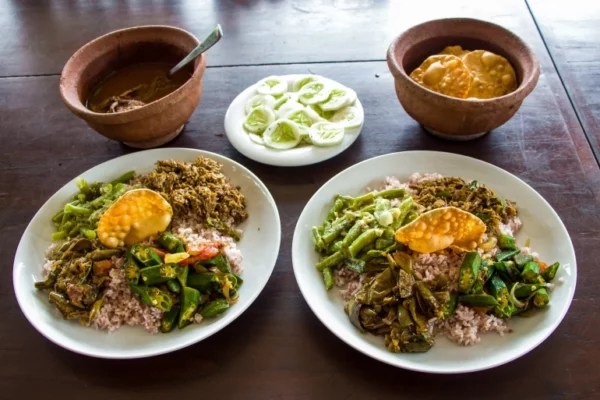
Sri Lankan rice and curry meal
A staple Sri Lankan rice and curry meal. Pictured are bandakka (okra stir fry), bonchi (beans in coconut milk), wam batu thel dala (eggplant), kesel muwa malluma (banana flower stir fry). Fish curry (served in a clay pot), papadam, and salt-and-pepper cucumber [Nathan Mahendra/Al Jazeera]

My mother is a good cook.

My father is just slightly better. That’s how my younger sister would always describe my parents’ food. She’s right. My mother cooked delicious curries. But my father cooked the food we hold dear.

My father grew up in Nabiriththawewa, a small village in Kurunegala, about 120km (75 miles) from Colombo.

Unlike his two older brothers who were more interested in going out with their friends, my father accompanied my grandfather to every village wedding. From what I could gather, my grandfather was the chef at every function in the village. He had cooked to feed hundreds.

“I followed him like a thread follows the needle. That’s how I learned to cook,” my father would say.

Although I wish I had met him, I never saw my grandfather, he was already a distant memory when I came to this world.
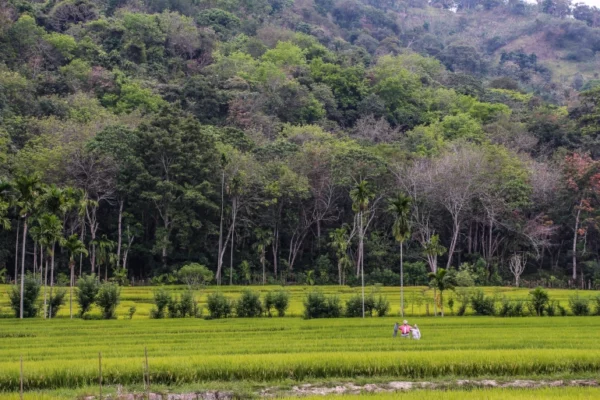
sri lanka
A paddy field by the road in a small village in Wellawaya, 282km from Colombo [Nathan Mahendra/Al Jazeera]

When I was eight years old, my family lived in a small house by the rice fields in my father’s village. My father worked a tedious office job, commuting for hours on a passenger train every day.

But when he was home, he would spend time doing two things: gardening and cooking.

My father lived a frugal life so he could build a secure future for his two daughters.

He was also a frugal cook, making use of every ingredient so nothing in his kitchen ended up in the waste pit. He mastered the art of delicious snacks, like bath aggala, a Sri Lankan sweet he makes using coconut and leftover rice and that marked our teatime ritual growing up. In Sinhala, aggala are sweet ball-shaped snacks and bath is cooked rice.

At home, teatime was when I cycled home through the rice paddies from the neighbours’ to find my little sister still in her bright sequined nursery dress with her colouring books. Outside, kids would be flying kites as men worked in the fields and women in colourful headwraps reaped golden-yellow paddy with their sharp sickles.

My mother, who was a government school teacher, would be just getting up from her afternoon nap to make tea with powdered milk for us.

During the week, teatime meant a cup of tea with a packet of biscuits or a loaf of white bread to dip. But on the weekends, it was my father’s bath aggala, eaten as we sat on the verandah watching the world. Sometimes, my parents would tell us about their childhood. Or we would just watch colonies of bats dart across the evening sky as night fell, and giggle over something my little sister said.

As I look back on those teatimes spent at home, I miss the sounds and colours of those evenings that held us together, and the taste of my father’s bath aggala.
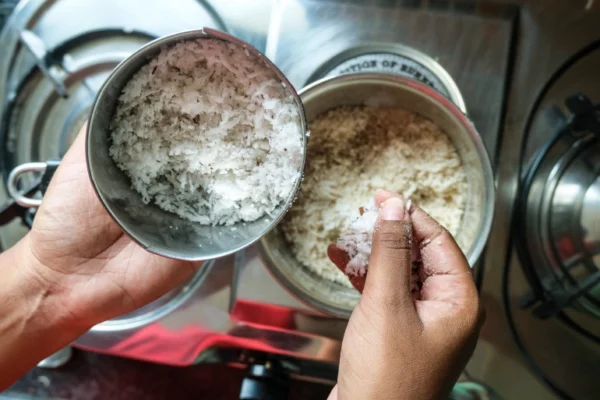
aggala
Roasting for about 20 minutes gives aggala a brown colour and nutty taste, which is how my father makes it [Nathan Mahendra/Al Jazeera]
It is only now that I understand that, for my father, bath aggala was more than sweet rice balls he made for his family. For him, it was making the most of rice: a grain beloved to him and all Sri Lankans.

The beloved grain

“Udetath bath, dawaltath bath, retath bath” is a popular Sinhala saying that means “Rice for the morning, afternoon, and night.”

Nothing reflects the essence of my island and people better than that. Rice is not only the main staple for Sri Lankans, it’s more than that.

In island kitchens, rice boils every day in clay pots over firewood or steams in electric rice cookers. A pot of steamed rice dominates our tables often, paired with other dishes and condiments. When rice is not cooked this way for breakfast or dinner, another rice-based food blesses our empty plates.

It could be kiribath, a sticky blend of rice and coconut milk eaten for breakfast. Or rice flour is used to make idi appa or idiyappam, discs of steamed thin noodles. Or appa or appam, bowl-shaped snacks with crispy edges and fluffy centres. Or dosa, thin, crisp flatbreads made with a fermented rice-lentil mix. Or levariya, sweet-savoury pockets of rice noodles filled with caramelised coconut.

We use soaked, ground rice to prepare sweetmeats for our New Year every April and when guests come over, we cook rice with aromatics like curry leaves and cinnamon and garnish it with crunchy cashews to prepare golden kaha bath.

When food is scarce, families soak leftover rice to eat in the morning with kiri hodi, a turmeric-infused coconut gravy soured with lime. This modest meal was my father’s favourite breakfast, paired with fresh green chilli.

Rice feeds us, builds us, and shapes us in many ways. This humble grain that thrives in the mud holds a place in every Sri Lankan meal and has crept into every nook and cranny of our society.
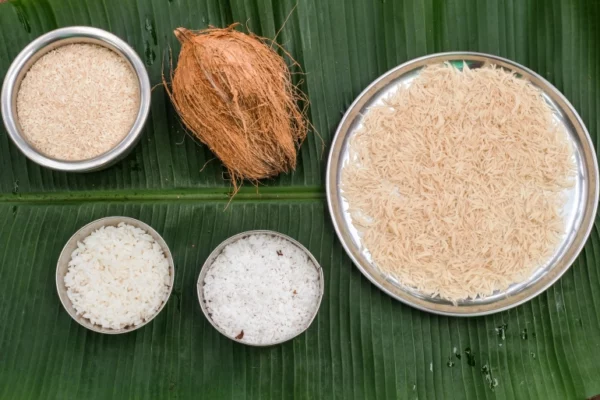
bath aggala
Ingredients for bath aggala. Clockwise from the right: leftover sundried rice, grated coconut, cooked and uncooked rice, and a coconut [Nathan Mahendra/Al Jazeera]
Rice has a large share of the island’s agriculture, frames its economy, and unpacks our history. And our love for it has given birth to a host of flavourful dishes.I learned how rice grew when we moved to our father’s village. Paddy – the word for the plant and the grain before removing the hull – flourished in the fields thanks to the farmers toiling in the sun.

My father grew paddy in a small field inherited from his parents, which grew enough rice for us. While he readied the field, I would run behind him, getting my feet muddy. Once or twice, I helped him plant seedlings.

The earliest stone carving of paddy cultivation in Sri Lanka dates back to 939-940 AD, says Professor Buddhi Marambe, who specialises in weed science and food security. Ancient Sri Lankan rulers built reservoirs to harness rainwater while people developed and preserved rice varieties for more than 3,000 years.

But when the island was colonised by the British in 1815, cash crops like tea and rubber were imposed on farmers to make money for the colonisers. British propaganda campaigns also encouraged people to replace rice with wheat in their diet. “By the 1940s, Sri Lanka had to import 60 percent of the rice needed for the country’s meagre six million population,” says Marambe.

In the following decades, refined wheat flour and white bread rose in popularity while native rice was replaced by high-yield varieties to sustain the growing population – varieties that needed chemical fertilisers and pesticides.

A child walks to the fields with a mammoty to help his parents in Pussellayaya, a village by the Wasgamuwa National Park [Nathan Mahendra/Al Jazeera]
In 2020, there was enough locally produced rice to feed Sri Lanka’s population of 21 million, Marambe says. But the then-government abruptly banned synthetic fertilisers in April 2021, forcing farmers to turn to organic fertilisers they were not used to. Farmers lost their harvest, and many deserted their rice fields.By the time the ban was lifted in November last year, Sri Lanka did not have enough foreign currency to import chemical fertilisers and pesticides. The hard currency shortage also resulted in a fuel crisis, and farmers have to pay more now for reaping and threshing machines.

“Most people [in our village] are abandoning their fields now,” my mother said when I rang her recently. “The machine is charging 240 rupees [$0.66] per minute. They can’t afford it.”

Sri Lanka’s future rice production now depends on a crippled economy and tentative foreign loans that may or may not come.

In the past, leftover rice was considered “poor man’s food”, so people stopped eating foods like diya bath (fermented rice porridge with coconut milk) for breakfast, reaching for refined white bread slathered in preservative-laden bottled jam instead.

But, in June, food inflation was more than 60 percent in Sri Lanka and has since kept climbing. Prices soar daily, and most low-income families eat just one or two meals a day. As people rethink their food choices, frugal cooking has made a comeback.

My parents no longer buy biscuits or white bread. A packet of biscuits that cost 200 Sri Lankan rupees ($0.55) a week ago is now 600 rupees ($1.65). “Who would pay that much for biscuits,” my mother said. She wants me to bring her some from India, where I’m currently travelling.

My father makes bath aggala more often now. It’s a dish he learned to make by watching his parents and older sisters, he told me recently on the phone.
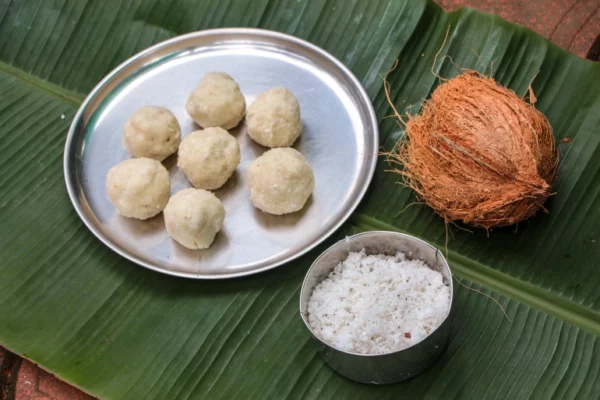
food security
‘For my father, bath aggala is food security. It is minimising waste,’ writes Rathnayake [Nathan Mahendra/Al Jazeera]
When my father was a teenager, Sri Lanka was battling drought and an economic crisis in the 1970s. Even though his family had land to grow rice, there wasn’t enough water. So my grandparents made the most of what was available.“They told us never to throw away rice, not even a single grain of it,” my father said. “When I saw a little boy digging in a dustbin for food at school, I realised what it means to have food on the table.”

Rice and coconuts

I don’t remember us ever buying rice. Even when I left home to live in Colombo, my parents would visit me with tightly packed grocery bags of rice from my father’s fields. But recently when I called home, my mother said she might have to buy rice for the first time in her life.

“The [threshing] machine will only come if we give them diesel,” my mother said. “And we can’t get diesel.”

Many families in the village are now eating diya bath in the morning, my mother said.

Making diya bath involves a few steps if you, like my father, want to eat it hot. Many people eat diya bath cold, which is faster.

If there is rice left over after dinner, my father soaks it in water, letting it soak overnight and draining it the next morning. Then he heats up the coconut milk in a pot, adds dried red chilli, curry leaves, onion, salt, half a teaspoon of turmeric powder, and Maldive fish flakes (dried, cured tuna fish), and lets it simmer.
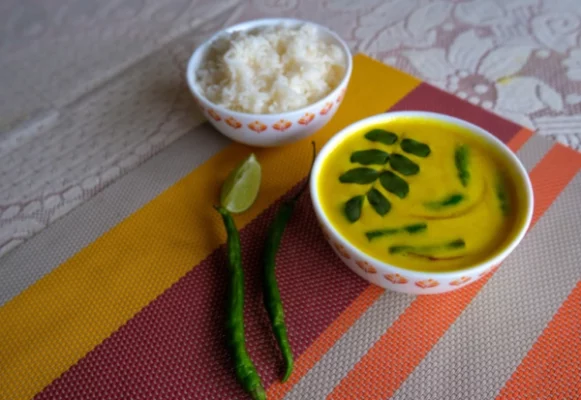
kiri hodi
Diya bath as my father eats it with kiri hodi, served warm [Nathan Mahendra/Al Jazeera]
For sourness, he squeezes in half a lime or adds a few pods of dark brown sun-dried tamarind. (This concoction alone is called kiri hodi). When it’s ready, my father pours it, piping hot, onto a bowl of rice and eats it with fresh green chilli and, sometimes, fried dried fish.Cold diya bath is a no-cook meal: mix two cups of coconut milk with one cup of soaked rice. Then add thinly-sliced red onion, two tablespoons of lime juice, three-four roasted dried red chillies, one teaspoon of grated Maldive fish, and salt to taste. If you like it sourer, squeeze in some more lime juice.

Some people like fresh green chilli instead of dried red chilli. Maldive fish is optional, but it adds a nice umami punch. Many elders believe that diya bath, with its fermented rice and coconut milk, cools the body and prevents heartburn.

Speaking of coconut milk, when I make diya bath, I reach for coconut milk that comes in sealed cardboard containers but my parents have never bought coconut milk in their life, they make it. My father plucks coconuts from our garden, removes the fibrous outer husk, halves the nut, and scrapes it with a hiramanaya – a traditional grater with a wooden seat for the person to sit while grating. He mixes the grated coconut with water, squeezing it several times with his hands to make coconut milk.

Making coconut milk is laborious, but my parents still do it. If rice is our staple, coconut is its mate. It thickens our curries, binds our sambals, flavours our foods, and balances meals with healthy fats. Coconuts also make our condiments richer to pair with humble rice.
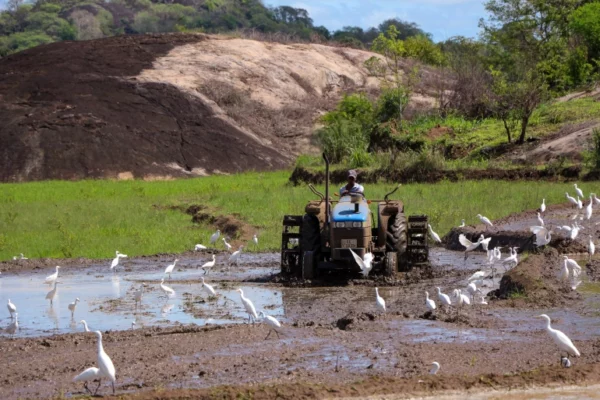
paddy cultivation
A tractor at work, ploughing the fields for paddy cultivation in Pussellayaya, by the Wasgamuwa National Park [Nathan Mahendra/Al Jazeera]

More than aggala

While people usually boil fresh rice for aggala, my father soaks leftover rice to make sugary, coconutty balls with a slight crunch. For him, bath aggala is food security. It is minimising waste.

To make this teatime snack, he ferments leftover cooked rice overnight in water. In the morning, he drains and sun-dries the rice until it is crisp, then roasts it for about 20 minutes in a skillet on a low flame, until it turns brown.

When I made bath aggala recently, I roasted the rice for five to eight minutes and switched off the stove before it changed colour, so it stayed white. Do as you like, roasting for longer gives aggala a  golden-brown colour and nutty flavour.

Using a pestle and mortar, my father grinds the warm, roasted rice until he gets an uneven texture with pieces of broken rice that add a delightful crunch. You can use an electric grinder as I do, just don’t grind it into powder.

Take 250g of this ground rice and add about 100g of grated coconut, half a cup of sugar, half a teaspoon of salt, and half a cup of water. Mix it well with your hands and shape it into little balls. Some people prefer a bit of a spice kick to their aggala, which is easily done by sprinkling a hint of black pepper into the mix.

Once ready, always serve with a cup of tea.
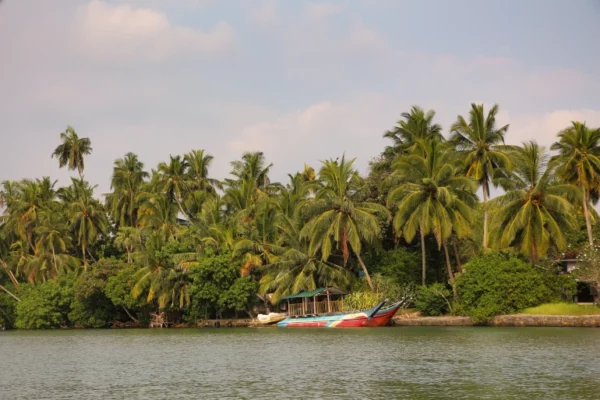
Sri Lankan cuisine
Like rice, coconut makes up a large chunk of Sri Lankan cuisine. Photo taken in Koggala [Nathan Mahendra/Al Jazeera]
My father’s bath aggala is a testimony to Sri Lanka’s longstanding relationship with rice. It bears witness to the island’s often troubled history and present, twisted and framed by politics and economic interests.The road to recovery is long. But for now, I’d like to be lulled into sweet teatimes at home. One bath aggala at a time.

TAGGED:"SRI-LANKANS"aggalaAgriculturebreakfastdinnerFish curryframesSri Lankan MealSri Lankan rice and curry meal
Share This Article
Facebook Whatsapp Whatsapp LinkedIn Email Copy Link Print
Previous Article T-20-word-cup Everything is ready for the T20 Cricket World Cup 2022: Mitchell Enright- CEO of the ICC Organising Committee
Next Article The Brad and Kiara Show Podcast - 2022-9-24 The Brad and Kiara Show Podcast – 2022-9-24
FacebookLike
YoutubeSubscribe
LinkedInFollow
eLanka Wedding
- Advertisement -
Ad image
Most Read

FIBA 3×3 World summit awaits the Gangurrus

Bingxue 1

Bingxue Sri Lanka Opens Its First Outlet in Dehiwala

Agnii Eatery Bar, Agnii Windsor, Agnii Chapel Street, Sri Lankan restaurant Melbourne, modern Sri Lankan cuisine Australia, Chef Gayan Pieris, Gayan Pieris Melbourne chef, Many Little Bar & Dining Red Hill Many Little Bar & Dining, Sri Lankan fine dining Melbourne, Chapel Street restaurants Windsor, new restaurants Melbourne 2026, Sri Lankan fusion food Australia, kussiya kitchen concept, open kitchen dining Melbourne, Mornington Peninsula dining, Red Hill winery restaurant chef, Australian Sri Lankan chefs, Melbourne food news 2026, Concrete Playground food news, Windsor dining precinct

Coming Soon: Chef Gayan Pieris Brings Contemporary Sri Lankan Flavours to Chapel Street with ‘Agnii’

Sri Lankan cuisine Melbourne, Agnii Windsor Melbourne, Chef Gayan Pieris, Many Little restaurant, Sri Lankan restaurant Melbourne, Melbourne food scene 2026, Sri Lankan food Australia, Chapel Street restaurants, Windsor dining Melbourne, Sri Lankan culinary revolution, hoppers Melbourne, kottu roti Melbourne, authentic Sri Lankan food, fire-driven hearth cooking, wood-fired Sri Lankan cuisine, Sri Lankan expat community Melbourne, Colombo street food Melbourne, regional Sri Lankan recipes, Melbourne multicultural food, The Havelock Place Canterbury, Dutch Rules Distilling Co Mitcham, Pearl By P&D Dandenong South, Sri Lankan restaurants Australia, Melbourne foodie guide, Sri Lankan curry Melbourne, Sri Lankan chefs Australia, Australian Sri Lankan culture, Melbourne dining destinations, contemporary Sri Lankan cuisine, Sri Lankan street food Australia, hopper brunch Melbourne, Good Food Guide chefs, Melbourne restaurant openings 2026, Agnii restaurant opening, Sri Lankan heritage cuisine, Sri Lankan flavours Melbourne, luxury Sri Lankan dining, Chapel Street food culture, Sri Lankan food trends Australia, eLanka food news

Melbourne’s Sri Lankan Food Revolution: Hatted Chef Gayan Pieris Fires Up ‘Agnii’ in Windsor

Written in the Stars, Sri Lankan community Melbourne, Sri Lankan Australian film, Menik Gooneratne, Su Dharmapala, The Wedding Season novel, Melbourne romantic comedy, Sri Lankan diaspora Australia, Australian Sri Lankan cinema, Nikesh Patel, Saagar Shaikh, Fawzia Mirza, Screen Australia, Telefilm Canada, Sri Lankan culture in Australia, multicultural Australian films, Sri Lankan weddings, Vedic astrology romance, Sri Lankan actress Australia, Melbourne film production, Sri Lankan heritage stories, eLanka news, Sri Lankan Australians, immigrant stories Australia, diversity in Australian cinema, Asian Pacific representation, Sri Lankan romance film, Melbourne arts community, Sri Lankan entertainment news, diaspora storytelling, Blue Fox Entertainment, Maslow Entertainment, Sri Lankan creatives, Sri Lankan identity in film, Australian multicultural storytelling, women-led film production, Sri Lankan community events Melbourne, cultural representation in cinema, eLanka Australia, Sri Lankan success stories

Melbourne Rom-Com About Sri Lankan Community “Written in the Stars” Heads to the Big Screen

Related News
Articles

OPALS VS CHINA | MELBOURNE 2026

NISHAN VELUPILLAY IMAGES. COURTESY ALEAGUES
Articles Lawrence Machado

Socceroo Nishan Vellupillay Eyes World Cup Debut

Escape-to-Baththalangunduwa-300x190 (1)
Articles

Escape to Baththalangunduwa: Sri Lanka’s Hidden Island Paradise

Asian Gym for Life Challenge 2026 , Indonesia Gymnastics. , Master Ahamadh Ayaan , Sri Lanka Gymnastics , Trinity College Kandy
Articles

Master Ahamadh Ayaan to Represent Sri Lanka at the 1st Asian Gym for Life Challenge 2026 in Indonesia

Sri Lanka cricket 2016, Australia tour of Sri Lanka, Warne-Muralitharan Trophy, Sri Lanka vs Australia Test series, Rangana Herath, Kusal Mendis, Lakshan Sandakan, Dilruwan Perera, Dhananjaya de Silva, Sri Lanka whitewash Australia, Sri Lanka cricket victories, historic cricket series, Sri Lankan cricket legends, Galle International Stadium, Pallekele International Cricket Stadium, SSC Colombo Test, Sri Lankan diaspora cricket, Test cricket classics, Sri Lanka sporting history, Sri Lankan pride, Australian cricket team 2016, Sri Lanka cricket memories, cricket nostalgia, Asian cricket dominance, spin bowling masterclass, Sri Lanka cricket fans, iconic Sri Lanka cricket moments, Sri Lanka vs Australia rivalry, Sri Lanka Test triumph, Sri Lankan sporting excellence, cricket in Sri Lanka, Herath 13 wickets SSC, Kusal Mendis breakthrough innings, Sri Lanka cricket retrospective, cricket history article, eLanka cricket feature, Sri Lankan community worldwide, cricket celebrations, Sri Lankan sports news, international cricket tours, cricket legends of Sri Lanka, Test match domination, Sri Lanka cricket heritage, world number one Australia, cricketing milestones, Sri Lankan excellence, cricket memories for diaspora, classic Test cricket, Sri Lanka sports achievements, eLanka sports articles
Articles

Rewind to Glory: Reliving the Historic 2016 Australia Tour of Sri Lanka!

  • Quick Links:
  • Articles
  • DESMOND KELLY
  • Dr Harold Gunatillake
  • English Videos
  • Sri Lanka
  • Sinhala Videos
  • eLanka Newsletters
  • Obituaries
  • Sunil Thenabadu
  • Dr. Harold Gunatillake
  • Tamil Videos
  • Sinhala Movies
  • Trevine Rodrigo
  • eLanka Newsletter
  • Photos

eLanka

Your Trusted Source for News & Community Stories: Stay connected with reliable updates, inspiring features, and breaking news. From politics and technology to culture, lifestyle, and events, eLanka brings you stories that matter — keeping you informed, engaged, and connected 24/7.
Kerrie road, Oatlands , NSW 2117 , Australia.
Email : info@eLanka.com.au / rasangivjes@gmail.com.
WhatsApp : +61402905275 / +94775882546
  • About eLanka
  • Terms & Conditions

Disclaimer:
eLanka is committed to sharing positive and community-focused stories. We do not publish or endorse political, religious, or ethnic viewpoints. The content published on eLanka, including articles and newsletters, reflects the opinions and views of the respective authors and not those of eLanka. eLanka accepts no responsibility or liability for the accuracy, completeness, or consequences of any content provided by contributors.

(c) 2005 – 2025 eLanka Pty Ltd. All Rights Reserved.